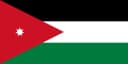
Jordan

🇯🇴

Phone Code

+962

Capital

Amman

Population

11 Million

Native Name

الأردن

Region

Asia

Western Asia

Timezone

Eastern European Time

UTC+02:00

Jordan is a Middle Eastern kingdom known for the ancient Nabataean city of Petra (UNESCO World Heritage Site and New Seven Wonders of the World), Dead Sea, Wadi Rum desert, and rich historical heritage. Amman, the capital, is a modern city built on seven hills with Roman ruins at its center. Jordan is one of the most stable and safe countries in the Middle East, welcoming tourists. Visitors are drawn to Petra's Treasury and ancient carved city, Dead Sea (lowest point on Earth at 430m below sea level), Wadi Rum desert landscapes (Lawrence of Arabia filming location), Jerash Roman ruins, Amman's citadel and Roman amphitheater, Aqaba Red Sea diving, Dana Biosphere Reserve hiking, Desert Castles, and Bedouin culture. Jordan offers ancient history, dramatic landscapes, and Middle Eastern hospitality with relatively easy travel logistics.

Visa Requirements for Jordan

Jordan offers visa on arrival for most nationalities at Queen Alia International Airport (Amman) and other entry points for JOD 40 (~$56 USD). However, the best option for tourists is the Jordan Pass, which costs JOD 70-80 depending on package, includes visa waiver (free visa if staying 3+ nights), Petra entry (worth JOD 50-55 alone), and 40+ other attractions. The Jordan Pass must be purchased online at jordanpass.jo before arrival. Without Jordan Pass, Petra entry alone costs JOD 50 (1 day) to JOD 55 (2 days), making the pass excellent value. Citizens of some countries can obtain free visas in advance through Jordanian embassies. Israeli-Jordanian border crossings have different visa rules. Jordan's visa system is straightforward, and the Jordan Pass streamlines entry while saving money for most tourists.

Common Visa Types

Jordan Pass (Visa Waiver + Attractions)

Visa waived if staying 3+ consecutive nights in Jordan; purchase online at jordanpass.jo before arrival; costs JOD 70 (Petra 1-day), JOD 75 (Petra 2-day), or JOD 80 (Petra 3-day); includes entry to Petra, Jerash, Wadi Rum, and 40+ sites; massive savings compared to buying separately; must activate within 12 months of purchase; print confirmation to show at immigration.

Best option for tourists - includes visa waiver and Petra entry plus 40+ attractions.

Visa on Arrival

30 days single entry; costs JOD 40 (~$56 USD); available at Queen Alia Airport, Aqaba Airport, and most borders; passport valid 6 months required; extendable at police stations; does NOT include Petra entry (must pay JOD 50 separately); less economical than Jordan Pass for tourists visiting Petra.

For tourists not using Jordan Pass, available for most nationalities at airports and most land borders.

Free Visa at Embassy

30 days; available for citizens of some countries through embassies/consulates; requires application, passport, photos; processing varies; check with local Jordanian embassy; still cheaper to use Jordan Pass if visiting Petra.

For certain nationalities who can obtain free single-entry visa through Jordanian embassy before travel.

Visa Extension

Extensions available through police stations; apply before current visa expires; requires passport, fees, proof of accommodation; can extend up to 3 months total stay typically; overstay fines are steep (JOD 1.5 per day).

For visitors wishing to stay beyond initial 30 days.

Important Travel Information

Jordan Pass is best value: Costs JOD 70-80, includes visa waiver (saving JOD 40) + Petra entry (worth JOD 50-55) + 40 other sites. Pays for itself even if only visiting Petra. Buy at jordanpass.jo before arrival.

3-night minimum for visa waiver: Jordan Pass only provides free visa if staying 3+ consecutive nights. For shorter stays, still need to pay JOD 40 visa on arrival (but Petra entry still included in pass).

Passport validity: Must be valid for at least 6 months from entry date. Blank pages required for stamps.

Travel Overview

Jordan is one of the most rewarding countries in the Middle East for travellers: compact enough to combine dramatically different landscapes and historical periods in a single trip, stable enough to visit without specialist planning, and home to sites of world-class importance at every stop. Petra — the Nabataean city carved directly into rose-red sandstone cliffs, capital of a trading empire that once controlled the frankincense and spice routes between Arabia, Egypt, and the Mediterranean — is one of the genuine wonders of the ancient world, and arriving through the Siq (the narrow canyon gorge leading to the Treasury) is one of travel's great first moments. But Jordan is far more than Petra: Jerash contains the best-preserved Roman provincial city outside Italy; the Dead Sea at 430 metres below sea level is the lowest point on Earth, with water so salinated that swimming is impossible but floating effortless; Wadi Rum's vast Martian landscape of red sand and sandstone towers was both Lawrence of Arabia's campaign base and the backdrop for dozens of films; Aqaba on the Red Sea has some of the richest coral reefs in the world at accessible depths; and the Dana Biosphere Reserve offers canyon hiking through one of the region's most intact ecosystems. Amman, the capital, is a pleasant modern Arab city built on seven hills, with an excellent Citadel and Roman Theatre at its centre and a café culture that makes it a comfortable base. Jordan is one of the easiest and safest countries in the region for independent travel.

Discover Jordan

Petra is the greatest archaeological site in the Arab world and one of the most extraordinary places on Earth. The Nabataean civilization — a nomadic Arab people who became wealthy merchants controlling the incense trade routes — carved their capital directly into the pink and red sandstone cliffs of southern Jordan, beginning around the 4th century BCE. The approach through the Siq, a narrow canyon gorge 1.2 kilometres long, is one of travel's most theatrical arrivals: the canyon narrows to three metres at points, light changes colour with the sandstone, and then the gorge opens suddenly onto the facade of the Treasury (Al-Khazneh) — a 40-metre carved temple front of extraordinary precision and elegance. But the Treasury is only the beginning: Petra extends over 264 square kilometres of canyons, ridge routes, and carved monuments. The Street of Facades has hundreds of tomb facades; the Colonnaded Street follows the main Nabataean thoroughfare; the Royal Tombs are massive carved complexes on the cliff face; the Monastery (Al-Deir) — a 45-minute climb — is actually larger than the Treasury; and Little Petra (Siq al-Barid), 8 kilometres north, is a quieter Nabataean suburb with painted cave ceilings. The Jordan Pass includes Petra entry and is by far the most economical option.

Ways to Experience This Destination

Ancient History & Archaeology

Petra (Nabataean rock city, one of the New Seven Wonders), Jerash (best-preserved Roman city outside Italy), Amman's Roman Theatre and Citadel, the Desert Castles, and Little Petra.

Desert & Landscapes

Wadi Rum (red sand desert, rock arches, Bedouin camps, stargazing), Dana Biosphere Reserve canyon hiking, the Dead Sea at 430m below sea level, and the Jordan Valley.

Compact Circuit

Jordan's size makes it ideal for combining Amman, Jerash, Petra, Wadi Rum, Aqaba, and the Dead Sea in 7–10 days — one of the most rewarding compact itineraries in the Middle East.

Diving & Red Sea

Aqaba's coral reefs begin within metres of shore — accessible for both snorkellers and divers, with warm water year-round and visibility that benefits from the Gulf of Aqaba's low boat traffic.

Money & Currency

Money & Currency
ا.د

Jordanian Dinar (JOD)

Currency code: JOD

Practical Money Tips

Jordanian Dinar (JOD) — one of the world's strongest currencies; 1 JOD ≈ 1.41 USD / 1.30 EUR

Jordan uses the Jordanian Dinar (JOD, also written JD, symbol د.أ). The JOD is one of the strongest currencies in the world: 1 JOD is approximately 1.41 USD and 1.30 EUR. The dinar is subdivided into 1,000 fils. Prices in Jordan can appear small in number but are actually substantial — a hotel room priced at 60 JOD costs around USD 85. The JOD is pegged to the USD at a fixed rate (approx. 0.709 JOD/USD), so USD exchange is always stable. EUR, GBP, and USD all exchange well at banks and licensed exchange offices (sarrafi) — typically at the airport on arrival or in Amman city centre. Jordan's Arab Bank, Cairo Amman Bank, and Jordanian Islamic Bank offer competitive rates. Exchange offices in Amman generally offer better rates than hotels.

ATMs available in Amman, Aqaba, and at Petra — reliable for Visa and Mastercard; fewer in remote areas

ATMs are widely available in Amman (especially in Abdali, Sweifieh, and Mecca Street areas), Aqaba, and near the Petra visitor centre in Wadi Musa. Arab Bank, Bank of Jordan, and Cairo Amman Bank ATMs reliably accept international Visa and Mastercard cards. Withdrawal limits are typically 300–500 JOD per transaction. Foreign card fees of 1–3% apply. In Wadi Rum (the desert reserve), there are no ATMs — withdraw sufficient JOD in Aqaba before entering. In Jerash, Madaba, and the Dead Sea hotel zone, ATMs are available but fewer. Notify your bank before travel.

Cards accepted at hotels and tourist sites — Apple Pay and Google Pay growing but not universal

Visa and Mastercard are accepted at mid-range and upscale hotels, larger restaurants in Amman, car rental companies, and the main Petra ticket office. American Express is accepted at luxury hotels only. Apple Pay and Google Pay are increasingly supported at modern establishments in Amman — at upscale malls (Mecca Mall, City Mall) and international hotel chains — but are not yet universally available across Jordan. In souks, local restaurants, street vendors, and smaller towns, cash in JOD is required. Petrol stations outside Amman are often cash-only.

Budget guide: falafel ~0.50 JOD; Petra entrance fee ~50 JOD (1-day) / ~60 JOD (2-day); Dead Sea hotels very expensive

Jordan spans a huge range of price points. Street food: falafel wrap 0.40–0.70 JOD; mansaf (traditional dish) in a local restaurant 3–6 JOD per person. Mid-range restaurant in Amman: 8–20 JOD per person. Petra 1-day entrance: 50 JOD; 2-day: 60 JOD (part of the Jordan Pass which bundles visa + multiple sites for ~70–80 JOD — usually good value if visiting multiple sites). Wadi Rum overnight camp: 30–80 JOD/person. Dead Sea resort hotels: 100–200+ JOD/night. Aqaba is more budget-friendly than Amman. Tipping: 10% at sit-down restaurants; 1–2 JOD per bag for hotel porters; 3–5 JOD/day for tour guides. Water: 0.20–0.50 JOD from shops, essential in summer heat.

Note: Always check current exchange rates before traveling. Currency exchange is available at airports, banks, and authorized money changers.

Common Money Questions

Cities with missions

Where this country maintains embassies or consulates

States & Regions in Jordan

Explore different regions and their cities.

Diplomatic Network

Jordan Embassies Worldwide

Popular Destinations

Top destinations with verified missions

Hosted missions

Embassies in Jordan

These foreign embassies and consulates are based here. Choose a mission to open its in-depth guide and contact details.

All countries by continent

Need help checking visa requirements or applying for your trip to Jordan?

Apply for Jordan visa