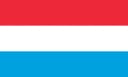
Luxembourg
Luxembourg is the world's only sovereign Grand Duchy, a 2,586-square-kilometre landlocked country wedged between Belgium, Germany and France with a population of around 640,000 — of which 48 percent are foreign nationals, the highest proportion in the European Union. The country is one of six founding members of the European Union, NATO, Benelux and the United Nations, hosts the European Court of Justice, the European Investment Bank and parts of the European Commission, and runs Europe's most cosmopolitan small capital. Luxembourg City — population around 130,000 — perches on a sandstone plateau cut by the gorges of the Alzette and Pétrusse rivers; the resulting old-town fortifications and casemates are listed as a UNESCO World Heritage Site. Three languages are simultaneously official: Luxembourgish (the national vernacular, a Moselle Franconian dialect), French (legislation and administration) and German (media and education), and most Luxembourgers speak all three plus fluent English. Beyond the capital the country opens out fast: the medieval castles of Vianden, Bourscheid, Beaufort and Clervaux in the north, the Mullerthal sandstone hiking region known as Little Switzerland, the Moselle wine villages from Schengen (where the 1985 agreement abolishing internal European borders was signed) to Wormeldange and Remich, and the Esch-Belval steel-belt now repurposed as Esch-sur-Alzette's University of Luxembourg campus. Public transport is free for everyone — visitors and residents — across the entire country, the first such system in the world (since March 2020).
Booking links go to our partner Trip.com — we may earn a commission at no extra cost to you.
Visa Requirements for Luxembourg
Luxembourg is a founding Schengen Area member, so standard Schengen rules apply at every border. Citizens of the European Union, EEA and Switzerland enter freely with a national ID card or passport. Citizens of around sixty visa-exempt third countries — including the United States, Canada, the United Kingdom, Australia, New Zealand, Japan, South Korea and most of Latin America — may enter visa-free for up to 90 days within any 180-day period across the entire Schengen Area, not Luxembourg alone. Travellers from countries on the Schengen visa list apply for a Schengen short-stay visa at the Luxembourg embassy or consulate responsible for their place of residence, or at any other Schengen mission representing Luxembourg. A passport valid for at least three months beyond the planned departure date is required for entry; six months is the safer benchmark for visa applications. Travel medical insurance at the Schengen minimum coverage level, return travel arrangements and proof of accommodation and funds are standard supporting documents. The ETIAS travel authorisation system will apply to currently visa-exempt travellers when it enters operation. The Schengen Agreement itself was signed in 1985 in the Luxembourg village of Schengen on the Moselle.
Visa types
Tourism, business, family visits and short courses for citizens of around sixty visa-exempt third countries.
Guides
Luxembourg rewards travellers who like compact, dense, internationally connected cities and short trips into castle and wine country. Luxembourg City is the obvious base: the UNESCO-listed old town perches on a sandstone plateau split by the gorges of the Alzette and Pétrusse rivers, with the Bock Casemates running 17 kilometres of medieval fortification tunnels beneath the streets, and the riverside Grund and Clausen quarters offering the most photogenic walks. The Adolphe Bridge over the Pétrusse and the Pont Grande-Duchesse Charlotte over the Alzette frame the modern Kirchberg European quarter on the far plateau, where the European Court of Justice, European Investment Bank and Mudam (Museum of Modern Art) are clustered. Beyond the city the country fits comfortably into long weekends: Vianden's romantic medieval castle on the Our river — Victor Hugo lived in exile here and drew the castle repeatedly — sits 60 kilometres north; the Mullerthal sandstone hiking region known as Little Switzerland is 30 kilometres east; Bourscheid and Clervaux castles cluster within an hour of Luxembourg City; the Moselle wine villages from Schengen (where the 1985 agreement was signed) through Wormeldange to Remich produce Crémant, Riesling and Auxerrois along a 42-kilometre wine route. Free public transport across the entire country since 2020 — buses, trains and the Luxembourg City tram, all gratis — makes the whole country navigable without a single ticket.
Luxembourg travel guide →
The full guide — the castle north, the gorge trails, the Moselle bank and the honest days answer.
Money in Luxembourg →
Euros, cards and the free-transport exception — the practical money guide.
Eating in Luxembourg →
A Franco-German table with its own accent — Judd mat Gaardebounen, the Moselle whites and the bakery habit.
Getting around Luxembourg →
Nationwide FREE public transport — the only country where the network costs nothing — and when a car still earns the north.
Health & safety in Luxembourg →
A genuinely low-risk baseline — trail sense in the gorges, and the numbers to call.
Cities & planning
Regions
Embassies & missions
Accredited missions for Luxembourg
Frequently asked questions
Luxembourg is a founding Schengen member, so the standard rules apply: EU/EEA/Swiss citizens enter with an ID card, and citizens of some sixty visa-exempt countries — the US, UK, Canada, Australia, Japan among them — get 90 days in any 180 across the whole Schengen Area. Others apply for a Schengen C visa. Fittingly, the agreement that abolished Europe's internal borders was signed in the Luxembourg village of Schengen itself — you can visit the museum on the spot.
Really: since March 2020, every bus, tram and second-class train in the country is free for everyone, visitors included — no ticket, no app, no validation, simply board. It was the first nationwide system of its kind in the world. The only exceptions are first-class rail and cross-border legs to Trier, Metz or Arlon. It meaningfully offsets the country's otherwise top-of-Europe prices.
Two days handle the capital well — old town, casemates, the Corniche, Grund and Kirchberg's museums. A third and fourth day open the country: Vianden's castle plus Clervaux's Family of Man in the Ardennes, or Mullerthal hiking with Echternach, or the Moselle wine route to Schengen. Everything is under 75 minutes from the capital on the free network, so one base covers it all.
Planning a trip to Luxembourg? Compare hotels and flights and book in minutes.
Booking links go to our partner Trip.com — we may earn a commission at no extra cost to you.
Treat this Visaja page as your starting point: verify the current rules directly with the official source before you submit an application.