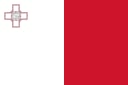
Malta
Malta is a small Mediterranean island nation south of Sicily, an EU member since 2004 and Schengen Area and Eurozone member. The world's tenth-smallest country, Malta consists of three inhabited islands (Malta, Gozo, Comino) with strategic location between Europe and Africa. A former British colony (independent 1964), Malta is one of only two EU countries where English is an official language (with Ireland), making it highly accessible for English speakers. Valletta, the capital built by Knights Hospitaller (Knights of St. John) in the 16th century, is a UNESCO World Heritage Site fortified city. Malta has remarkably dense history - successively occupied by Phoenicians, Romans, Arabs, Normans, Knights Hospitaller, French, and British. Visitors are drawn to Valletta's Baroque architecture and St. John's Co-Cathedral, Mdina medieval fortified city (“Silent City”), Blue Grotto sea caves, Gozo island's Azure Window (collapsed 2017) and Ġgantija temples (older than Stonehenge), Comino's Blue Lagoon, megalithic temples (UNESCO, among the world's oldest free-standing structures), Game of Thrones filming locations, English language schools, diving (wrecks and clear water), and Mediterranean beaches. Malta offers European culture, English accessibility, history, and year-round sunshine.
Booking links go to our partner Trip.com — we may earn a commission at no extra cost to you.
Visa Requirements for Malta
As a Schengen Area member, Malta follows standard Schengen visa policies. EU/EEA/Swiss citizens can enter with just a valid ID card or passport and stay indefinitely with full freedom of movement rights. Citizens of the United States, United Kingdom, Canada, Australia, New Zealand, Japan, and many other countries can enter visa-free for tourism or business stays of up to 90 days within any 180-day period across the entire Schengen Area. Those requiring Schengen visas should apply through Maltese embassies or consulates (or any Schengen embassy), submitting completed applications, passport photographs, travel itinerary, proof of accommodation, travel insurance meeting the Schengen minimum coverage (check the current threshold), and proof of financial means. Malta welcomes over 2.5 million visitors annually (5x its population). Processing typically takes 15 calendar days. Malta is popular for English language learning stays - students on long-term language courses need student visas. Malta's combination of EU membership, Schengen access, English language, and Mediterranean climate makes it attractive for both tourism and language education.
Visa types
For tourism, business, or short stays for US, UK, Canada, Australia, and other Schengen visa-exempt nationalities.
Guides
Malta packs 7,000 years of history, three UNESCO World Heritage Sites, world-class diving, and a thriving English-language school industry into an archipelago smaller than the Isle of Wight. Valletta — the fortified Baroque capital built by the Knights Hospitaller — is one of the most concentrated historic cityscapes in Europe. Gozo offers rural tranquillity, megalithic temples older than the pyramids, and the Azure Window's successor reefs. Comino's Blue Lagoon is a turquoise postcard. The warm Mediterranean climate (300+ sunny days), English as an official language, and direct flights from most European capitals make Malta one of the most accessible island destinations on the continent.
Malta travel guide →
The full guide — the Knights' capital, temples older than the pyramids and the three-island plan.
Money in Malta →
Euros across three islands — card coverage, Gozo and Comino cash reality, and honest costs.
Eating in Malta →
Beyond the resort menu — pastizzi at any hour, the rabbit stew that is genuinely national, Gozo's cheeselets.
Getting around Malta →
The Tallinja card, the Gozo ferry — and why Comino is reached a genuinely different way.
Health & safety in Malta →
A safe EU destination — reciprocal healthcare, tap-water taste, jellyfish season and shade-poor old towns.
Embassies & missions
Accredited missions for Malta
Frequently asked questions
Citizens of the US, UK, Canada, Australia, New Zealand, Japan and many other countries can visit visa-free for up to 90 days within any 180-day period, valid across the whole Schengen Area. Other nationalities need a Schengen visa (Type C) through a Maltese embassy or any Schengen embassy.
Very much so — Malta is one of only two EU countries (with Ireland) where English is an official language, a legacy of British colonial rule. Signs are bilingual and English is spoken everywhere.
Four to five days covers Valletta, Mdina, a Gozo day trip and a beach or diving day — the whole archipelago is only 316 km², smaller than the Isle of Wight, so distances are short.
Planning a trip to Malta? Compare hotels and flights and book in minutes.
Booking links go to our partner Trip.com — we may earn a commission at no extra cost to you.
Treat this Visaja page as your starting point: verify the current rules directly with the official source before you submit an application.