Mayotte
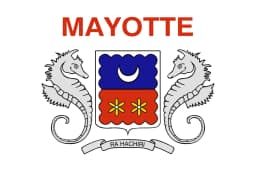
Phone Code
+262
Capital
Mamoudzou
Population
320,901 (2024)
Languages
French · Maore · Bushi
Area
374 km²
Driving side
right
Native Name
Mayotte
Region
Africa
Eastern Africa
Timezone
East Africa Time
UTC+03:00
On This Page
Mayotte is a French overseas department in the Mozambique Channel between Madagascar and the African mainland. Grande-Terre, Petite-Terre and surrounding islets sit inside an immense double-barrier lagoon known for coral reefs, turtles, dolphins and seasonal whale activity. Mamoudzou is the administrative and commercial centre, while the airport lies at Pamandzi on Petite-Terre. French institutions coexist with Mahorais culture, and Shimaore and Kibushi are widely spoken alongside French. Mayotte belongs to the European Union as an outermost region, but it is outside the Schengen Area and has distinct entry rules. That legal difference is central to trip planning: permission valid for metropolitan France or the Schengen Area does not automatically authorize travel to Mayotte.
Mayotte Visa & Immigration System
Mayotte applies French rules for overseas territories but is not part of the Schengen Area. A Schengen visa by itself does not automatically permit entry; travellers who require a visa must obtain a document valid for Mayotte or the relevant French overseas territories. Visa-free eligibility, permitted stay, passport validity and supporting documents depend on nationality, residence, purpose and route. Long stays, work and study require the appropriate prior authorization. Because most journeys connect through another country or territory, check its transit rules separately. Travellers arriving from or transiting a yellow-fever-risk area should also verify the current vaccination-certificate rule for their itinerary with an official French consular source.
Common Visa Types
Visa-Free Entry (90 days)
Short visits by nationalities covered by Mayotte's visa exemption rules
Short-Stay Visa (under 3 months)
Tourism, business, family visits for nationals requiring visas. Note: Schengen visas are NOT valid for Mayotte entry.
Long-Stay Visa (VLS-TS)
Employment, studies, family reunification, extended stays beyond 90 days
Transit Visa
Transit where the route and nationality require prior authorization
Important Information for Mayotte Travelers
Mayotte rewards travellers who plan around the lagoon rather than treating Mamoudzou as the destination. Boat excursions reach reefs, islets and sandbanks; guided outings may encounter turtles, dolphins and, in season, humpback whales. Petite-Terre offers accessible volcanic landscapes and beaches near the airport, while Grande-Terre holds forested ridges, ylang-ylang country, fishing villages and trailheads. Infrastructure is less predictable than in mainland France: road congestion, ferry queues, weather, water or fuel disruption and limited rural card acceptance can all change a day. A four- to six-day stay gives enough flexibility for two lagoon days, Petite-Terre and one land excursion without relying on perfect conditions.
Discover Mayotte
The lagoon is Mayotte's defining attraction. Responsible operators run snorkelling, diving and wildlife trips to reef passes, islets and clear-water sites, but sightings are never guaranteed. Choose an operator that respects approach distances, avoids chasing animals and explains reef rules. Sea state and visibility change quickly, so keep at least one flexible day and never stand on coral or disturb nesting and resting turtles.
Ways to Experience This Destination
Explore lagoon reefs and passes with a responsible local operator and weather flexibility.
Look for turtles, dolphins and seasonal whales without treating wildlife sightings as guaranteed.
Combine Grande-Terre, Petite-Terre and boat-access sandbanks while respecting tides and nesting areas.
Walk Lac Dziani viewpoints and forested terrain with heat, rain and trail conditions in mind.
Experience markets, food and village life with modest dress and respectful photography.
Money & Currency
Euro (EUR)
Currency code: EUR
Practical Money Tips
Mayotte uses the euro; arrive with a working card and some EUR because foreign-currency exchange is limited
The euro (EUR) is the official currency, so eurozone visitors do not need a currency conversion. Travellers with another account currency should compare their issuer's card, withdrawal and conversion charges before departure. Do not plan to exchange uncommon foreign cash after arrival: services and opening hours are limited. Prices vary sharply between local market goods and imported products, and supply disruption can affect availability, so a current trip budget is more useful than comparisons with other overseas departments.
ATMs available in Mamoudzou and Dzaoudzi — BFC OI (Banque Française Commerciale de l'Océan Indien) is the main bank; Crédit Agricole and La Banque Postale also have ATMs; coverage limited outside the two main urban areas
ATMs are easiest to find in Mamoudzou and Dzaoudzi/Pamandzi, with much thinner coverage in rural parts of Grande-Terre. Acceptance, limits and charges depend on the machine, card network and issuer; SEPA membership does not make every card withdrawal fee-free. Read any fee shown before confirming and reject dynamic currency conversion if your own provider offers the better rate. Withdraw during normal daytime activity and keep a modest reserve before travelling to villages or boat departure points.
Cards and phone wallets can work at larger businesses; physical card and euro cash are essential backups
Visa and Mastercard are useful at many supermarkets, hotels, fuel stations and established restaurants, but acceptance falls at markets, taxis, small eateries and rural guesthouses. Apple Pay or Google Wallet can work only when the issuer supports the card and the terminal accepts contactless; neither is guaranteed by the presence of an NFC terminal. No Mayotte-specific payment app is required. Carry the physical card, a second payment method and enough euro cash for the day's smaller purchases without holding an unnecessarily large amount.
Budget with live prices: imported goods, accommodation, vehicle hire and lagoon trips can outweigh cheaper local purchases
Local market food and simple Mahorais meals can cost less than imported products, while accommodation, car hire and guided lagoon activities may form most of the budget. Availability and supply conditions can change prices quickly. Check current accommodation and operator quotes for the exact dates, ask what a boat trip includes, and budget separately for transfers, ferries, fuel and contingency days rather than relying on old sample prices.
Note: Always check current exchange rates before traveling. Currency exchange is available at airports, banks, and authorized money changers.
Mayotte is a French overseas department and an outermost region of the European Union, but it is outside the Schengen Area. Schengen permission alone does not automatically authorize entry.
Not on the strength of an ordinary Schengen visa alone. Travellers who require a visa must confirm that the document is explicitly valid for Mayotte or the applicable French overseas territories.
Four to six days allow two possible lagoon days, Petite-Terre and a Grande-Terre excursion. The extra time matters because boat trips, traffic and ferry movements can change with weather or local disruption.
This overview comes from Visaja's worldwide missions database (visaja.com), checked against official government sources; for binding answers, the mission itself always has the final word.