Yucatán
Apply for your eVisa- Code:YUC
- Type:state
- Population:2.3M (2020)
- Area:39,612 km²
- Elevation:30 m
- Capital:Mérida
Introduction
Yucatán state, in the heart of the Yucatán Peninsula, is the cultural and historic soul of the Maya world — a land of colonial cities, towering pyramids, underground cenote pools and a distinctive cuisine, away from the Caribbean beach resorts of the coast. For travellers it offers the elegant 'white city' of Mérida, the great Maya sites of Chichén Itzá and Uxmal, hundreds of swimmable cenotes, colourful colonial towns and flamingo-filled lagoons — a deeper, more cultural Mexico than the beaches alone.
Overview
Yucatán state occupies the centre and north of the Yucatán Peninsula, and it is the cultural heart of the region — distinct from the Caribbean beach resorts of neighbouring Quintana Roo (Cancún and the Riviera Maya), this is the Mexico of Maya ruins, colonial cities, cenotes and tradition. Its capital, Mérida, is one of the country's most graceful and safest cities — a colonial 'white city' of pastel mansions, leafy plazas, a great cathedral, the grand Paseo de Montejo boulevard lined with belle-époque palaces, lively markets and a rich calendar of free music and dance. From Mérida and the laid-back colonial town of Valladolid, the peninsula's archaeological wonders are within reach: Chichén Itzá, with its iconic stepped pyramid of El Castillo, is one of the New Seven Wonders of the World and a UNESCO World Heritage Site, while Uxmal and the Puuc Route showcase a different, ornate style of Maya architecture, often with far fewer crowds. Threading the whole flat, jungly limestone landscape are the cenotes — thousands of freshwater sinkholes, many of them spectacular swimming holes of crystal-clear turquoise water in caves and open pools, sacred to the ancient Maya and a highlight of any visit. The state's colonial towns charm in their own right — Valladolid, a 'pueblo mágico' of colourful streets and cenotes; the entirely golden-yellow town of Izamal — and the old henequen (sisal) haciendas have been reborn as atmospheric hotels. On the coasts, the lagoons of Celestún and Río Lagartos shelter great flocks of pink flamingos and a biosphere of birdlife, and the Gulf town of Progreso offers a beach day from the capital. Above all, Yucatán has a strong living Maya culture and one of Mexico's most distinctive regional cuisines, from cochinita pibil to sopa de lima. The climate is hot and humid; the cooler, drier season from November to March is the most comfortable for exploring.
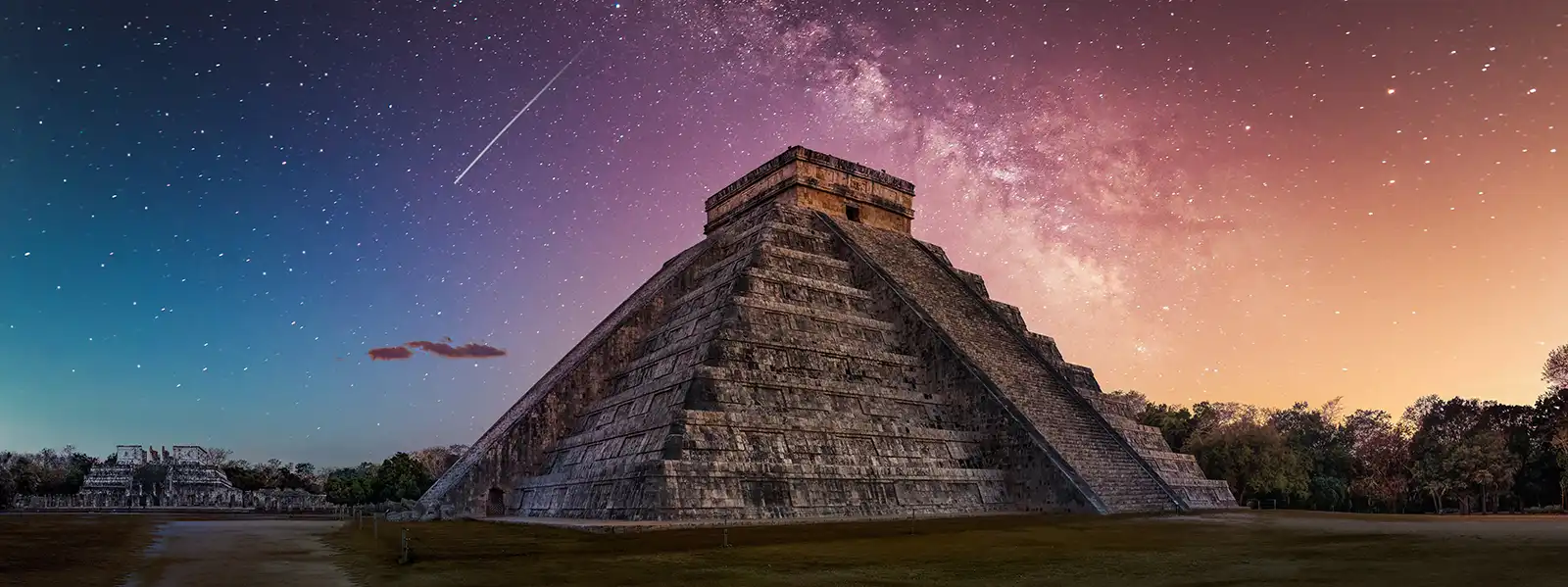
El Castillo at Chichén Itzá — the Maya calendar built in stone.
© jdross75 / Adobe Stock
Discover Yucatán
Mérida and Colonial Yucatán
Mérida, the state capital, is the cultural hub of the peninsula and one of Mexico's most appealing and safest cities — a colonial 'white city' founded on a Maya site, with a handsome historic centre of pastel buildings, a fortress-like cathedral (among the oldest in the Americas), shady plazas and bustling markets. The grand Paseo de Montejo, a tree-lined boulevard modelled on Parisian avenues, is lined with the belle-époque mansions built by henequen (sisal) barons, some now museums like the Palacio Cantón. Mérida is famous for its lively cultural life — free music, dance and the Vaquería folk performances fill its squares most nights, and there's a strong food and arts scene. Around the city, the old henequen haciendas — vast estates from the sisal boom — have been beautifully restored as boutique hotels and museums, and the colonial towns of the interior, above all the colourful, walkable Valladolid and the entirely golden-yellow town of Izamal (a 'pueblo mágico' built around a Franciscan monastery on a Maya pyramid), make rewarding bases and day trips.
Chichén Itzá, Uxmal and the Maya World
Yucatán holds some of the greatest archaeological sites of the ancient Maya. Chichén Itzá, between Mérida and Valladolid, is the most famous — a vast ceremonial city dominated by the perfectly proportioned stepped pyramid of El Castillo (the Temple of Kukulcán), where the equinox sun casts a serpent of shadow down the staircase, alongside the great ball court, the Temple of the Warriors and the sacred cenote. A UNESCO World Heritage Site and one of the New Seven Wonders of the World, it draws crowds, so arrive at opening time. To the south, Uxmal is a magnificent and far quieter site in the ornate Puuc style — the rounded Pyramid of the Magician, the elegant Nunnery Quadrangle and the Governor's Palace — and the Puuc Route links it to smaller, atmospheric ruins like Kabah and Sayil. Other sites such as Ek Balam (with its well-preserved stucco and a pyramid you can still climb) and Mayapán reward those wanting fewer visitors. Together they tell the story of one of the Americas' great civilisations, set in dry tropical forest.
Cenotes, Flamingos and the Coast
Beneath Yucatán's flat limestone surface lies a hidden world of water: the cenotes, thousands of freshwater sinkholes formed where the cave roof collapsed, ranging from open turquoise pools to vast, dimly lit underground caverns hung with stalactites and tree roots. Sacred to the ancient Maya as gateways to the underworld, today the clearer ones are sublime swimming holes — among the most magical experiences in the region — clustered especially around Valladolid, Cuzamá and the 'Ring of Cenotes'. On the coasts, the state's lagoons are a wildlife spectacle: Celestún, on the Gulf, and Río Lagartos, on the north coast, shelter great flocks of pink Caribbean flamingos along with herons, ibis and pelicans, explored by boat through mangroves (Río Lagartos also has the surreal pink salt lakes of Las Coloradas nearby). The Gulf-coast town of Progreso, with its long pier and beach, offers an easy seaside day from Mérida. Add the distinctive Yucatecan cuisine — cochinita pibil (slow-roasted pork), sopa de lima, papadzules, panuchos and the smoky recado spices — and Yucatán is a feast for the curious traveller.
Ways to Experience This Destination
Graceful Mérida and the Paseo de Montejo, colourful Valladolid and the golden town of Izamal.
Chichén Itzá and El Castillo, the ornate Puuc style of Uxmal, and the quieter Ek Balam.
Swimming in the turquoise freshwater sinkholes, from open pools to vast underground caverns.
The pink flamingos of Celestún and Río Lagartos and the distinctive Yucatecan food.
Frequently asked questions
Is Yucatán state the same as Cancún and the Riviera Maya?
How do I visit Chichén Itzá and avoid the crowds?
What are cenotes and where can I swim in them?
When is the best time to visit Yucatán?
Cities in Yucatán
Treat this Visaja page as your starting point: verify the current rules directly with the official source before you submit an application.