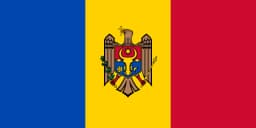
Moldova
Phone Code
+373
Capital
Chișinău
Population
2.4M (2024)
Languages
Romanian · Moldovan
Area
33,844 km²
Electricity
220 V
Plug types
Europlug · Schuko
Driving side
right
Native Name
Moldova
Region
Europe
Eastern Europe
Timezone
Eastern European Time
UTC+02:00
On This Page
Moldova is a landlocked Eastern European country between Romania and Ukraine, one of Europe's smallest and least-visited nations. A former Soviet republic (independent 1991), Moldova is one of Europe's poorest countries but has rich wine-making tradition dating back 5,000 years. Chișinău, the capital, has Soviet-era architecture, parks, and emerging café culture. Moldova is linguistically and culturally Romanian but politically separate - complex history includes Romanian rule (1918-1940), Soviet occupation (1940-1991), and current identity debates. IMPORTANT: Transnistria, a narrow strip along eastern border with Ukraine, is a breakaway region not controlled by Moldova (de facto independent since 1992, unrecognized by UN). Visitors are drawn to underground wine cities Cricova and Milestii Mici (world's largest wine cellars, 1.5-2 million bottles, UNESCO candidate), Orheiul Vechi cave monastery, Chișinău's Soviet architecture and parks, traditional villages, very affordable travel (cheapest country in Europe), wine tourism, and Transnistria 'Soviet time capsule' experience. Moldova offers authentic Eastern European experience, excellent wine, and extreme affordability with limited tourism infrastructure.
Visa Requirements for Moldova
Moldova has liberal visa policies for tourism. Citizens of the United States, Canada, United Kingdom, EU member states, Australia, New Zealand, Japan, and many other countries can enter visa-free for up to 90 days within any 180-day period. E-visas are available online for nationalities not eligible for visa-free entry. Passport must be valid for at least 3 months beyond departure. No registration required for stays under 90 days. Moldova's visa policies are relatively open to encourage tourism to one of Europe's least-visited countries. IMPORTANT: Transnistria (breakaway region) has separate entry procedures - technically requires 'registration' within 24 hours for stays beyond day trips, though enforcement varies. Transnistria is commonly visited from Moldova as a day trip — but the region borders Ukraine, so check your government's current travel advisory before including it in plans. Moldova is a candidate for EU membership (status granted 2022) which may eventually lead to Schengen integration.
Common Visa Types
Visa-Free Entry
For tourism or business for US, UK, EU, Canada, Australia and 100+ other countries.
E-Visa
For nationalities not eligible for visa-free entry, applied online before travel.
Embassy Visa
Traditional visa obtained through Moldovan embassy for those not eligible for e-visa or visa-free entry.
Transnistria Registration
Separate entry procedure for visiting Transnistria breakaway region.
Important Travel Information
Moldova is one of Europe's least-visited countries — and one of its most rewarding for travellers seeking authentic experiences away from tourist crowds. The world's highest density of vineyards per capita sustains a wine culture dating back 5,000 years, with Cricova and Milestii Mici operating the world's largest underground wine cellars (over 200 km of tunnels). Chisinau, the capital, mixes Soviet-era architecture with a growing cafe and restaurant scene. The countryside offers Orthodox monasteries (Orheiul Vechi cave monastery is spectacular), rolling hills, and a pace of life that feels decades removed from Western Europe. Transnistria, the self-declared breakaway republic, offers a surreal day-trip into a Soviet time capsule.
Discover Moldova
Moldova's signature attraction is literally subterranean: former limestone mines converted into wine cities where the scale stops being a metaphor. Cricova's 120 km of tunnels have street names, traffic signs and tasting halls — visits are by guided vehicle tour through avenues named for the grape varieties aging alongside, past the private collections of visiting heads of state and a bottle stock that includes Göring's captured wines. Milestii Mici holds the Guinness record for the world's largest wine collection, its 'Golden Collection' stretching along a fraction of 200 km of galleries. Both sit within a half-hour of Chisinau, and both require booking ahead — these are working cellars with scheduled tours, not drop-in venues. Surface-level wine culture completes the picture: Castel Mimi's restored château, Purcari's flagship reds near the Ukrainian border, and family wineries where the tasting happens at the family table. Time a visit for Wine Day, the first October weekend, when the producers set up in Chisinau's central square.
Ways to Experience This Destination
Moldova's wine heritage is its standout attraction. Cricova (120 km of underground streets, where Putin and Merkel stored personal collections), Milestii Mici (the world's largest wine collection by Guinness record, 200+ km of tunnels), Chateau Purcari, and dozens of family wineries offer tastings and tours. The annual Wine Day festival (first weekend of October) fills Chisinau's central square. Moldovan wines — especially Feteasca Neagra, Rara Neagra, and ice wines — are gaining international recognition.
Orheiul Vechi (Old Orhei), a cave monastery carved into limestone cliffs above the Raut River, is Moldova's most photogenic site. Curchi Monastery, Capriana Monastery, and Saharna Monastery offer peaceful retreats in forested countryside. Moldova's Orthodox Christian heritage is deeply embedded in daily life and architecture.
The self-declared Pridnestrovian Moldavian Republic — a narrow strip of land along the Ukrainian border with its own currency, army, and Soviet-era aesthetics — is one of Europe's most unusual day trips. Tiraspol, the capital, features Lenin statues, a Soviet tank memorial, and the Kvint cognac factory. Day trips (under 10 hours) require no advance registration; overnight stays require OVIR registration.
Moldova's countryside — rolling hills, sunflower fields, walnut orchards, and villages where horse carts share the road with cars — offers a pace of life increasingly rare in Europe. Homestays (casa rurala) provide authentic immersion in Moldovan hospitality, home cooking, and winemaking traditions. The Codru forest reserve and Dniester River valley are highlights for nature lovers.
Money & Currency
Moldovan Leu (MDL)
Currency code: MDL
Practical Money Tips
Moldova uses the Moldovan leu (MDL)
The local currency is the Moldovan leu (MDL, plural lei), trading at roughly 19–20 MDL per euro. Euros and US dollars are the preferred currencies for exchange. Banks and licensed exchange offices (casă de schimb valutar) in Chisinau offer competitive rates. Airport exchange is available but rates are less favourable. Bring clean euro notes for the best experience.
ATMs available in Chisinau and major towns
ATMs are widely available in Chisinau and accessible in larger towns like Balti, Comrat, and Tiraspol (Transnistria uses its own currency). Most accept Visa and Mastercard. Maestro cards work at some bank ATMs (Moldova Agroindbank, Victoriabank). Withdrawals are in lei. Outside major towns, ATM availability drops — carry cash when heading to rural areas or monasteries.
Cards accepted in Chisinau, cash preferred elsewhere
Card payments (Visa, Mastercard) are accepted at hotels, restaurants, supermarkets, and shops in Chisinau and larger cities. Contactless payments are growing. In smaller towns, markets, rural homestays, and local transport, cash is essential. Wine cellars and monasteries often prefer cash for entrance fees and purchases.
Transnistria has its own currency
If visiting Transnistria, note that it uses the Transnistrian ruble (PRB) — not accepted anywhere else in the world. Exchange euros, dollars, or Moldovan lei at exchange offices in Tiraspol or Bendery. Moldovan lei and euros are sometimes accepted informally. ATMs in Transnistria dispense Transnistrian rubles. Spend all PRB before leaving — they cannot be exchanged outside Transnistria.
Note: Always check current exchange rates before traveling. Currency exchange is available at airports, banks, and authorized money changers.
Moldova — Embassies worldwide
Popular Destinations
Top destinations with verified missions
All Countries by Continent
Embassies in Moldova
These foreign embassies and consulates are based here. Choose a mission to open its in-depth guide and contact details.
Key origin countries


All countries by continent
Accredited missions for Moldova
Citizens of the US, Canada, UK, EU member states, Australia, New Zealand, Japan and many other countries can enter visa-free for up to 90 days within any 180-day period. Other nationalities can apply for an e-visa online.
Yes, as a day trip from Chișinău — under 10 hours requires no advance registration. Overnight stays require registering with the OVIR office within 24 hours. Transnistria is a breakaway region with its own currency and border checkpoints, not internationally recognised.
It has a 5,000-year winemaking tradition and the world's highest density of vineyards per capita. Cricova and Milestii Mici operate two of the world's largest underground wine cellars, with over 200 km of tunnels between them.
Treat this Visaja page as your starting point: verify the current rules directly with the official source before you submit an application.