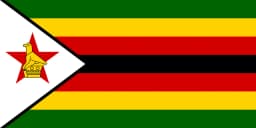
Zimbabwe
Phone Code
+263
Capital
Harare
Population
15.2M (2022)
Languages
English · Shona · Northern Ndebele · Chewa · Barwe
Area
390,757 km²
Electricity
220 V
Plug types
AC power plugs and sockets: British and related types · BS 1363
Driving side
left
Native Name
Zimbabwe
Region
Africa
Eastern Africa
Timezone
Central Africa Time
UTC+02:00
On This Page
Zimbabwe is a 391,000-square-kilometre landlocked country in southern Africa, bordered by South Africa to the south, Botswana to the south-west, Zambia to the north (along the Zambezi River) and Mozambique to the east. The 16 million Zimbabweans speak English (the official language of administration, education and business), Shona (the language of the majority), Ndebele (the dominant language of Matabeleland in the south-west) and 14 further recognised national languages. The country is most associated with three of Africa's signature attractions on its northern border with Zambia: Victoria Falls (the 1.7-km-wide curtain of water on the Zambezi, the largest single sheet of falling water in the world, designated UNESCO World Heritage in 1989), Hwange National Park (Zimbabwe's flagship reserve, 14,650 km² in the north-west, with one of Africa's largest concentrations of elephants and the full Big Five) and Mana Pools National Park (UNESCO-listed Zambezi-front reserve in the lower Zambezi valley, famous for walking safaris and canoe trips). Beyond the safari core, the country holds the medieval stone-walled ruins of Great Zimbabwe near Masvingo (capital of the 11th-15th-century Kingdom of Zimbabwe and the source of the country's name; UNESCO 1986), the Matobo Hills (UNESCO-listed granite kopjes near Bulawayo with the rock art of the San and Cecil Rhodes' grave), the Eastern Highlands tea-and-mountain country around Nyanga and Bvumba, the Midlands and the Lake Kariba reservoir on the Zambian border. Tourism is one of the country's main international sectors, and Victoria Falls, Hwange and Mana Pools are operated by experienced safari companies (Wilderness, Imvelo, African Bush Camps, Bushlife, Goliath, Vundu) at a level of guiding that is widely regarded as among the best in Africa. The Kavango Zambezi Transfrontier Conservation Area (KAZA), the giant cross-border park linking Zimbabwe, Zambia, Botswana, Angola and Namibia, has its own KAZA UNIVISA — a fixed-fee visa that lets travellers move freely between Zimbabwe and Zambia (and day-trip into Botswana) for 30 days. Currency life is unusual: Zimbabwe issued the gold-backed ZiG (Zimbabwe Gold) in April 2024, but the US dollar circulates more or less universally in tourism and the mainstream economy. Cuisine — sadza (the maize-meal staple eaten with stew and greens), nyama (grilled meat), mbeu (peanut-and-vegetable dishes), mopane worms (a traditional Shona delicacy) — and the legendary Zimbabwean bush-guide tradition (Hwange's old hands trained generations of Africa's safari guides) make the country a destination travellers return to.
Visa Requirements for Zimbabwe
Zimbabwe runs a tourist-friendly visa system that uses three layers. The Government of Zimbabwe e-Visa portal at evisa.gov.zw allows citizens of essentially every nationality to apply online before travel and present an electronic approval at the border. Visa on arrival is also available at all major international entry points — Robert Mugabe International Airport (Harare, HRE), Victoria Falls International Airport (VFA), Joshua Mqabuko Nkomo International Airport (Bulawayo, BUQ), the Beitbridge border with South Africa, the Victoria Falls/Livingstone border with Zambia, the Kazungula border with Botswana and a number of other land borders — for the same fee, paid in US dollars at the immigration desk. For most Western nationalities (the so-called Category B), single-entry, double-entry and multiple-entry tourist visa fees are charged on a tiered scale, with US passport holders on a separate reciprocity-based scale — check the current amounts on evisa.gov.zw before booking. Some nationalities (Category A — most African Union states, the Caribbean Community, parts of Asia) enter visa-free; others (Category C) require an advance application. Passport must be valid at least 6 months from the date of entry with at least 3 blank pages. A separate KAZA UNIVISA, available at Robert Mugabe and Victoria Falls international airports and at the Victoria Falls/Livingstone and Kazungula land borders, charges a fixed fee (check the current amount on evisa.gov.zw) and lets the holder move freely between Zimbabwe and Zambia (and day-trip into Botswana via the Kazungula bridge) for 30 days — the standard choice for travellers doing the Victoria Falls + Chobe combination. A yellow fever certificate is required only if you have travelled in or transited through countries with yellow fever transmission risk (most sub-Saharan Africa and parts of South America). Visa rules and the KAZA UNIVISA participating airports have changed several times — verify the current rules on evisa.gov.zw before booking. UK and Irish travellers should note that Zimbabwean consular services in London are no longer issuing visas; the e-visa or visa on arrival is the standard route.
Common Visa Types
Visa on Arrival (Category B)
Tourism and short-term business visits for citizens of around 50 Category B nationalities — including the EU, UK, US, Canada, Australia, New Zealand, Switzerland, Norway, Japan and the rest of the Western and Asian-developed world.
Zimbabwe e-Visa
Tourism and short-term business visits applied online before travel through the official Government of Zimbabwe e-Visa portal, valid for citizens of all nationalities including those in Category C who require advance approval.
KAZA UNIVISA (Zimbabwe + Zambia + Botswana Day Trips)
Travellers combining Victoria Falls (Zimbabwe and Zambia sides), Chobe (Botswana day-trips) and the wider Kavango Zambezi Transfrontier Conservation Area — the standard choice for the classic Vic Falls + Chobe + Hwange circuit.
Visa-Free Entry (Category A)
Tourism and short visits for citizens of African Union member states, the Caribbean Community (CARICOM), Hong Kong, Macao, Mauritius, the Seychelles, Cyprus, Malta and a few others under reciprocal agreements.
Important Travel Information
Zimbabwe is one of Africa's classic safari and natural-wonder destinations, anchored by Victoria Falls, Hwange and Mana Pools and supported by an exceptionally well-trained guiding tradition that has shaped southern-African safari standards for decades. Most trips begin or end at Victoria Falls — accessible directly via Victoria Falls International Airport (VFA) from Johannesburg, Cape Town, Nairobi, Addis Ababa and seasonally Doha and Dubai — where the 1.7-km-wide curtain of the Zambezi falls 108 m into the gorge below, generating the spray cloud that gives the falls their Toka-Leya name “Mosi-oa-Tunya” (the smoke that thunders). The Zimbabwean side of the falls offers the longer, more panoramic walking trail along the rim with viewing points at the Devil's Cataract, the Main Falls and the Knife-Edge Bridge; the town of Victoria Falls itself runs adventure activities — bungee from the 1905 Victoria Falls Bridge over the Zambezi gorge, white-water rafting on the Zambezi rapids, the Devil's Pool natural infinity pool on the Zambian side, sundowner cruises on the river and helicopter Flight of Angels over the falls. Hwange National Park, three hours south by road or a short charter flight, is the country's flagship reserve at 14,650 km² — one of Africa's largest concentrations of elephants (40,000+), full Big Five, and a network of camps from luxury (Linkwasha, Davison's, Bomani, Camp Hwange) to budget self-catering inside the park. Mana Pools National Park on the Zambezi (UNESCO 1984) is the country's most distinctive park: pristine river-front floodplain studded with mahogany and acacia winterthorn, walking safaris on foot through resident lion and elephant, canoe trips down the Zambezi between Mana and Kanyemba. The Eastern Highlands around Nyanga, the Bvumba near Mutare and the Chimanimani are tea-and-mountain country with historic hotels (Troutbeck Inn, Bvumba's Leopard Rock), waterfalls and granite peaks. Bulawayo, the second city in Matabeleland, is the gateway to the Matobo Hills (UNESCO 1986) with its San rock art at Nswatugi and Pomongwe, the Whovi rhino sanctuary and Cecil Rhodes' grave on the World's View kopje. Great Zimbabwe near Masvingo (UNESCO 1986) — the medieval stone-walled capital of the 11th-15th-century Kingdom of Zimbabwe and source of the country's name — is the country's most important historical site. Lake Kariba on the Zambian border is houseboat-and-tigerfish country. Cuisine — sadza (maize meal) and nyama (grilled meat), the long-established Mbare and Mufakose markets in Harare, mbeu (peanut sauce) — and a notable specialty-coffee scene in Harare's Avondale and Borrowdale neighbourhoods sit alongside the safari-camp standard.
Discover Zimbabwe
Zimbabwe's professional guide licence is widely considered the hardest to earn on the continent — years of apprenticeship followed by a notoriously demanding written, oral and practical exam covering bird calls, tracking, first aid, dangerous-game protocol and rifle handling under pressure. The pass rate is famously low, and the licence carries weight far beyond the country's borders — camps elsewhere in southern and eastern Africa advertise a Zimbabwe-licensed guide as a credential in its own right. Hwange and Mana Pools, both built around walking safaris, are where that training shows most directly — guides who read tracks, wind direction and animal behaviour as a matter of course rather than relying on radios and vehicles to find game.
Ways to Experience This Destination
Victoria Falls — Mosi-oa-Tunya, “the smoke that thunders” — is the 1.7-km-wide curtain of the Zambezi River falling 108 m into the gorge below; the largest single sheet of falling water in the world, UNESCO World Heritage since 1989. The Zimbabwean side offers the longer panoramic walking trail along the rim with viewing points at the Devil's Cataract, the Main Falls and the Knife-Edge Bridge; the river above the falls runs sundowner cruises, and the gorge below carries world-class white-water rafting (best low-water July-November). The town of Victoria Falls runs bungee from the 1905 Bridge, helicopter Flights of Angels and quick crossings to the Zambian side and Livingstone. Best months April-October (cool dry season).
Hwange National Park, 14,650 km² in the north-west three hours south of Victoria Falls, is Zimbabwe's flagship safari reserve and home to one of Africa's largest concentrations of elephants — over 40,000 — alongside lion, leopard, buffalo and white rhino, plus the painted dog (African wild dog) for which Hwange is one of the best places on the continent. Camps run from luxury fly-in (Linkwasha, Davison's, Camp Hwange, Little Makalolo) to mid-range tented (Bomani, Nantwich) to budget self-catering; the park's old guides set the standard for southern-African safari guiding for generations. Best September-November (dry season, water-pan concentration).
Mana Pools National Park (UNESCO 1984) lines a 50-km stretch of the lower Zambezi between Sapi and Chewore, opposite Zambia's Lower Zambezi National Park. Pristine flood-plain studded with mahogany and winter-thorn acacia where elephants stand on hind legs to feed; herds of buffalo, lion prides, leopard and one of Africa's most reliable wild-dog populations; the park is one of the few in southern Africa where walking safaris with armed guides and canoe trips on the Zambezi between camps are the standard format rather than the exception. Camps include Vundu, Goliath, Bushlife, Kanga and the seasonal John's Camp. October is the wildlife peak; the park closes during the wet season (December-March).
Great Zimbabwe near Masvingo (UNESCO 1986) is Africa's largest medieval stone-walled monument, the medieval capital of the 11th-15th-century Kingdom of Zimbabwe and source of the country's name. The Hill Complex, the Great Enclosure with its 11-m conical tower and the Valley Ruins remain remarkably intact. The Matobo Hills near Bulawayo (UNESCO 1986) are a granite-kopje landscape with the densest concentration of San rock art in southern Africa (Nswatugi, Pomongwe, Bambata caves), the Whovi rhino sanctuary, the World's View ridge with Cecil Rhodes' grave and a long Ndebele cultural depth — Mzilikazi and his successors based their kingdom in the same hills.
Lake Kariba — the world's largest man-made reservoir by volume, formed in 1958 by the Kariba Dam on the Zambezi between Zimbabwe and Zambia — is one of southern Africa's distinctive boat-and-fishing destinations. Houseboats from Kariba town and Binga sleep up to 12 and run multi-day cruises along the Matusadona shoreline (the dry-drowned mopane woodland whose silver tree skeletons rise from the lake at low water), with fishing for tigerfish, swimming on remote bays and game-viewing of elephant and crocodile from the water. Matusadona National Park, on the southern shore, is one of Zimbabwe's classic walking-safari parks with a small handful of bush camps.
The Eastern Highlands run along Zimbabwe's border with Mozambique — Nyanga in the north (with Mt Nyangani, the country's highest peak, the World's View viewpoint, the Pungwe Falls and the historic Troutbeck Inn for trout fishing and afternoon tea), Bvumba near Mutare (mountain tea estates, the Leopard Rock Hotel, the Vumba Botanical Gardens) and Chimanimani in the south (a granite-quartzite range with one of Africa's best multi-day mountain treks, crossing the Mozambique border in places). The contrast with Hwange and Mana Pools — mountain mist, pine plantations, trout streams, tea — is the country's other natural face.
Money & Currency
Zimbabwe Gold (ZiG, since April 2024), U.S. Dollar widely used
Currency code: ZWL
Practical Money Tips
Two Currencies: US Dollar and ZiG
Zimbabwe runs a dual-currency system. The ZiG (Zimbabwe Gold), introduced in April 2024 and backed by gold and foreign-currency reserves, is the local unit for everyday Zimbabwean transactions — but the US dollar circulates universally in tourism, and safari camps, hotels, restaurants and activity operators quote and settle their prices in USD. As a visitor you can treat USD as your working currency from arrival to departure.
Small-Denomination USD Bills Are the Key
Bring your USD in small denominations — ones, fives, tens and twenties cover tips, curios, park fees and incidentals, and torn or older-series bills are sometimes refused. Change at tourist-facing businesses is often given in a mix of USD and ZiG, so keep loose track of both. In Bulawayo and the south, the South African rand is also widely accepted.
ATMs Dispense USD but Are Unreliable
ATMs in Harare, Bulawayo and the Victoria Falls tourism corridor dispense US dollars, but machines run out of cash, impose daily withdrawal limits and thin out quickly outside the cities. Treat ATMs as a top-up option, not a plan — arrive with the cash your itinerary needs.
Cards Work Upscale, Cash Everywhere Else
Visa and Mastercard are accepted at upscale hotels, lodges and city supermarkets, but acceptance is unreliable elsewhere and remote safari camps often require cash or advance payment by international transfer. Confirm payment arrangements with camps and operators before you travel.
Note: Always check current exchange rates before traveling. Currency exchange is available at airports, banks, and authorized money changers.
Zimbabwe — Embassies worldwide
Popular Destinations
Top destinations with verified missions
Embassies in Zimbabwe
These foreign embassies and consulates are based here. Choose a mission to open its in-depth guide and contact details.
Key origin countries


All countries by continent
Accredited missions for Zimbabwe
Argentine Embassy in Pretoria
Based in Pretoria, South Africa
Austrian Embassy in Pretoria
Based in Pretoria, South Africa
Embassy of Ireland in Lusaka
Based in Lusaka, Zambia
New Zealand High Commission in Pretoria
Based in Pretoria, South Africa
Peruvian Embassy in Pretoria
Based in Pretoria, South Africa
Most nationalities do. Citizens of the EU, UK, US, Canada, Australia, New Zealand and most of the developed world (Category B) can get a visa on arrival at any major airport or land border, or apply in advance through the official e-Visa portal at evisa.gov.zw. Citizens of most African Union states, CARICOM countries and a few others (Category A) enter visa-free for short stays. Fees are charged in cash US dollars and vary by nationality and number of entries — check evisa.gov.zw for the current amount for your passport.
The KAZA UNIVISA is a joint Zimbabwe-Zambia visa that also permits day trips into Botswana via the Kazungula bridge. It's the standard choice for the classic Victoria Falls + Chobe + Hwange circuit, since it removes the need for separate visas at each border crossing. It's available at the main international airports and land borders on the Zimbabwean and Zambian sides — check the current fee and validity period on evisa.gov.zw before travel.
The Zimbabwean side gives the longer, more panoramic rim walk with views of nearly the entire falls face, while the Zambian side (Livingstone) gets closer to the water, including the Devil's Pool infinity pool in the dry season. Many travellers cross the bridge and see both. Water level matters too: the Zimbabwean panoramic view is at its most spectacular in the high-water months of February-May, though heavy spray can obscure the view at peak flow, while the drier months (July-December) give clearer visibility and open access to the Zambian-side Devil's Pool.
Visaja keeps this page's contact details and visa guidance under continuous review — still, requirements can change at short notice, so confirm the essentials with the mission or the official government portal before you travel.