Visit Sharm El-Sheikh: Red Sea reefs, wrecks & Ras Mohammed
Apply for your eVisa- Population:73K
- Timezone:EET (UTC+2); EEST (UTC+3) late April to late October
- IATA:SSH
Overview
Sharm El-Sheikh is the resort town on the southern tip of the Sinai Peninsula — a chain of hotel bays on the Red Sea with coral reefs off its beaches, day boats to Ras Mohammed and the Thistlegorm, and Mount Sinai within reach on a night excursion.
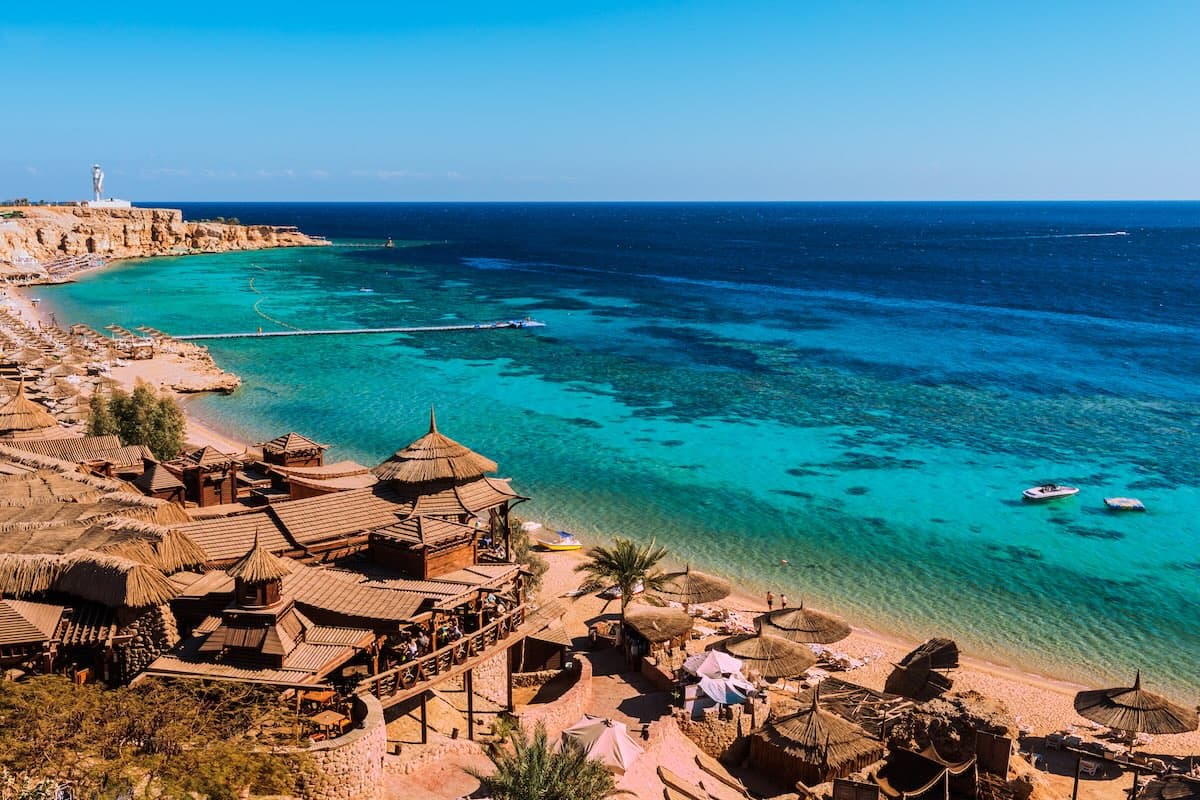
A South Sinai cove near Sharm El-Sheikh, where the reef shelf drops from turquoise shallows into open Red Sea blue.
© sola_sola / Adobe Stock
Travel
Sharm El-Sheikh lies on the southern tip of the Sinai Peninsula, where bare desert mountains come down to the Red Sea, and most of what draws visitors is under the water. Coral reefs begin a few metres off its beaches, and day boats leave every morning for the reefs and wrecks that cannot be reached from the shore. The resort is a chain of hotel bays along the coast rather than a town with one centre, and most visitors arrive on a direct holiday flight from Europe or a domestic flight from Cairo. The high mountains behind the coast are an excursion rather than a base, reached on a night or a day trip.
Arriving: the airport, the permit and the taxis
At Sharm El-Sheikh's airport the hotel bays begin almost at the perimeter, so most transfers are short; holiday bookings are met in the arrivals hall, and hotels send a driver when asked in advance. On arrival, eligible travellers choose between a full Egyptian visa and the Sinai-only permit, which covers the south of the peninsula but not the mainland — Cairo, Giza and the Nile Valley lie outside it — and the choice made in the arrivals hall stands for the whole trip. Within the resort, hotel shuttles and taxis do most of the work. Taxis are unmetered, so the fare is agreed before getting in, and the hotel desk knows what a given run should cost; ride-hailing apps are patchy here, and no plan should depend on one.
Choosing a bay: Naama Bay, Sharks Bay, Ras Um Sid and Nabq
Naama Bay is the nearest thing Sharm has to a centre: a sandy bay lined with hotels, with a pedestrian promenade of restaurants, cafés, shisha bars and shops behind it that stays busy late into the evening. Its own reef is decent for snorkelling, but the better shore reefs lie at Sharks Bay, to the north, and Ras Um Sid, to the south, where hotels stand on the cliffs above the reef. Nabq, north of the airport, holds many of the large all-inclusive resorts; it is the furthest from Naama Bay's evenings, and its reef is reached less directly from the beach. Alcohol is served in the resort hotels and in the bars and restaurants of Naama Bay.
The house reefs: snorkelling and diving from the shore
The house reefs are the easiest way into the Red Sea: a jetty or walkway crosses the shallow reef flat to the edge, and from its ladder the reef slope drops away below. The reefs at Ras Um Sid and around Sharks Bay are dived from the shore as well as snorkelled, and parrotfish, wrasse and lionfish are around a swimmer within a few metres of the edge. The reef flat is fragile and sharp underfoot: enter only from the jetty or a marked gap, keep fins clear of the coral, and stay near the ladder when a current runs along the edge.
Ras Mohammed National Park
Ras Mohammed is the southern tip of the Sinai, where the Gulf of Suez and the Gulf of Aqaba meet, and its reefs are protected as a national park. The park's signature dive is Shark Reef and Yolanda Reef: on the open-sea side the wall falls into deep blue water, schools of barracuda and jacks often gather off it, and the cargo of the freighter Yolanda — toilets and bathtubs among it — lies scattered across the reef. Divers reach the park on day boats from Sharm. By road it is a short drive south of the resort, and its beaches let snorkellers swim out to the reef from the shore; the park also takes in a mangrove channel and long stretches of desert coast.
The Thistlegorm and the wrecks of the Strait of Gubal
The SS Thistlegorm, a British cargo ship sunk in 1941, lies at about 30 metres in the Strait of Gubal with trucks and motorcycles still in its holds. Day boats from Sharm take three to four hours each way, so the day starts before dawn; liveaboards take it in on a circuit of the northern Red Sea. Depth and currents make it a dive for experienced divers, and dive centres usually ask for advanced certification. On busy days many boats moor over the wreck at once, and the earliest dives of the day meet the fewest divers. Liveaboard routes often add the reef of Abu Nuhas, where several more ships lie wrecked, and the Dunraven lies closer to Sharm, near Ras Mohammed.
Beyond the coast: Dahab, the desert and Mount Sinai
Much of South Sinai is within a day's reach of the resort: Dahab lies about 90 minutes up the Gulf of Aqaba coast, evening trips into the desert by jeep, quad bike or camel end with dinner at a Bedouin camp, and Mount Sinai is a night excursion of about three hours' drive each way, timed so that the climb reaches the summit at sunrise, with St Catherine's Monastery visited on the way back. Before booking a trip inland, read your own government's current travel advice and Egypt's health and safety basics.
Frequently asked questions
How many days do I need in Sharm El-Sheikh?
When is the best time to visit Sharm El-Sheikh?
Can I see the reefs without diving?
Is Sharm El-Sheikh a good place to learn to dive?
This overview comes from Visaja's worldwide missions database (visaja.com), checked against official government sources; for binding answers, the mission itself always has the final word.