Papua New Guinea
Phone Code
+675
Capital
Port Moresby
Population
8.9M (2020)
Languages
English · Tok Pisin · Hiri Motu · Papua New Guinean Sign Language
Area
462,840 km²
Electricity
240 V
Plug types
AS/NZS 3112
Driving side
left
Native Name
Papua Niugini
Region
Oceania
Melanesia
Timezones
Bougainville Time
UTC+11:00
+1 more
On This Page
Papua New Guinea (PNG) is a Pacific island nation occupying the eastern half of the island of New Guinea, plus the offshore islands of New Britain, New Ireland, Bougainville, Manus and the Trobriand and D'Entrecasteaux groups; the western half of the New Guinea landmass is Indonesian Papua. The capital is Port Moresby on the south coast, and the country has a population of around 9 million. Tropical rainforest covers roughly three-quarters of the country, and the rugged Highlands range forms the central spine. PNG is the world's most linguistically diverse country, with over 800 indigenous languages across an estimated 7,000 distinct cultural groups, and English, Tok Pisin and Hiri Motu are the three official languages. PNG achieved independence from Australia, the former trustee, on 16 September 1975. Most international travellers apply through the official PNG e-visa portal of the Immigration and Citizenship Authority (ICA) at evisa.ica.gov.pg; the currency is the Papua New Guinean Kina (PGK), and Port Moresby's Jacksons International Airport (POM) is the principal gateway.
Visa Requirements for Papua New Guinea
Most international visitors — including all EU, UK, US, Canadian, Australian, New Zealand, Japanese, Singaporean, Indian and most other passport holders — apply through the official PNG e-visa portal of the Immigration and Citizenship Authority (ICA) at evisa.ica.gov.pg before travel; entry without a valid e-visa is refused at all international ports. Visa-free entry is limited to nationals of a small number of Pacific Forum and partner states under bilateral agreements, so almost all travellers should plan to apply in advance. Separately from any visa, every traveller — visa holders, the visa-free minority and PNG citizens alike — must also complete the Papua New Guinea Digital Arrival Card (PNGDAC), the free online form that replaced the paper Incoming Passenger Card in October 2025. A yellow-fever vaccination certificate is required only for travellers arriving from a country in the WHO yellow-fever transmission zone (most of mainland Africa and parts of South America); PNG is a year-round malaria-endemic country, so malaria prophylaxis is a separate pre-travel medicine decision regardless of visa type. See the tourist, business, APEC and work/study/dependant categories below for the specific application requirements and durations. Verify your home country's current travel advisory before booking.
Common Visa Types
Tourist E-Visa (60 Days)
Tourism, cultural travel, family visits and short-stay leisure for almost all non-exempt nationalities — applied online at evisa.ica.gov.pg before travel. The standard option for the Highlands sing-sing festival circuit, the Kokoda Track trek, Kimbe Bay or Milne Bay diving, the Sepik carving regions and Port Moresby city stays.
Business E-Visa
Business meetings, conferences, trade negotiations and short-term professional activity in PNG. The PNG LNG project, Ok Tedi and Porgera mining, the BSP Financial Group banking presence and Port Moresby's role as the principal Pacific financial centre outside Australia and New Zealand drive the business segment.
APEC Business Travel Card
Pre-cleared multi-entry business travel for APEC Business Travel Card (ABTC) holders, valid across PNG and the other participating APEC economies. Pacific business travel community uses the ABTC as the standard mobility tool.
Work, Study & Dependant Visas
Employment with a PNG-registered employer (mining, petroleum, NGO, consulting, education, healthcare and the diplomatic and aid sector are the major expatriate segments), full-time study at the University of Papua New Guinea, the PNG University of Technology in Lae or Divine Word University in Madang, and dependants of work or study visa holders.
Important Travel Information
•Most international visitors apply online...
•Jacksons International Airport (POM) in...
•PNG is a year-round malaria-endemic...
•The currency is the Papua...
•English, Tok Pisin and Hiri...
•Papua New Guinea is among...
•Climate is tropical year-round with...
•Verify the current travel advisory...
•PNG cultural protocol is built...
•The Kokoda Track must be...
•Emergency numbers: 000 in Port...
Papua New Guinea is the cultural and natural showpiece of the south-west Pacific — a country the size of Sweden with the world's greatest concentration of indigenous languages, around 38 of the planet's 42 bird-of-paradise species, the Highlands sing-sing circuit, the Australian-Anzac Kokoda Track and Coral Triangle diving, all anchored by the coastal capital Port Moresby. From the capital, the Highlands, the Sepik River, the Trobriand Islands and New Britain each open up a genuinely different side of the country within a short domestic flight.
Discover Papua New Guinea
Why Parliament Haus Looks Like a Spirit House
Parliament Haus was deliberately designed in the form of a Sepik haus tambaran (spirit house) rather than a conventional Western government building, a choice intended to root the young nation's central institution in indigenous architectural identity rather than colonial precedent at a country with over 800 languages and no single dominant traditional culture to draw from. The National Museum and Art Gallery nearby holds the Ambum Stone, a carved stone figure whose exact age and original purpose remain debated by archaeologists, alongside a Sepik mask collection and Trobriand kula-canoe prow boards that together give first-time visitors a single-stop introduction to the material culture they'll encounter piecemeal elsewhere in the country.
Reading the Sing-Sing: What the Decoration Means
Sing-sing body decoration is built from specific, meaningful materials rather than generic costume: Huli Wigmen's ceremonial wigs are made from their own real hair, cultivated and shaped over months at dedicated wig schools, while the elaborate feather headdresses seen across the Highlands draw on bird-of-paradise plumes traditionally traded between clans precisely because the birds themselves are protected and not hunted for the purpose today. Clay-based face and body paint, as used by the Asaro Mudmen, historically doubled as a practical device — the stark white clay was said to frighten off rival groups — though today it functions purely as a performance tradition passed down within specific clans. Attending Mount Hagen or Goroka means booking accommodation many months ahead, since both shows draw visitors from across PNG and abroad into towns with limited hotel capacity.
Trekking Kokoda: What the Days Actually Look Like
A Kokoda trek runs as a fully supported expedition rather than a self-guided hike: licensed operators supply porters who carry the bulk of the gear, guides who set the daily pace and route, and overnight stops in village guesthouses or camping areas along the track rather than formal huts. Physical preparation matters more than technical skill — the terrain is steep, humid and often muddy rather than exposed or requiring climbing technique — and most operators recommend several months of hill-walking training beforehand. Villages along the route, including Naoro, Menari, Efogi and Kagi, host trekkers overnight and are part of the local economy the licensed-operator system is designed to support.
Why PNG Sits Inside the World's Richest Reef Waters
The Coral Triangle's exceptional biodiversity, of which PNG's waters hold a substantial share, results from the region sitting at the confluence of major Pacific and Indian Ocean currents combined with an unusually long, stable period of reef formation compared to more geologically disrupted reef systems elsewhere — conditions that let an outsized number of coral and fish species accumulate over millions of years. Practically, this means dive trip logistics vary by region: Kimbe Bay and Milne Bay run primarily from land-based resorts with day-boat access to nearby sites, while Kavieng's wreck diving and Madang's more scattered sites are more commonly covered by liveaboard itineraries that can reach multiple dive areas across a single trip.
Inside a Haus Tambaran: Purchasing Sepik Carvings Respectfully
Haus tambaran spirit houses function as initiation and ceremonial spaces for men in Sepik village society, which is why entry to the interior of an active haus tambaran is typically restricted to male initiates and why visitors, regardless of gender, should always ask a village guide before approaching or entering one rather than assuming open access. Carvings sold to visitors range from tourist-grade pieces made specifically for sale to genuinely ceremonial-quality work by recognised master carvers; asking a guide or the carver directly about a piece's purpose and maker is the most reliable way to understand what you're buying, and prices for master-carver pieces reflect that distinction significantly.
Why So Many Birds-of-Paradise Evolved in New Guinea
New Guinea's exceptional concentration of bird-of-paradise species is generally attributed to the island's fragmented mountain-valley geography combined with an abundance of fruit and low predation pressure, conditions that allowed sexual selection — females consistently choosing the most elaborately plumed and best-displaying males — to run to extremes over millions of years of relative isolation between populations. Kumul Lodge near Mount Hagen sits at high enough altitude to attract species like the Ribbon-tailed Astrapia and King of Saxony directly to feeders visible from the lodge itself, making it one of the few places in the world where several bird-of-paradise species can realistically be seen without a dawn trek into deep forest.
How the Kula Ring Actually Works
The kula exchange system moves two types of ceremonial valuables in fixed opposite directions around a ring of island communities: red shell-disc necklaces (soulava) travel clockwise while white shell armbands (mwali) travel counter-clockwise, so that any given participant is always both giving one type and receiving the other from different trading partners. The objects themselves carry no practical use value — their significance comes entirely from the prestige of having held and passed on a particular named piece with a known history of previous owners, a system anthropologist Bronislaw Malinowski used to challenge purely economic theories of exchange when he documented it in the 1910s. Modern kula expeditions still run seasonally by sailing canoe between islands, alongside the more prosaic outboard-powered boats now used for everyday travel.
Rabaul After the 1994 Eruption
When Mount Tavurvur and Mount Vulcan erupted simultaneously in 1994, ashfall was heavy enough across old Rabaul that the provincial government relocated permanently to nearby Kokopo rather than attempt a full rebuild, which is why Rabaul today is a much smaller town than its pre-1994 role as regional capital would suggest, with many original buildings still partially buried or visibly ash-damaged. Tavurvur remains active and is monitored continuously, and its accessibility — visitors can approach far closer than most active volcanoes permit — is largely because its current activity level is considered low enough for regulated viewing with a local guide rather than because the volcano is dormant.
How Bilum Bags Are Made
Bilum weaving uses a continuous looping technique worked entirely by hand without a loom, traditionally with fibre stripped from tree bark or plant stems and now often with commercial wool or acrylic yarn, built up stitch by stitch into a stretchy, expandable mesh that can hold loads far heavier than the bag's own weight. The skill is typically passed down from mother to daughter starting in childhood, and regional colour patterns and stitch styles can often identify roughly which province or even which language group a particular bilum comes from, similar to how tatreez patterns work elsewhere in the world.
Ways to Experience This Destination
Port Moresby is a 1- to 2-day orientation stop for most visitors: the Parliament Haus, designed in the style of a Sepik haus tambaran (spirit house), the Papua New Guinea National Museum and Art Gallery on Independence Hill (the country's pre-eminent collection of Highlands and coastal material culture, including the Ambum Stone, a Sepik mask collection and Trobriand kula-canoe prow boards), and the Bomana War Cemetery, the largest Allied war cemetery in the Pacific, on the foothills of the Hombrom Bluff near the start of the Kokoda Track at Owers' Corner. Adventure Park PNG and the Port Moresby Nature Park round out an easy first or last day before heading to the Highlands, Sepik or diving regions.
The great Highlands sing-sing cultural shows are the cultural showpiece of Papua New Guinea. The Mount Hagen Cultural Show (mid-August, Western Highlands) brings 50+ tribes from across the Highlands to the showground for two days of traditional dance, body decoration and song — the famous Huli Wigmen with their human-hair ceremonial wigs, the Asaro Mudmen of the Eastern Highlands with white clay body paint and clay masks, the Chimbu skeleton dancers, the Engan dancers and the spectacular plumed feather arrays of the Western Highlands. The Goroka Show on Independence Weekend (mid-September, Eastern Highlands) is the country's oldest cultural show — founded 1957 — and runs alongside the national Independence Day celebrations on 16 September. The smaller Enga Cultural Show in Wabag, the Sepik River Crocodile Festival in Ambunti and the Hiri Moale Festival on Port Moresby's Ela Beach round out the September festival window. Photography etiquette is to ask before taking close portraits and to give a small contribution.
The 96-kilometre Kokoda Track between Owers' Corner near Port Moresby and Kokoda village in the Oro Province is the central Australian-Anzac historic trek of the south-west Pacific, following the route of the WWII-era Kokoda campaign. The trek's significance in modern Australian national memory is why it is walked today. Today the trek takes 4 to 10 days (typically 7–8) through cloud forest, ridge climbs (the Maguli Range, Imita Ridge), village stops at Naoro, Menari, Efogi, Kagi and Isurava, and the central Isurava Memorial site. The trek must be done with a licensed Kokoda Track Authority operator (porters, guides, permit, village contributions are part of the package). Best season: April to November (the dry window). Anzac Day commemorations on 25 April are the busiest period at Isurava.
Papua New Guinea sits inside the Coral Triangle and its waters hold around 75% of the world's known coral species and over 2,000 reef-fish species — among the highest marine biodiversity counts on earth. Kimbe Bay (West New Britain) is the headline dive area, with Walindi Plantation Resort the long-standing reference base, pristine coral pinnacles, reef shark and barracuda action and warm 28–30 °C water year-round; Milne Bay (Alotau, the Tawali peninsula) is the macro and muck-diving capital of the south-west Pacific, with mantis shrimp, ghost pipefish, frogfish and the famous rhinopias slopes; Tufi on the Oro fjord coast offers wall and fjord diving from a single boutique lodge; Kavieng (New Ireland) is the big-fish action — barracuda, reef sharks, schools of jacks; and Madang on the north coast carries the Pacific Wahoo dive sites and the famous WWII Japanese Mavis flying-boat wreck. PNG diving is generally accessed via dedicated dive resorts or liveaboards (the Star Dancer and FeBrina liveaboards are the principal Coral Triangle vessels). Underwater visibility 20–40 m is standard.
The Sepik River is Papua New Guinea's largest river and the centre of the great Melanesian woodcarving tradition. Reached from Wewak (East Sepik) by road and boat to Pagwi or Ambunti, the Middle Sepik villages — Tambanum, Kanganamun, Yentchen, Palembei — carry the haus tambaran (spirit house) tradition: tall, sloping-roofed ceremonial houses fronted by carved ancestor masks and decorated with painted gables, often accessible by male initiates only. The Iatmul people are the principal carvers; ancestral masks, crocodile-form drums, story boards (sometimes called Kambot boards), shell-and-cowry headdresses and ceremonial hooks are produced for both ritual and the international art market. River travel is by motorised dugout or guided river boat; dry-season access (May–October) is the standard window. The Sepik River Crocodile Festival in Ambunti each August is a substantial cultural event in its own right.
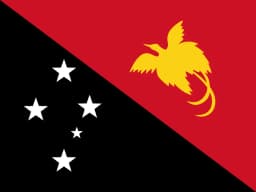
Papua New Guinea is home to around 38 of the world's 42 bird-of-paradise species — the famous Raggiana (the national bird, on the PNG flag and 50-toea coin), the Blue Bird-of-Paradise, the Lesser Bird-of-Paradise, the King of Saxony, the Superb Bird-of-Paradise, Wilson's Bird-of-Paradise (Raja Ampat) and the Magnificent Bird-of-Paradise. The principal field sites are Varirata National Park 40 km from Port Moresby (the Raggiana lek), Kumul Lodge near Mount Hagen at 2,860 m (the Ribbon-tailed Astrapia, the King of Saxony, the Brown Sicklebill — birding from the lodge feeders and gardens), Tabubil and Kiunga in the Western Province (the lowland birds-of-paradise), and the Crater Mountain Wildlife Management Area in Eastern Highlands. PNG also holds the world's largest butterfly — the Queen Alexandra's Birdwing of the Oro Province — tree kangaroos (Tenkile, Matschie's), cassowaries, the smallest parrot in the world (the buff-faced pygmy parrot) and the spectacular Goldie's Lorikeet. The Port Moresby Nature Park is the most reliable single-stop wildlife collection.
The Trobriand Islands — Kiriwina, Kitava, Vakuta and the smaller atolls — lie north-east of mainland Milne Bay province and carry one of anthropology's most famous study cultures: the kula ring trade circuit documented by Bronislaw Malinowski during his 1915–1918 fieldwork at Omarakana, which produced the foundational text Argonauts of the Western Pacific. The kula expeditions — clockwise red shell-disc necklaces (soulava) and counter-clockwise white shell armbands (mwali) circulating between island communities — remain a working ceremonial trade system. The islands are also famous for yam gardens (the harvest is celebrated with the months-long Milamala festival each summer), cricket matches in elaborate body paint, and the matrilineal descent system. Access is by Air Niugini and PNG Air to Losuia airfield on Kiriwina from Port Moresby via Alotau.
East New Britain's Rabaul-Kokopo region, on the Gazelle peninsula, sits inside one of the world's most active volcanic calderas — the 1994 simultaneous eruption of Mount Tavurvur and Mount Vulcan buried much of old Rabaul under ash and shifted the regional capital to Kokopo. The Tavurvur volcano is still active and is one of the most accessible active volcanoes in the south-west Pacific. The region is also the heart of the WWII Japanese South Pacific theatre — the Japanese 8th Army headquarters tunnel network at Rabaul, the submarine base, the Japanese Yamamoto memorial, the Bita Paka war cemetery near Kokopo and the Bismarck Sea wreck-diving (the largest concentration of Japanese WWII wrecks outside Truk Lagoon). The Mask Festival (Warwagira) in July is the great regional cultural event of East New Britain, with the Tolai Tubuan and Duk Duk masked dancers in the Kokopo bay. New Ireland (Kavieng) and Bougainville add further volcanic and cultural depth.
The PNG table is built around a handful of everyday staples: kaukau (sweet potato, the Highlands staple), taro, sago (the Sepik palm starch), fresh-caught reef fish and mumu, the underground stone-and-banana-leaf bake used for Highlands feasts. Saksak (sago pancakes) is a Sepik and coastal specialty. Bilum bags — hand-looped string bags in bright patterned colours, carried across the body or worn on the forehead — are a genuine everyday item as much as a craft souvenir, woven by hand across the Highlands and coastal provinces. The Wahgi valley around Mount Hagen grows the country's prized arabica coffee, including the well-known Sigri estate.
Money & Currency
Papua New Guinea Kina (PGK)
Currency code: PGK
Practical Money Tips
Papua New Guinean Kina (PGK) — floating currency; exchange USD, AUD, EUR at BSP (Bank South Pacific) branches, ANZ, Westpac, Kina Bank in Port Moresby (Waigani, Gordons) and Lae, Mount Hagen, Madang; airport exchange at Jackson's International Airport (limited); USD and AUD are the most exchangeable foreign currencies; no exchange outside major cities
Papua New Guinea uses the Papua New Guinean Kina (PGK), a floating currency. Exchange rates vary and are best checked in advance. USD and AUD are the most easily exchangeable foreign currencies. BSP (Bank South Pacific) is the largest bank with the widest branch network. ANZ, Westpac, and Kina Bank are also present in major cities. Jackson's International Airport in Port Moresby has exchange facilities. EUR can be exchanged in Port Moresby but is less commonly accepted — bring USD or AUD. Currency exchange is unavailable in rural areas, Highland villages, and island communities outside major towns.
ATMs primarily in Port Moresby and Lae — BSP, ANZ, Westpac, Kina Bank ATMs in Port Moresby (Vision City, Harbour City), Lae, Mount Hagen, Madang, Goroka; unreliable or absent in Highland villages, outer islands, Sepik, Milne Bay; withdraw PGK in Port Moresby or Lae before travelling to rural or island areas; Visa and Mastercard accepted
ATMs in Papua New Guinea are primarily concentrated in Port Moresby and the major provincial cities. BSP has the largest ATM network, followed by ANZ, Westpac, and Kina Bank. In Port Moresby, ATMs are at Vision City Mall, Harbour City, and major BSP branches. Lae, Mount Hagen, Madang, and Goroka have ATMs but with less density. Highland villages, Sepik River region, Milne Bay island chain (Trobriand Islands), and remote areas have no ATMs. Withdraw sufficient PGK in Port Moresby before any travel to rural, Highland, or island destinations. Network outages can affect ATM availability even in cities.
Limited card acceptance — Visa and Mastercard at major Port Moresby hotels (Airways Hotel, Holiday Inn, Hilton), top restaurants, Vision City Mall; Apple Pay not available; Google Pay not available; cash PGK essential throughout the country outside five-star hotels; cash only in rural areas, Highlands, islands, and markets
Card acceptance in Papua New Guinea is very limited. Visa and Mastercard are accepted at a small number of international hotels in Port Moresby (Airways Hotel, Holiday Inn, Hilton, Crowne Plaza), some upscale restaurants in the CBD, and major supermarkets. Vision City Mall and Harbour City have some card-accepting retailers. Apple Pay and Google Pay are not available in Papua New Guinea. Outside these limited venues, PGK cash is the only accepted payment method throughout the country — in markets, local restaurants, guesthouses, taxis, provincial cities, Highlands, islands, and villages.
Expensive for international standards: mid-range Port Moresby hotel PGK 400–900/night (USD 100–225); budget guesthouse in Highlands PGK 80–200/night; local market meal PGK 5–15; dive resort Milne Bay/Kimbe Bay USD 250–500/day all-inclusive; tipping not traditional but USD 1–2 for guides is appreciated; carry large amounts of PGK for rural travel
Papua New Guinea is expensive by regional standards, with prices driven by import costs and limited infrastructure. Mid-range hotel in Port Moresby (e.g., Crowne Plaza): PGK 400–900/night (USD 100–225). Budget guesthouse in Highlands towns: PGK 80–200/night (USD 20–50). Local market meal (rice and vegetables): PGK 5–15. Restaurant main course in Port Moresby: PGK 80–200. Cold beer at a hotel bar: PGK 15–25. Live-aboard dive resort in Kimbe Bay or Milne Bay: USD 250–500/day (all-inclusive — many quote in USD). Tipping is not a traditional part of PNG culture but USD 1–2 for guides or drivers is increasingly appreciated. Always carry cash for travel outside Port Moresby.
Note: Always check current exchange rates before traveling. Currency exchange is available at airports, banks, and authorized money changers.
Do Apple Pay or Google Pay work in Papua New Guinea?
Is cash essential in Papua New Guinea?
Can I exchange EUR or GBP in Papua New Guinea?
Is tipping expected in Papua New Guinea?
Are Wise or Revolut useful in Papua New Guinea?
What currency is best to bring to Papua New Guinea?
Is Papua New Guinea expensive?
Can I use my card at ATMs in Papua New Guinea?
Embassies in Papua New Guinea
These foreign embassies and consulates are based here. Choose a mission to open its in-depth guide and contact details.
Key origin countries


Accredited missions for Papua New Guinea
Why is Parliament Haus shaped like a traditional spirit house?
It was deliberately designed after a Sepik haus tambaran to root the young nation's central government building in indigenous architecture rather than colonial precedent, a meaningful choice in a country with over 800 languages and no single dominant traditional culture.
Are the feathers used in sing-sing headdresses taken from hunted birds-of-paradise?
Traditionally the plumes were traded between clans rather than freshly hunted for each event, and the birds themselves are protected today — most feathers now in use are heirloom pieces passed down through families rather than newly acquired.
Do I need to carry my own gear on the Kokoda Track?
No — licensed operators supply porters who carry the bulk of the equipment; what matters most for trekkers is physical preparation, since the terrain is steep and humid rather than technically difficult.
Should I dive PNG from a resort or a liveaboard?
It depends on the region — Kimbe Bay and Milne Bay work well from land-based resorts with day-boat access to nearby sites, while Kavieng's wrecks and Madang's more scattered sites are usually better covered by a liveaboard itinerary spanning several areas.
Can I go inside a haus tambaran spirit house?
Access to the interior is typically restricted to male initiates in that community, so always ask a village guide before approaching or entering one, regardless of your gender — respecting that restriction is standard practice for visitors.
Why is Kumul Lodge good for seeing birds-of-paradise?
Its high altitude near Mount Hagen attracts species like the Ribbon-tailed Astrapia and King of Saxony directly to feeders visible from the lodge, making it one of the few places where several species can be seen without a dawn trek into deep forest.
What do the shells exchanged in the kula ring actually mean?
They carry no practical use value — their significance comes from the prestige of having held and passed on a specific named piece with a known history of previous owners, moving in fixed opposite directions (necklaces clockwise, armbands counter-clockwise) around the trading ring.
Why did Rabaul stop being East New Britain's capital?
The 1994 simultaneous eruption of Mount Tavurvur and Mount Vulcan buried much of the town in ash, and the provincial government relocated permanently to nearby Kokopo rather than attempt a full rebuild.
Do I need the PNG Digital Arrival Card even if I already have an e-visa?
Yes — the PNGDAC is a separate requirement from the visa and applies to everyone entering the country, PNG citizens included. Submit it online through ICA's official PNGDAC portal up to 72 hours before arrival; it is free of charge there, so treat any site asking a fee for it as unofficial. Keep the confirmation ready alongside your passport for check-in and immigration.
Planning a trip to Papua New Guinea? Check what you need to enter and apply online in minutes.
Apply for your eVisaAlso required: digital arrival card
This overview comes from Visaja's worldwide missions database (visaja.com), checked against official government sources; for binding answers, the mission itself always has the final word.