
Travel deep dive
Rajasthan: Why the Palaces Survived
Rajasthan's superabundance of intact forts and lived-in palaces is not luck — it is the visible result of a survival strategy. The Rajput kingdoms endured the Mughal centuries and the British one not by winning every war but by striking accommodations that kept their thrones, so their citadels were never razed and their courts never dispersed. When independent India finally ended princely privileges in 1971, maharajas with palaces and no privy purses invented the heritage-hotel economy that now defines the state. Understand that chain and Rajasthan's colour-coded cities, camel fairs and palace suites stop being a fantasy backdrop and become what they are: the living aftermath of the subcontinent's shrewdest dynasties.
Updated 2026-09-19
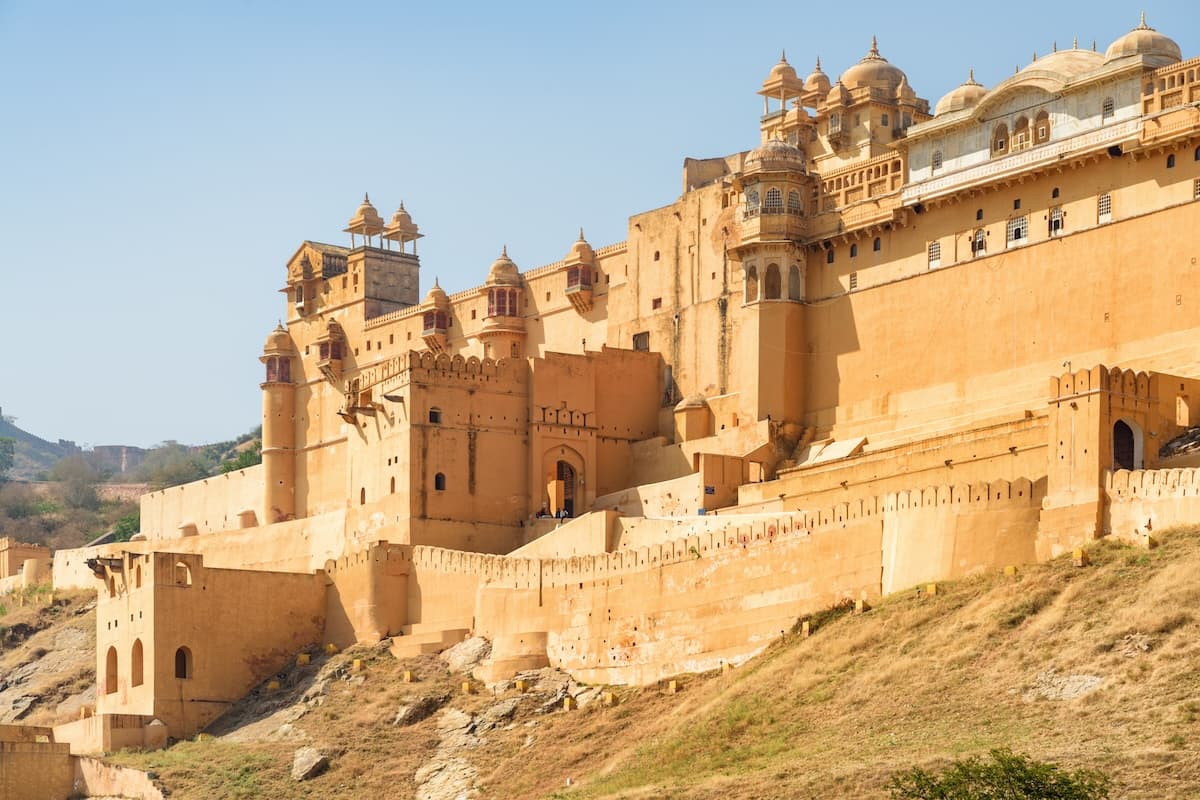
Amer Fort outside Jaipur — the fortress-palace that anchors Rajasthan's classic loop.
Survival, then hospitality: the mechanism behind the palaces
The Rajput states occupied the arid buffer between Delhi's empires and the western deserts, and their princes mastered the art of the workable arrangement — marriage alliances and treaties with the Mughals, subsidiary alliances with the British — that left their kingdoms internally sovereign for centuries. The consequence tourists now enjoy: unlike the sacked capitals elsewhere on the plain, Rajasthan's great forts — Mehrangarh, Amber, Jaisalmer's living citadel — came through the centuries garrisoned rather than ruined, and the palaces within them kept their mirror halls, armouries and durbar rooms in continuous use.
Independence kept the thrones ornamental, and 1971 removed their funding: the constitutional abolition of the privy purses left princely families holding enormous, expensive buildings with no state income to run them. The elegant solution became an industry — the palace as hotel. The exemplars of the class are famous in their own right — Rambagh Palace in Jaipur, Devi Garh near Udaipur, the Suryagarh fortress outside Jaisalmer, the Lake Palace afloat on Pichola — alongside city-palace wings run as hotels by the families themselves (Udaipur's Shiv Niwas the model), restored havelis in the merchant towns, and fortress hotels on the desert routes. Sleeping in one is not a themed experience; it is the building's actual continued life.
The practical consequence: in Rajasthan the accommodation IS an attraction, and one heritage-property night — chosen anywhere on the budget ladder, since the class runs from merchant havelis to royal wings — belongs in any itinerary. Book the famous properties well ahead in the cool season; the state's tourism calendar concentrates hard into those months.
The colour-coded cities — each shade has a reason
Rajasthan's cities brand themselves by colour, and each colour has a mechanism rather than a marketing origin. Jaipur is pink because the old city was washed in terracotta for a nineteenth-century royal visit and the colour was kept by decree; Jaipur is the hinge between this route and the Golden Triangle. Jodhpur is blue because generations of old-city householders — by caste tradition and practical lore about heat and insects — washed their walls in indigo; seen from the ramparts of Mehrangarh Fort above, the blue city is one of India's great urban views, and the fort itself, still run by the royal family's trust, is among the best-curated in the country.
Jaisalmer is golden because it is built of the same yellow sandstone it stands on — a fortified trading town on the old caravan routes deep in the Thar, whose citadel is still inhabited: a living fort where guesthouses, temples and family homes share the walls. Its havelis, carved by merchant wealth into stone lace, are the desert-trade era's autobiography. Udaipur, the counterpoint, is the white city of lakes — palace architecture composed on and around water, the Rajput imagination at its most romantic and the gentlest introduction to the state.
Bikaner, the connoisseur's under-touristed tip, rewards the detour for exactly that reason: Junagarh is a great fort without the crowds, and the town sits on the desert's edge with its own camel-breeding heritage. The colour-city sequence — pink hinge, blue ramparts, golden citadel, white lakes — is the state's natural itinerary spine, and most loops simply choose a direction around it.
The living Thar: dunes, fairs and the craft economy
The Thar is a populated desert — one of the world's most densely inhabited arid zones — and that is the right frame for its tourism. The villages between Jaisalmer and the dunes live from herding, craft and increasingly from hosting; a camel safari here moves through a worked landscape of shrines, wells and millet fields, not an empty quarter. The classic format is an afternoon ride to the dunes — Sam, outside Jaisalmer, is the established stage — with an overnight in a tented camp; choosing an operator is the quality decision, and the marks of a good one are small groups, unhurried animals in visibly good condition, and camps that belong to the villages they sit beside.
Pushkar compresses the desert's sacred and commercial sides into one town: a holy lake ringed by ghats and one of the world's few Brahma temples, and each year — on the full-moon window of the Kartik lunar month, usually falling in November — the great camel fair, when livestock trading, pilgrimage and spectacle converge on the sands outside town. The fair follows the lunar calendar, so plan around the announced dates for your year and book far ahead; outside fair season Pushkar reverts to a laid-back pilgrim town on the backpacker circuit.
The craft economy is the desert's portable half: Jaipur's block-printed textiles and gem trade, Jodhpur's antiques quarter, the bandhani tie-dye and silver of the desert towns, Bikaner's woollens. The bazaars reward the standard souk disciplines — compare across shops, bargain as expected custom, and treat any unsolicited “export deal” on gems with the scepticism any tout's pitch deserves. Buying craft at source, from the workshops the towns are organized around, is both the better story and the better price.
Routing the state: the loop, the seasons, the honest fortnight
Rajasthan is a loop, not a line. The classic circuit runs from Jaipur through Pushkar or Bikaner to Jaisalmer, back along the desert edge to Jodhpur, south to Udaipur, and out — with Delhi or the Golden Triangle as the entry ramp. Rail links the major cities well, including overnight runs that convert the long desert legs into sleep; a car with driver stitches the smaller stops (Ranakpur's carved Jain temple between Jodhpur and Udaipur is the classic one) that trains cannot. The fortnight-minimum is honest: a week forces a two-city triage, while fourteen days makes the full colour sequence unhurried.
The season is the desert's own logic: the cool months are the state at its best and busiest — daytime warmth, cold desert nights, the festival calendar — while the hot months before the monsoon are genuinely punishing for fort-climbing and dune trips. The monsoon itself brushes Rajasthan lightly; the land turns briefly green, prices soften, and the trade-off is heat and humidity between showers. Whatever the season, the fort-visit rhythm is the Triangle's: ramparts early, interiors and bazaars through the middle of the day, rooftops at sunset.
Two-city triage, if forced: Udaipur plus Jaisalmer is the connoisseur's pairing (water and sand, the state's two poles), while Jodhpur plus Jaipur is the practical one (the best fort and the best connections). But Rajasthan punishes hurry more than most places — its texture lives in the havelis, stepwells and bazaar detours between the marquee forts — and the traveller who budgets the honest fortnight almost always ranks it the trip's best decision.