Jakarta
Arrange your visa on arrival- Population:11.1M (2024)
- Area:662 km²
- Elevation:91 m
- Timezone:WIB
- IATA:CGK
Overview
Jakarta is Indonesia's sprawling, fast-moving capital — a megacity of more than ten million where the old squares of Batavia, the towering National Monument, grand mosques, mega-malls and an endless street-food scene capture the energy of the world's fourth most populous country.
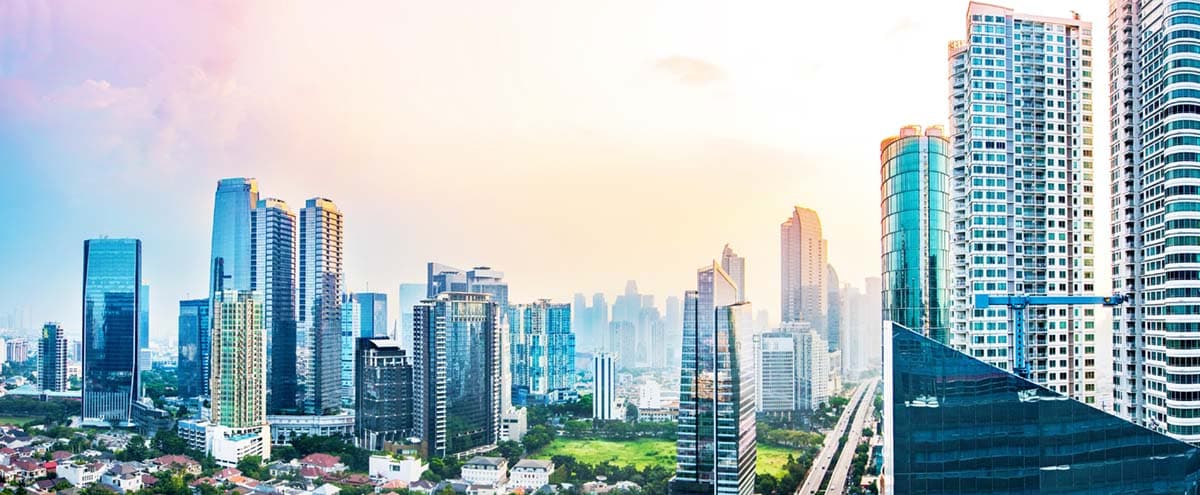
Central Jakarta's towers — the archipelago's political and business engine room.
Travel
Jakarta is the beating heart of Indonesia — an immense, humid, endlessly energetic capital on the north coast of Java that most travellers pass through on the way to Bali or Yogyakarta, but which rewards the curious with a genuine slice of modern Indonesian life. It is not a city of postcard sights so much as of atmosphere, food and contrast: gleaming skyscrapers and mega-malls rise above traditional markets and kampung neighbourhoods, and the traffic — legendary, all-consuming — is part of the experience. The historic core is Kota Tua (Old Town), the heart of old Batavia, where Dutch-era buildings around the cobbled Fatahillah Square now hold museums, and bicycles in bright hats wait for hire; nearby, the old port of Sunda Kelapa still loads timber onto wooden Bugis schooners, and Glodok forms one of Asia's older Chinatowns. At the city's symbolic centre stands Monas, the National Monument, a 132-metre marble obelisk topped with a gold flame in the vast Merdeka Square, overlooked by the colossal Istiqlal Mosque (the largest in Southeast Asia) and, facing it, the neo-Gothic Jakarta Cathedral — a striking emblem of the country's pluralism. Beyond the monuments, Jakarta is about eating and browsing: street stalls and warungs serving nasi goreng, satay, Padang food and martabak; the museums of the National Museum and the modern Museum MACAN; the giant malls of the Golden Triangle that double as the city's air-conditioned public space; and a nightlife and café scene to match any in the region. The Thousand Islands offer a quick boat escape to beaches off the coast. Jakarta is hot and humid year-round; the drier months from roughly May to September are the most comfortable, and a little planning around the traffic goes a long way.
Kota Tua — Old Batavia and the Old Port
The most atmospheric corner of Jakarta is Kota Tua, the old town that was the heart of Dutch-colonial Batavia. Its centre is the cobbled Fatahillah Square, ringed by handsome early buildings now housing the Jakarta History Museum, the Wayang (puppet) Museum and the Fine Art and Ceramics Museum, with colourful rental bicycles and street performers filling the square and the famous Café Batavia overlooking it. A short way north, the old harbour of Sunda Kelapa is one of the city's great sights — a forest of masts where towering wooden Bugis pinisi schooners still load and unload cargo by hand, as they have for centuries. Nearby Glodok, Jakarta's Chinatown, is a dense warren of temples, herbal shops and some of the best street food in the city. The area is best explored in the cooler morning before the heat and crowds build.
Monas, Mosques and Museums
Jakarta's monumental centre is Merdeka Square, an enormous park at whose heart rises Monas — the National Monument, a 132-metre marble obelisk crowned with a gold-leafed flame, with a lift to a viewing deck and a diorama of Indonesian history in its base. Overlooking the square stands the vast Istiqlal Mosque, the largest in Southeast Asia, open to respectful visitors outside prayer times; directly opposite, in a deliberate symbol of religious harmony, rises the neo-Gothic Jakarta Cathedral. On the square's western side, the excellent National Museum of Indonesia holds the country's foremost collection of antiquities, sculpture and ethnography — the best single primer on the archipelago's cultures. For a contemporary contrast, Museum MACAN in West Jakarta shows world-class modern and contemporary art, including the famous infinity-room installations.
Markets, Malls and Street Food
Day-to-day Jakarta lives in its markets, malls and food stalls. The mega-malls of the 'Golden Triangle' business district — Grand Indonesia, Plaza Indonesia, Pacific Place — are more than shopping: in a hot, traffic-bound city they serve as the social and dining heart, full of food courts, cinemas and people-watching. At the other end, traditional markets like the textile halls of Tanah Abang (Southeast Asia's largest) and the antiques and curios of Jalan Surabaya reward a wander. But the real pleasure is the food. Jakarta is a street-food paradise that gathers the whole archipelago's cooking — nasi goreng and mie goreng from the roadside carts, satay grilled over coconut husks, fiery Padang food from West Sumatra, soto soups, the sweet folded pancake martabak, and the kerak telor egg-and-rice speciality unique to the city. Eating from the warungs and night stalls is the most authentic Jakarta experience there is.
Escapes — the Thousand Islands and Beyond
When the megacity becomes too much, Jakarta has its escape valves. The Thousand Islands (Kepulauan Seribu), a chain of small islands in the bay reached by fast boat from the northern marinas, offer white-sand beaches, snorkelling and quiet resorts for a day trip or overnight away from the crowds and concrete. Inland, the cooler hills of Bogor — with its famous Botanical Gardens and the presidential palace — and the tea plantations and volcanoes of Puncak make a popular weekend retreat (traffic permitting). Jakarta is also Indonesia's main international gateway: from Soekarno-Hatta Airport (CGK), the rest of the archipelago opens up — the temples of Yogyakarta, the beaches of Bali, the wildlife of Sumatra and Borneo all a short flight away. Many travellers give Jakarta a day or two to soak up the capital before moving on.
Frequently asked questions
Do I need a visa to visit Jakarta?
Is Jakarta worth visiting, or just a transit stop?
How do I cope with Jakarta's traffic?
When is the best time to visit Jakarta?
What food should I try in Jakarta?
Transport & airports
Official site for Jakarta's main international airport — terminals, arrivals and departures, and ground transport including the Airport Rail Link.
Official site for the Jakarta MRT — network map, fares and the air-conditioned line through the central business district.
Diplomatic missions in Jakarta
14 embassies based in this city, grouped by region.
Europe8
Oceania1
Treat this Visaja page as your starting point: verify the current rules directly with the official source before you submit an application.