Iran
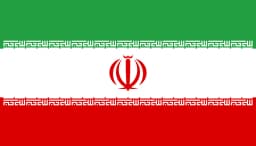
Phone Code
+98
Capital
Tehran
Population
92.4M (2025)
Languages
Persian
Area
1,648,195 km²
Electricity
220 V
Plug types
Europlug · Schuko
Driving side
right
Native Name
ایران
Region
Asia
Southern Asia
Timezone
Iran Standard Time
UTC+03:30
On This Page
Iran is a 1.65 million-square-kilometre country at the crossroads of the Middle East, Central Asia and the Caucasus, bordered by Turkey, Azerbaijan and Armenia in the north-west, the Caspian Sea, Turkmenistan and Afghanistan in the north-east, Pakistan in the south-east and Iraq in the west, with 2,400 km of southern coastline on the Persian Gulf and Gulf of Oman. The roughly 89 million Iranians speak Persian (Farsi) as the universal language, with substantial regional populations speaking Azeri (around 16 percent in the north-west), Kurdish (around 10 percent in the west), Mazandarani and Gilaki (along the Caspian), Luri, Baluchi and Arabic in Khuzestan. The capital, Tehran, sits at the foot of the Alborz Mountains in the north and holds about 9 million people in the city proper and 16 million in the metropolitan area. Iran has 28 UNESCO World Heritage sites — among the highest counts in the world — anchored by Persepolis (Takht-e Jamshid), the Achaemenid ceremonial capital built between 518 and 330 BCE, and Pasargadae with the tomb of Cyrus the Great; the Naqsh-e Jahan Square in Isfahan, one of the largest urban squares in the world, framed by the Shah and Sheikh Lotfollah mosques and the Ali Qapu Palace; the historic city of Yazd, an adobe desert city of windcatchers (badgir) and one of the oldest continuously inhabited cities in the world; the Persian Garden ensemble (Bagh-e Eram in Shiraz, Bagh-e Fin in Kashan, Bagh-e Dolat-Abad in Yazd, six others); Susa and the Chogha Zanbil ziggurat from the Elamite era; the Tabriz Historic Bazaar Complex; the Bisotun reliefs of Darius the Great; the Lut Desert (Dasht-e Lut), a UNESCO natural site with some of the highest land surface temperatures recorded on Earth; and ten further sites across the country. Iranian culture is the heir of the Achaemenid, Parthian, Sassanid and post-Islamic Persian dynasties, and is best read through Persian poetry (Hafez and Saadi in Shiraz, Ferdowsi's Shahnameh, Rumi, Khayyam in Nishapur), miniature painting and tile-work, the music of the tar and santur, the carpet weaving traditions of Tabriz, Isfahan, Kerman and Qom, and a cuisine — chelo kebab, fesenjan (walnut and pomegranate stew), ghormeh sabzi (herb stew), joojeh kebab, ash reshteh (noodle soup), tahdig (the prized crisped rice base), baghali polo with saffron, dates from Bam, pistachios from Kerman, cardamom-and-rosewater desserts, the long tea ritual — that travellers cite among the great cuisines of West Asia. Iran's hospitality (taarof, the elaborate ritualised politeness that runs through every encounter, including the famous repeated 'no, please, you keep it') is one of the most striking first impressions for international visitors and is consistently noted by returning travellers across decades and political contexts.
Visa Requirements for Iran
Iran requires a visa for citizens of essentially all nationalities (a small number of African and Asian states have bilateral visa-free arrangements). The standard route for tourism is a two-step process: an online application through the official Iranian Ministry of Foreign Affairs e-visa portal for an authorisation code (also called a 'visa grant notice' or 'reference number'), followed by collection of the actual visa sticker either at an Iranian consulate abroad or at the visa-on-arrival counter at major airports. The application typically takes 5–10 working days and costs around EUR 50–100 depending on nationality and processing speed. Visa on arrival is available at Imam Khomeini International Airport (IKA, Tehran), Mehrabad (THR, Tehran domestic but accepts some flights), Mashhad (MHD), Isfahan (IFN), Shiraz (SYZ), Tabriz (TBZ) and Kish and Qeshm island free zones for most European, Latin American, East Asian and Australasian nationalities — typically 30 days, around EUR 75–100, paid in cash euros at the airport visa-on-arrival office before passport control. Citizens of the United States, the United Kingdom and Canada are a distinct case: they cannot use the visa-on-arrival route and must travel as part of a pre-arranged organised tour with a licensed Iranian tour operator who provides the accompanying guide for the duration of the visit. Israeli passport holders, and travellers whose passport contains an Israeli entry or exit stamp, are denied entry; carry a passport without such marks if you intend to enter Iran. Passport must be valid at least six months from the date of entry. Mandatory travel insurance covering medical care in Iran is required and may be checked at the airport — many travellers buy a 30-day Iranian-domestic policy on arrival for around EUR 15. Female travellers are required to be photographed with a headscarf (hijab) for the visa application and to wear hijab in public throughout the visit (see notes below). The visa system has tightened and loosened in cycles; verify the current rules for your nationality on the official e-visa portal or with an Iranian consulate or accredited tour operator before booking, especially given the political volatility surrounding US/UK/Canadian travel and dual-nationality risks (see Important Travel Information).
Common Visa Types
Tourist Visa with Authorisation Code (Pre-Arranged)
Tourism for citizens of almost all countries — the standard pre-arranged route via the Ministry of Foreign Affairs e-visa portal, with the actual visa collected either at an Iranian consulate abroad or as visa on arrival.
Visa on Arrival (30 Days)
Tourism for citizens of most European, Latin American, East Asian and Australasian countries — including the entire Schengen area, the UK if travelling unaccompanied is permitted (verify before booking), Australia, New Zealand, Japan, South Korea, Singapore, Indonesia, Malaysia, Mexico, Chile, Argentina, Brazil and others; not available to US, UK and Canadian nationals (organised tour required, see below).
Tourist Visa via Organised Tour (US, UK, Canada)
Tourism for US, UK and Canadian nationals, who under current Iranian regulations cannot use the visa-on-arrival route and must enter the country as part of a pre-arranged organised tour with a licensed Iranian tour operator and an accompanying guide for the duration of the visit.
Pilgrimage, Business, Press & Long-Term Visa
Pilgrimage to Mashhad and Qom (the standard Shia pilgrimage routes attract several million annual visitors from Iraq, Pakistan, Lebanon, Azerbaijan and beyond), business travel, journalism and press, study at Iranian universities, family reunification with Iranian citizens, and long-term residence (carte de séjour, the Iqamat-e Pelak Sabz).
Important Travel Information
•Citizens of essentially all nationalities...
•Passport must be valid for...
•Imam Khomeini International Airport (IKA)...
•International credit and debit cards...
•The Iranian rial (IRR) is...
•Persian (Farsi) is the official...
•Female travellers are required to...
•Alcohol is strictly prohibited and...
•Best travel windows are March...
•Iran is generally very safe...
•Verify the current travel advisory...
•In emergencies dial 110 (police),...
Iran is one of the world's great destinations for travellers interested in deep history, Islamic and Persian architecture, the great gardens and miniature traditions, Silk Road bazaars and a cuisine that ranks among the most distinctive in West Asia — and is increasingly recognised by repeat visitors as one of the most hospitable countries on Earth, regardless of the political climate around it. The classic two-week itinerary follows the historical heart of Iran in a Tehran–Kashan–Isfahan–Yazd–Shiraz–Persepolis loop, often extended north-west to Tabriz or east to Mashhad. Tehran, the capital, is a sprawling modern megacity at the foot of the Alborz with the National Museum of Iran and the National Jewelry Treasury (the Crown Jewels including the Darya-e Noor diamond), the Golestan Palace UNESCO complex of Qajar-era audience halls, the Carpet Museum, the contemporary Tabiat Bridge, the Tochal cable car up the mountain north of the city, and a thriving restaurant and café scene in the northern Tajrish, Niavaran and Elahieh neighbourhoods. Kashan, three hours south of Tehran, is the gateway to the desert circuit, with the four classical Qajar merchant houses (Borujerdi, Tabatabaei, Abbasian, Ameri), the Bagh-e Fin Persian garden (UNESCO) and the rosewater distilleries of Qamsar in May. Isfahan — Esfahan nesf-e jahan, 'Isfahan is half the world' as the saying goes — is the country's signature city: the Naqsh-e Jahan Square (UNESCO), one of the largest urban squares in the world, frames the 17th-century Shah Mosque, the smaller jewel-like Sheikh Lotfollah Mosque, the Ali Qapu Palace and the entrance to the Grand Bazaar; the Khaju and Si-o-Se Pol bridges across the Zayanderud, the Vank Cathedral in the Armenian quarter of Jolfa, the Chehel Sotoun and Hasht Behesht palaces and pavilions complete the city. Yazd, four hours south-east, is the Zoroastrian and desert architecture city — UNESCO-listed adobe old town, the world's highest concentration of windcatchers (badgir), the Atash Behram Zoroastrian fire temple keeping a flame alight since the 5th century, the Towers of Silence on the city's edge, the Amir Chakhmaq complex. Shiraz, the city of poetry, is the gateway to Persepolis (UNESCO, the Achaemenid capital 60 km away) and Pasargadae (UNESCO, with Cyrus the Great's tomb 130 km further) and holds in its own right the Nasir al-Mulk 'Pink Mosque' (with the famous stained-glass winter prayer hall), the Eram Garden (UNESCO Persian garden), the tombs of Hafez and Saadi (the great Persian poets), the Vakil Bazaar and the Karim Khan Citadel. Tabriz in the north-west is the country's textile and bazaar capital, with the UNESCO-listed Tabriz Historic Bazaar Complex (one of the largest covered bazaars in the world), the Blue Mosque (Masjed-e Kabud, ruined but partly restored), the Azerbaijan Museum and the gateway to the Sabalan volcano and the village of Kandovan (a still-inhabited rock-cut village resembling Cappadocia). Mashhad in the north-east is the country's holiest city for Shia Muslims and one of the largest pilgrimage destinations in the Islamic world, centred on the Imam Reza Shrine — over a million square metres including mosques, madrasas, the Astan Quds Razavi museum, libraries and the actual mausoleum — and the resting place of the Persian poet Ferdowsi at Tus nearby. The Caspian coast in the north (Ramsar, Chalus, Babolsar) is summer beach territory for Iranians; the Persian Gulf islands of Kish and Qeshm have free-zone status with relaxed visa rules; the Lut Desert in the south-east is a UNESCO natural site for serious desert travellers; the Hyrcanian forests in the north, Iran's only temperate rainforests, were UNESCO-listed in 2019. Cuisine — chelo kebab, fesenjan, ghormeh sabzi, ash reshteh, joojeh kebab, dizi (the lamb stew you mash and pour over flatbread), tahdig, the saffron-and-rosewater bastani ice cream, the multi-hour Persian tea ritual with sugar candy (nabat) — is genuinely one of the great cuisines of the region. Iranian hospitality and the taarof code make every encounter memorable.
Discover Iran
Persepolis: Standing in the Achaemenid Throne Room
Persepolis rewards slow hours. Climb the great double staircase — shallow enough, tradition says, for dignitaries to ascend on horseback — and the Apadana's tribute reliefs unfold like a stone documentary of the ancient world: Nubians with giraffe tails, Lydians with gold, Bactrians leading camels, every delegation of an empire spanning three continents carved queuing politely for Darius. The Gate of All Nations' colossal winged bulls still bear 19th-century explorers' graffiti beside cuneiform; the Hall of a Hundred Columns maps its forest of stumps; and Alexander's burn layer is the site's final chapter, legible in the archaeology. Build the full Achaemenid day from Shiraz: Naqsh-e Rustam's cliff face ten minutes away, where Darius and three successors lie in cross-shaped rock tombs above Sassanid investiture reliefs (including Shapur humbling the Roman emperor Valerian), then Pasargadae's plain where Cyrus the Great's gabled tomb stands in grand solitude. Go at opening or late afternoon — the stone goes honey-gold and the tour groups thin.
Isfahan: Half the World in One Square
Esfahan nesf-e jahan — 'Isfahan is half the world' — was Safavid propaganda that four centuries of travellers have endorsed. The Naqsh-e Jahan Square organizes the masterpieces around its 500-metre expanse: the Shah Mosque's turquoise portal angled toward Mecca off the square's axis (stand on the black paving stone under the dome for the sevenfold echo), the Sheikh Lotfollah's smaller dome shifting from cream to pink with the day's light above what was the royal family's private oratory, the Ali Qapu palace's music room ceiling carved into plaster resonators, and the Qeysarie gate opening into kilometres of vaulted bazaar where copper-beaters and miniaturists still work the trades. Evenings belong to the bridges: Si-o-Se Pol's thirty-three arches and Khaju's stepped tiers fill with strollers and singers whose voices test the vaults (the Zayanderud below flows seasonally — its dry bed changes nothing about the ritual). Jolfa's Vank Cathedral adds the Armenian chapter, its interior a collision of Persian tile logic and Christian fresco.
Yazd: The Desert City That Engineered Itself
Yazd is a masterclass in living with the desert, and reading its engineering is the visit's pleasure. The adobe old town — UNESCO-listed, one of Earth's oldest continuously inhabited cities — bristles with badgirs, the windcatcher towers that scoop any moving air down into rooms and over water basins in pre-electric air conditioning; beneath the streets, qanat channels (a separate UNESCO inscription) carry mountain groundwater kilometres under the desert as they have for millennia, feeding the ab anbar cisterns under their swollen domes. Zoroastrianism survives here in working form: the Atash Behram temple guards a flame kept burning, keepers attest, since the 5th century, and the twin Towers of Silence on the outskirts — the hilltop rings where the dead were exposed until the 1960s — can be climbed at sunset for the desert panorama. The Amir Chakhmaq facade anchors the centre; the Jameh Mosque's twin minarets carry Iran's tallest portal. Sleep in a converted courtyard house and take the rooftops at dusk, when the badgir skyline turns silhouette.
Shiraz: Poets, Gardens and Morning Glass
Shiraz runs on poetry the way other cities run on commerce. The tomb of Hafez is a functioning national shrine: Iranians of every generation arrive with his divan, open it at random for the fal — the poem as oracle — and read their fortune under the tiled dome; sunset brings musicians and the atmosphere of secular pilgrimage unique to this country's relationship with its poets. Saadi's garden tomb completes the pair. The Nasir al-Mulk 'Pink Mosque' demands the early alarm: for an hour after sunrise (winter months best), its stained-glass wall throws kaleidoscope light across the carpeted winter prayer hall — arrive at opening or share the floor with tripods. Between them: the Eram and Naranjestan gardens' cypress-and-orange formality (the Persian garden template that named 'paradise' itself), the Karim Khan citadel's leaning tower, the Vakil bazaar's rose-and-spice vaults, and — evenings — the Quran Gate's hillside, where the city picnics. Shiraz then hands you the Achaemenid circuit at its doorstep.
Tehran and the North: Museums, Mountains and Mashhad
Tehran deserves its two days rather than a transit shrug. The National Museum holds the country's archaeological spine (the Salt Man, Persepolis reliefs in context); the National Jewelry Treasury — open limited afternoon hours inside the central bank's vault — stacks the Darya-e Noor pink diamond, the Peacock Throne and a globe of 51,000 gems into the world's most concentrated room of treasure; Golestan Palace's mirror halls carry Qajar excess with UNESCO endorsement. Modern Tehran breathes at the Tabiat Bridge's layered walkways and in the gallery-café belt of the north, and the Alborz wall above the city offers the Tochal gondola to 3,900 metres — skiing in season, altitude picnics otherwise. Mashhad, the north-east's magnet, is the Shia world's great living shrine: the Imam Reza complex receives millions of pilgrims through courtyards that dwarf cathedrals — non-Muslim visitors are welcomed in the outer courts with guides from the shrine's own service (dress and protocol observed), an experience of devotional scale matched in few places on earth. Ferdowsi's tomb at Tus nearby closes the poetic circle.
The Practical Craft of an Iran Trip
Iran's practicalities are distinctive, learnable and — handled right — smooth. The frame first: check your government's current advisory as planning's opening move (levels run elevated and shift with the political cycle), note the dual-national cautions, and let a licensed operator carry the paperwork — mandatory anyway for US, UK and Canadian passports, which travel only on organised tours with an accompanying guide. Money is cash-only by sanction: no foreign cards work, so the whole budget lands as euros exchanged at sarrafi offices (never street changers), with tourist debit-card services available for those who prefer plastic after arrival — and every price clarified rials-versus-tomans before agreeing. Dress law applies from the jetbridge: hijab for women (headscarf plus covering layers — Iranian women's street practice shows the working interpretation), long trousers the male norm; alcohol is prohibited outright. Then the compensations: internal flights and buses that cost little, hotels from restored caravanserais to Qajar courtyards, Nowruz (the spring-equinox New Year) as the festive season worth aiming for — and taarof, the courtesy code in which your taxi driver will refuse payment twice before accepting; the third offer is the real one. Learn that rhythm and the country opens.
Ways to Experience This Destination
Persepolis (Takht-e Jamshid, UNESCO World Heritage) was the ceremonial capital of the Achaemenid Empire built between 518 and 330 BCE under Darius I, Xerxes I and their successors — the great staircase, the Apadana audience hall, the Hall of a Hundred Columns, the bas-reliefs of tribute-bearing delegations from across the ancient world. Pasargadae (UNESCO), 130 km north of Shiraz, holds the tomb of Cyrus the Great, founder of the Achaemenid Empire and author of the Cyrus Cylinder (often described as the world's first declaration of human rights). Naqsh-e Rustam, near Persepolis, holds the rock tombs of Darius the Great and three other kings carved into the cliff face. A standard 1–2 day excursion from Shiraz; reach by hired car or organised tour.
Isfahan, the 17th-century Safavid capital, is the city most travellers cite as their favourite stop in Iran. The Naqsh-e Jahan Square (UNESCO World Heritage), one of the largest urban squares in the world (160,000 m²), frames the Shah Mosque (now Imam Mosque) with its turquoise dome, the smaller and more intimate Sheikh Lotfollah Mosque (originally a private royal mosque), the Ali Qapu Palace with its music hall stucco ceilings and the entrance to the Grand Bazaar (Qeysarie). The Khaju and Si-o-Se Pol bridges over the Zayanderud are the city's evening gathering places; the Vank Cathedral in the Armenian quarter of Jolfa testifies to Shah Abbas's relocation of Armenian craftsmen; the Chehel Sotoun palace pavilion sits in a Persian garden of the same name (UNESCO).
Yazd (UNESCO Historic City), in the central Iranian desert plateau, is one of the oldest continuously inhabited cities on Earth and the principal centre of Iran's surviving Zoroastrian community. The adobe-walled old town has the world's highest concentration of windcatchers (badgir), the elegant ventilation towers that cool houses without electricity; the Atash Behram fire temple has kept a flame alight continuously since the 5th century AD; the twin Towers of Silence on the city's outskirts are the historical Zoroastrian sky-burial sites; the Amir Chakhmaq complex anchors the centre with its photogenic three-tiered facade. Half of the desert tour-circuit operators run camel-and-dune safaris into the surrounding Lut and Kavir deserts from here.
Shiraz, the city of Hafez and Saadi (the two great Persian poets, both buried here in working pilgrimage sites), the Nasir al-Mulk 'Pink Mosque' (famous for the stained-glass kaleidoscope of light through its winter prayer hall at sunrise), the Eram Garden and the Bagh-e Naranjestan (both UNESCO-listed Persian gardens), the Karim Khan Citadel, the Vakil Bazaar and the Vakil Bath, and the Pars Museum. Shiraz is also the standard base for Persepolis (60 km), Pasargadae (130 km) and Naqsh-e Rustam (also 60 km) — the four-site Achaemenid circuit that anchors most Iran itineraries.
Tehran, the modern capital at the foot of the Alborz, holds the National Museum of Iran (the country's principal antiquities collection from prehistoric to Islamic eras), the Golestan Palace (UNESCO Qajar-era complex of audience halls and gardens), the National Jewelry Treasury with the Darya-e Noor diamond and the Peacock Throne, the Carpet Museum and the Tochal cable car up the mountain. Mashhad in the north-east is the country's holiest Shia city centred on the Imam Reza Shrine (over a million square metres of mosques, madrasas and the Astan Quds Razavi museum); the resting place of Ferdowsi at Tus is nearby. The Caspian coast (Ramsar, Chalus, Babolsar) is summer beach country for Tehranis; the Hyrcanian forests (UNESCO 2019) are Iran's only temperate rainforests.
Iranian cuisine is one of the great kitchens of West Asia: chelo kebab (the national dish of skewered lamb or chicken with saffron-buttered rice), fesenjan (walnut and pomegranate stew with chicken or duck), ghormeh sabzi (herb-and-kidney-bean stew), joojeh kebab (yoghurt-marinated saffron chicken), ash reshteh (the noodle, herb and bean soup of Persian New Year), dizi (the lamb-and-chickpea stew you mash with the pestle and pour over flatbread), tahdig (the prized crisped rice base), the saffron-and-rosewater bastani ice cream and the multi-hour Persian tea ritual with rock sugar (nabat). Carpet weaving is the other defining art: Tabriz, Isfahan, Kerman, Qom, Kashan and Nain are the famous origin cities. Taarof — the elaborate ritualised politeness that runs through every encounter — is one of the most striking first impressions for international visitors.
Money & Currency
Iranian Rial (IRR)
Currency code: IRR
Practical Money Tips
Iranian Rial (IRR) / Toman — bring USD, EUR, or AED cash; no international cards work
Iran uses the Iranian Rial (IRR) as its official currency, but Iranians commonly quote prices in Tomans — one Toman equals ten Rials (e.g., a price of '50,000 Toman' equals 500,000 Rials). Due to US-led sanctions, Iran is excluded from the SWIFT international banking network. As a result, no international debit or credit cards — Visa, Mastercard, American Express, or any other — work in Iran at any ATM or point-of-sale terminal. You must bring sufficient foreign cash for your entire trip before entering Iran. The most practical currencies are USD, EUR, and UAE Dirham (AED). Exchange cash at licensed exchange offices (sarrafis) in Tehran's Grand Bazaar, in hotel lobbies, or at exchange bureaux in major city centres — rates are generally competitive and consistent.
ATMs only work for Iranian-issued cards — no foreign cards accepted anywhere
There are ATMs throughout Iran's cities, but they exclusively serve holders of Iranian bank cards. Foreign visitors cannot use international ATMs in Iran under any circumstances — this is a direct consequence of SWIFT exclusion and financial sanctions. There is no workaround: bring all the cash you need for accommodation, food, transport, tours, and souvenirs. A common strategy is to calculate your total budget conservatively in USD or EUR and carry that amount divided across multiple secure locations. USD bills must be in good condition (no tears, no pen marks) — damaged bills may be refused by exchange offices.
No Apple Pay, no Google Pay, no contactless — cash is the only payment method
Apple Pay, Google Pay, and all international mobile and contactless payment technologies are entirely non-functional in Iran due to sanctions. Iranian banks offer their own domestic apps (Shaparak network) for Iranian cardholders, but these are inaccessible to foreign visitors. Some upscale hotels that cater to international guests will accept payment in cash USD or EUR at reception. In practical terms, every expense during your trip — accommodation, restaurants, transport, museums, bazaar shopping, taxis, and tour guides — will be settled in cash Rials/Tomans or in foreign currency at agreed rates.
Budget guide: accommodation $20–80/night; meals 2–15 USD equivalent; museums $2–10 USD
Despite complex logistics, Iran is generally affordable for international visitors once inside. Street food and local restaurant meals cost the equivalent of 2–8 USD. Mid-range restaurant meals in Tehran or Isfahan: 8–20 USD equivalent. Budget hostels and guesthouses: 15–35 USD per night. Mid-range hotels: 40–90 USD. Museum entries (Persepolis, Golestan Palace, National Museum): 2–10 USD per site. Taxis and ride apps (Snapp, Tap30) require an Iranian SIM to use; negotiate taxi fares in advance and settle in Rials. Carrying a mix of small USD bills ($1, $5, $10, $20) in addition to larger denominations helps with flexibility.
Note: Always check current exchange rates before traveling. Currency exchange is available at airports, banks, and authorized money changers.
Can I use my Visa or Mastercard in Iran?
What is the difference between Rial and Toman?
What is the best currency to bring to Iran?
How do I access Iranian Rials once inside Iran?
Is Apple Pay or any mobile payment usable in Iran?
How much cash should I bring to Iran?
Are there special tourist cards or visitor services for foreign payments?
Can I use ride-hailing apps in Iran?
Iran — Embassies worldwide
Popular Destinations
Top destinations with verified missions
All Countries by Continent
Embassies in Iran
These foreign embassies and consulates are based here. Choose a mission to open its in-depth guide and contact details.
Key origin countries


All countries by continent
Europe(1)

Can I visit Iran right now?
Start with your government's current travel advisory — levels for Iran run elevated, shift with the political cycle, and directly affect insurance validity and consular cover; several governments also flag specific risks for dual nationals. Where travel proceeds, it runs smoothly through licensed Iranian operators, who handle the visa authorisation, routing and current-conditions judgment. The advisory is the first document of the plan; everything below is the second.
How does the Iran visa process work?
Two steps for most nationalities: an online application through the official e-visa portal yields an authorisation code (5-10 working days), then the visa itself is collected at an Iranian consulate or the visa-on-arrival counter at major airports (30 days, cash euros, extendable in-country to 90). Mandatory Iranian medical insurance is checked — buyable on arrival if needed. Apply through an operator to smooth the code stage; women's application photos require hijab.
Can Americans, Britons and Canadians visit Iran?
Yes — but only on pre-arranged organised tours: US, UK and Canadian passport holders cannot use visa on arrival and must travel with a licensed Iranian operator and an accompanying guide for the entire stay, on an itinerary filed with the visa. The tours range from private drivers to small groups and don't feel like supervision in practice — but the requirement is absolute, and these nationalities should also weigh their governments' specific advisories with extra care.
What is the hijab rule for female travellers?
It is law, applies to all women regardless of nationality or faith, and starts when the aircraft doors open: hair covered with a headscarf, arms and legs covered, tops long enough to cover the hips — in practice a loose manteau or long shirt over trousers with a casually draped scarf, matching what Iranian women themselves wear on the street. Pack accordingly (light fabrics for summer), keep a scarf in hand luggage for landing, and observe stricter cover at shrines, where chadors are provided.
How do I handle money in Iran if my cards don't work?
They genuinely don't — sanctions cut Iran from international card networks — so the entire budget travels as cash euros (preferred) or dollars, exchanged at official sarrafi offices in the cities as needed. Tourist-oriented prepaid local cards exist for those who'd rather not carry the full float. The daily discipline: confirm every quoted price as rials or tomans (a tenfold difference), and enjoy how far the money goes — Iran is remarkably affordable at street level.
Will an Israeli stamp keep me out of Iran?
Yes — Israeli passport holders are barred outright, and any Israeli stamp, visa or border-crossing evidence in another passport means denied entry. Israel no longer stamps passports directly, but Egyptian and Jordanian land-border exit stamps at Israeli crossings tell the same story to Iranian officers. The clean solutions: a fresh passport, or sequencing any regional grand tour with Iran before Israel.
When is the best time to visit Iran?
Spring (March-May) and autumn (September-November): mild across the classic Tehran-Kashan-Isfahan-Yazd-Shiraz circuit, with Nowruz — the spring-equinox Persian New Year — as the country's most festive fortnight (book early; Iranians travel en masse). Summer scorches the desert cities past 45°C while the Caspian and the Alborz stay pleasant; winter brings serious skiing an hour above Tehran and thin, atmospheric crowds at Persepolis.
Visaja keeps this page's contact details and visa guidance under continuous review — still, requirements can change at short notice, so confirm the essentials with the mission or the official government portal before you travel.