
Travel deep dive
Silk Road and the Western Frontier
Everything else in this inventory is built around a base city or a compact region — a river bend, a mountain valley, a metropolis. The Silk Road corridor through Gansu and Xinjiang works differently. It's a linear route running west from Xi'an across roughly four thousand kilometres and two thousand years of trade history, and planning it means planning a sequence of stops along a line rather than a shortlist to choose between. The reward is one of the great overland journeys still possible at this scale.
Updated 2026-08-15
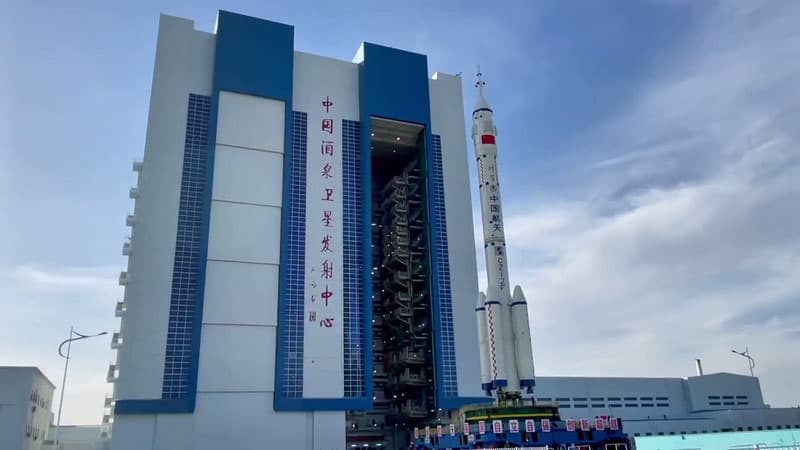
Jiuquan on the Hexi Corridor — the old Silk Road's desert gateway now launches spacecraft.
The shape of the route: desert, oasis, repeat
The corridor's logic is geographic before it's historical: the Silk Road followed the only viable path through a landscape of desert basins, threading from oasis town to oasis town because there was nowhere else water and shelter reliably coincided. Every stop on the modern route sits where an ancient caravan stop once had to sit, for the same reason.
That gives the journey a rhythm unlike the rest of a China trip — long stretches of empty, spectacular desert between towns, rather than the dense stop-to-stop density of a city-based itinerary. Travellers used to packing a day with sights need to recalibrate: the desert itself, the light, and the sense of scale are as much the destination as any single monument along the way.
The standard route picks up the trail at Lanzhou and runs west, and treating it as one continuous corridor — rather than a set of unconnected day trips — is what makes the history legible: each stop explains why the next one exists.
Lanzhou to Dunhuang: the classic week
Lanzhou, Gansu's capital, is the natural starting point and worth a stop in its own right for the bowl of hand-pulled beef noodle soup that gave the city its culinary reputation — a dish now found across the country but done best at its source. From here the route runs west into increasingly dramatic terrain.
Zhangye's Danxia landform is the first great stop: rainbow-striped sandstone ridges whose colour intensifies dramatically in morning and evening light, one of the most photographed geological formations in the country. Further on, Jiayuguan Fort marks the western end of the Ming-dynasty Great Wall, a fortress built specifically to guard the frontier where the empire's authority thinned into desert.
The route's centrepiece is Dunhuang, at the edge of the Gobi, home to the Mogao Caves — nearly five hundred grottoes carved into a cliff face between the fourth and fourteenth centuries, preserving over a millennium of Buddhist mural and sculpture. Advance booking is essential, and the site's digital exhibition centre, visited before the caves themselves, meaningfully improves the experience by explaining what the murals depict before you're standing in front of them.
Where the road forks: Turpan and Urumqi, or Kashgar
Beyond Dunhuang, the corridor splits, and the choice shapes the rest of the trip. The northern fork runs to Turpan and Urumqi: Turpan sits below sea level in one of the hottest, driest basins on earth, its Flaming Mountains glowing red in the heat haze, its ancient Karez underground irrigation channels and the Astana Tombs offering a look at how desert civilisations actually survived here. Urumqi and the alpine grasslands above it provide a cooler counterpoint after the basin's heat.
The southern fork crosses the edge of the Taklamakan Desert toward Kashgar, historically the most important crossroads on the entire route — where trade from India, Persia and China all converged. The city's Sunday Bazaar still trades carpets, knives and karakul lambskin much as it always has, under rows of poplar trees, and the Id Kah Mosque remains the largest in the country, its courtyard a genuine centre of daily life rather than a museum piece.
Neither fork is objectively better — Turpan and Urumqi lean toward geology and desert engineering, Kashgar toward living Central Asian culture — and the honest answer is that either extends the corridor meaningfully, while combining both in one trip asks for real time and distance.
Practical notes for the corridor
A few smaller stops round out the route without needing detours: the Yumen Pass ruins near Dunhuang mark another frontier checkpoint from the same era as Jiayuguan, and the Crescent Lake oasis at the nearby Singing Sand Dune — a genuine spring-fed lake cupped in a bowl of dunes — is worth the short trip out from town, ideally timed for a sunset camel ride across the sand.
Because this is a linear route rather than a hub city, pace matters more here than anywhere else in the inventory: a week is the realistic minimum to cover Lanzhou through Dunhuang properly, and extending to either fork adds several more days rather than a quick add-on.
The corridor connects naturally to the Great Wall's own western terminus at Jiayuguan, so travellers who've already walked a section of Wall near Beijing get a genuine bookend here — the same structure, thousands of kilometres and an entirely different landscape later, finally meeting the desert it was built to hold back.