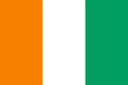
Ivory Coast
Ivory Coast (Côte d'Ivoire) is a West African nation of about 28 million on the Gulf of Guinea, bordered by Liberia, Guinea, Mali, Burkina Faso and Ghana. Yamoussoukro is the official political capital — designated by the 1983 constitution and home to the Basilica of Our Lady of Peace, the largest church in the world — but Abidjan, on the Ébrié Lagoon, remains the de facto capital, the country's economic engine, the seat of all foreign embassies, and the major international gateway. As the world's largest cocoa producer, a significant coffee and rubber exporter, and home to the regional headquarters of the African Development Bank and many multinationals, Côte d'Ivoire combines vibrant urban life in Abidjan with UNESCO heritage at Grand-Bassam and the Taï rainforest, the Atlantic coast at Assinie and San-Pédro, the western highlands of Man, and one of West Africa's most efficient e-visa systems.
Visa Requirements for Ivory Coast
Côte d'Ivoire operates one of the more streamlined visa systems in West Africa. Citizens of ECOWAS (Economic Community of West African States) member countries enter visa-free for up to 90 days. Most other foreign nationals apply for an electronic visa (e-visa) in advance through the official portal — processing typically takes 3–5 business days, the standard fee is around €73, and applications require a passport scan, passport-style photograph, yellow fever vaccination certificate (mandatory and checked at entry), accommodation confirmation, return ticket and online card payment. Visa-on-arrival is available at Félix-Houphouët-Boigny International Airport in Abidjan for some nationalities, but the e-visa is strongly recommended to avoid potential delays. Traditional embassy visas remain available through Ivorian diplomatic missions abroad. Stays beyond the initial visa period require a residence permit (titre de séjour) issued by the Office d'Identification Nationale (OIDN).
Visa types
E-Visa (Tourist / Business)
Electronic visa applied for in advance through the official Côte d'Ivoire portal. Suitable for tourism, business meetings, conferences and family visits. Application requires a passport biographical-page scan, passport-style photograph, yellow fever vaccination certificate, accommodation confirmation (hotel or invitation), return or onward ticket and online card payment.
ECOWAS Visa-Free Entry
Citizens of ECOWAS member states (Benin, Burkina Faso, Cape Verde, Gambia, Ghana, Guinea, Guinea-Bissau, Liberia, Mali, Niger, Nigeria, Senegal, Sierra Leone, Togo) enter under regional free-movement protocols.
Visa on Arrival (Abidjan FHB Airport)
Available at Félix-Houphouët-Boigny International Airport in Abidjan for travellers from eligible nationalities arriving without an e-visa. The e-visa is strongly preferred — arriving without proper documentation can mean immigration retains the passport overnight, with collection and fee payment from the immigration office the next business day.
Embassy Tourist / Family Visit Visa
Traditional visa obtained in advance through an Ivorian embassy or consulate, suitable for travellers preferring pre-departure certainty, those entering at land borders, or family-visit applicants needing to attach an invitation letter from a host in Côte d'Ivoire.
Business Visa (Embassy)
For business meetings, contract negotiations, investment exploration in cocoa, coffee, petroleum, banking, manufacturing or telecoms, trade conferences and short-term commercial activity. Requires an invitation letter from an Ivorian company or organisation on official letterhead stating purpose and duration. Available as e-visa or embassy application.
Work Permit & Residence Permit (Titre de Séjour)
Foreign nationals taking up employment in Côte d'Ivoire enter on a tourist or business visa, then apply in-country: the work permit is processed by the Ministry of Employment and Social Protection with employer sponsorship, and the titre de séjour for residence beyond the initial visa is issued by the Office d'Identification Nationale (OIDN). Work permits typically run for the contract duration and are renewable annually; children under 16 documented on a parent's residence permit do not need their own.
Transit Visa
For travellers transiting through Félix-Houphouët-Boigny Airport on the way to a third country, or transiting overland through Côte d'Ivoire to a neighbouring country. Requires proof of onward travel, the visa for the next country if needed, valid passport with six months' validity and yellow fever certificate (required even for transit).
Guides
Côte d'Ivoire is the economic powerhouse of francophone West Africa and one of the continent's most varied destinations within easy travel range. Abidjan, on the Ébrié Lagoon, is the dynamic core: a high-rise Plateau business district facing lively neighbourhoods like Treichville, Cocody and Yopougon, with a music culture (Coupé-Décalé and Zouglou were both born here) that has shaped francophone Africa. Yamoussoukro, the official capital, is dominated by the Basilica of Our Lady of Peace, modelled on St Peter's in Rome and the largest church in the world. Grand-Bassam (UNESCO World Heritage), Côte d'Ivoire's first colonial capital, preserves weathered colonial-era houses, a national history museum and Atlantic beaches. The Taï National Park (UNESCO) in the south-west protects one of the last large primary rainforests in West Africa, famous for its tool-using chimpanzees that crack nuts with stones. The Atlantic coast at Assinie and San-Pédro offers palm-fringed beaches, lagoon waterways and a relaxed weekend pace. The western highlands around Man bring waterfalls, masks of the Dan and Yacouba peoples and a different cultural register entirely. And — uniquely — Côte d'Ivoire is the world's largest cocoa producer, making farm visits, cooperative tours and origin chocolate one of the country's most distinctive travel angles.
Ivory Coast travel guide →
The full guide — maquis nights, the faded first capital, the basilica in the bush and Taï's chimps.
Money in Ivory Coast →
The CFA franc in practice — the euro peg, mobile money, and cash planning beyond Abidjan.
Eating in Ivory Coast →
Four dishes unlock the country — attiéké, kedjenou, garba and alloco, from street stall to maquis.
Getting around Ivory Coast →
Abidjan traffic as a planning factor, orange taxis with agreed fares, and daylight-only road rules.
Health & safety in Ivory Coast →
Malaria care and the yellow-fever certificate nationwide — plus the northern advisory picture.
Cities & planning
Plan your trip
Booking links go to our partner Trip.com — we may earn a commission at no extra cost to you.
Regions
Embassies & missions
Frequently asked questions
Do I need a visa to visit Ivory Coast?
Most non-African visitors do: the e-visa through the official portal is the standard route (30-90 days, processing about 3-5 working days, fee around €73), collected on arrival at Abidjan airport. ECOWAS citizens enter free for 90 days. Visa on arrival exists for some nationalities but comes with a real caveat: incomplete documentation can mean immigration keeps your passport overnight — the e-visa avoids the gamble. Land-border entries should hold an embassy or e-visa in advance.
Is the yellow fever vaccination really mandatory?
Absolutely, for everyone, from everywhere: Côte d'Ivoire checks the yellow fever certificate at airport and land borders alongside your passport and visa, and the shot must date at least ten days before travel. Bring the physical card. Add malaria prophylaxis as the other non-negotiable — it's endemic year-round — plus routine typhoid and hepatitis cover per your travel clinic.
Can I get by with English in Ivory Coast?
Only barely — French is the language of everything: immigration, banking, taxis, menus, markets. English surfaces in international hotels and little else. Even phrasebook French transforms the trip, and a translation app fills the gaps. The reward for trying is real: Ivorians meet effortful French with visible warmth, and the maquis table opens fastest to those who greet in it.
Is Ivory Coast safe to visit?
The main travel circuits — Abidjan, the Bassam-Assinie coast, Yamoussoukro, the cocoa belt — run on normal big-city and road-travel precautions: registered taxis with agreed fares, valuables managed in markets, night driving avoided between cities. The specific caveat is regional: some northern border zones adjoining Burkina Faso and Mali carry standing government advisories — check your foreign ministry's current guidance when planning any northern route.
How do I visit a cocoa farm?
Two ways, best combined: organized origin tours from Abidjan or San-Pédro visit working farms and cooperatives in the southwestern belt — pod-splitting, fermentation and drying included, with the growers themselves as guides — while Abidjan's bean-to-bar makers (Mon Choco, Instant Chocolat) run city-side tastings and workshops. Book ahead rather than arriving at farms unannounced; harvest peaks October-March, when the whole chain is in motion.
Is the Yamoussoukro basilica worth the detour?
Yes — it's one of Africa's most astonishing buildings and the detour is modest: three hours from Abidjan on a good highway, guided visits daily, and the scale (the world's largest church, its dome outreaching St Peter's) simply doesn't translate to photographs. Pair it with the crocodile lake at feeding time and the Houphouët-Boigny Foundation, and treat it as an unhurried day trip or surreal overnight.
When is the best time to visit Ivory Coast?
November to March is the driest, most reliable window across the south and the classic season for the coast, Yamoussoukro and cocoa-harvest visits. The long rains peak May-July (Taï's forest treks get genuinely hard); the mountains around Man stay cooler year-round with their own showers. December-February adds the harmattan's dusty haze up north — atmospheric, but soft light for photographers.
Planning a trip to Ivory Coast? Check what you need to enter and apply online in minutes.
Visaja keeps this page's contact details and visa guidance under continuous review — still, requirements can change at short notice, so confirm the essentials with the mission or the official government portal before you travel.