Lagos
Apply for your eVisa- Population:15.1M (2022)
- Area:1,171 km²
- Elevation:34 m
- Timezone:WAT (UTC+1)
- IATA:LOS
Overview
Lagos is Nigeria's largest city and economic and cultural capital — one of Africa's great megacities, spread across the mainland, lagoons and Atlantic islands. It is the engine of Afrobeats and Nollywood, a city of beaches and boat trips, art galleries and markets, legendary nightlife and food, pulsing with the energy that has made it the continent's creative powerhouse.
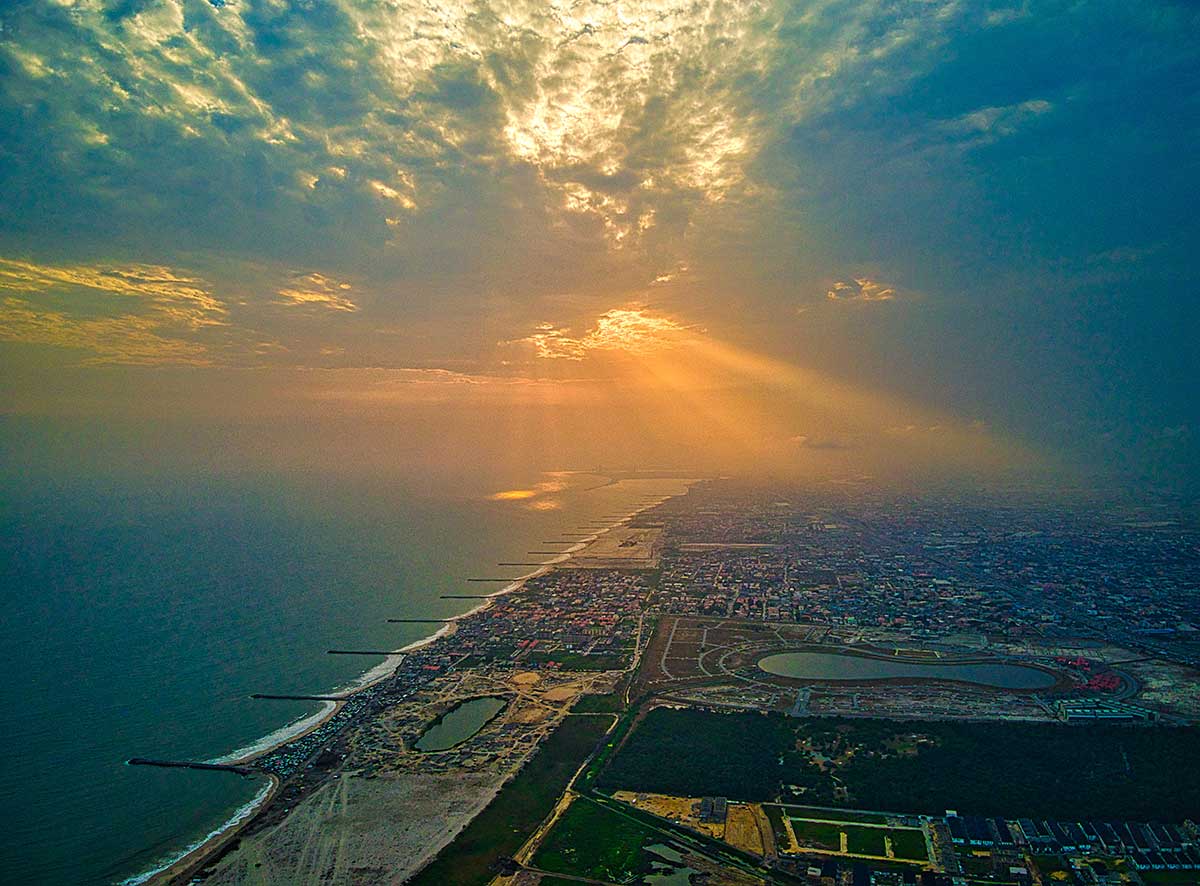
Lagos from the lagoon — Victoria Island's towers behind the water traffic.
Travel
Lagos is the largest city in Nigeria and one of the biggest and fastest-growing in the world — a vast, exuberant megacity of well over fifteen million people, spread across the West African mainland, a network of lagoons and a cluster of Atlantic islands. It is not Nigeria's political capital (that is Abuja), but it is the country's undisputed economic and cultural heart, and the creative engine of the continent. The geography divides the city: the older mainland and the historic Lagos Island, with its markets and colonial-era core, sit across the water from the wealthier islands of Victoria Island and Ikoyi — the business, dining and nightlife districts — and the rapidly expanding Lekki peninsula beyond, with its beaches, galleries and the new Eko Atlantic city rising on reclaimed land. Lagos is, above all, a cultural force: it is the home of Afrobeats, the genre that has conquered global music through artists like Burna Boy, Wizkid and Davido; the centre of Nollywood, the world's second-largest film industry by output; and the legacy home of the Afrobeat pioneer Fela Kuti, celebrated at the New Afrika Shrine and the annual Felabration. Its arts scene — the remarkable Nike Art Gallery, art fairs and a wave of galleries — its fashion, and its famously high-energy nightlife draw a creative crowd, while its food, from jollof rice and pepper soup to the smoky street-side suya, is a destination in itself. There are beaches too — the boat-access Tarkwa Bay, the lively Elegushi and the Lekki strands — and pockets of nature like the Lekki Conservation Centre with its long treetop canopy walkway. Lagos is intense — the traffic (“go-slow”) is legendary and it demands a little local know-how — but for travellers ready to embrace it, the city offers an unmatched window onto contemporary African urban life. The climate is hot and humid year-round, with a drier, more comfortable season from November to March (and the hazy harmattan winds).
Africa's Megacity — The Islands and the Mainland
To understand Lagos is to grasp its geography of water and islands. The historic core is Lagos Island, the old commercial and trading heart, home to the teeming Balogun and Idumota markets, the National Museum and the city's origins. Across the lagoon lie the affluent islands that most visitors gravitate to: Victoria Island, the business and dining hub with corporate towers, restaurants, bars and hotels; leafy, upscale Ikoyi; and, stretching east, the booming Lekki peninsula, with its beaches, galleries, gated estates and shopping, beyond which the futuristic Eko Atlantic district is being built out into the sea. The bridges linking these islands to the densely populated mainland (Yaba, Surulere, the vast suburbs) carry the city's famous traffic. Lagos is a city of staggering scale and energy, of wealth and hustle side by side, and of constant motion — and simply experiencing that intensity, ideally with a local guide or host, is part of what makes a visit memorable. Boat trips on the lagoon offer a calmer, revealing perspective on this sprawling metropolis of the water.
Afrobeats, Nollywood and the Creative Capital
Lagos is the cultural powerhouse of Africa, and its creative energy is the headline reason many travellers come. It is the birthplace and capital of Afrobeats, the sound that has taken over global pop through Lagos-raised stars, and the city's nightlife — clubs, live-music venues, beach parties and lounges on Victoria Island, Ikoyi and Lekki — is among the most exciting on the continent, especially around the festive “Detty December” season when the diaspora returns. It is the home of Nollywood, one of the world's most prolific film industries, and the legacy city of the Afrobeat legend Fela Kuti, whose spirit lives on at the New Afrika Shrine (run by his family) and the annual Felabration festival. The visual arts thrive too: the extraordinary, multi-storey Nike Art Gallery in Lekki — one of the largest in West Africa, packed with Nigerian art and textiles — is a must, alongside a growing scene of contemporary galleries and the international Art X Lagos fair. Fashion, design and a buzzing café and creative-workspace culture complete a city that, more than any other in Africa, sets the continent's cultural pace.
Beaches, Lagoons and Nature
For all its concrete and crowds, Lagos is a coastal city, and the Atlantic and lagoons are part of its life. The favourite escape is Tarkwa Bay, a sheltered, calm beach reachable only by boat from the marinas of Victoria Island — a popular day out for swimming and relaxing away from the city. Closer in, the privately run Landmark Beach and the lively Elegushi Beach on the Lekki coast are weekend playgrounds of beach bars, music and crowds, while quieter sands stretch further east toward Lekki and beyond. For nature, the Lekki Conservation Centre protects a patch of coastal wetland and forest within the city, famous for its long elevated canopy walkway through the treetops — among the longest in Africa — where you may spot monkeys and birdlife. Boat cruises on the lagoon, fishing trips, and the long Atlantic beaches out toward Badagry give the restless city its breathing space. These watery escapes are a reminder that, beneath the megacity, Lagos remains a place defined by its lagoons and ocean.
Food, Markets and Practical Lagos
Lagos is a food city, and eating is one of the great pleasures of a visit. Nigerian cuisine is bold and varied — the much-debated jollof rice (Nigerians will insist theirs is the best), spicy pepper soup, egusi and other rich stews with pounded yam or fufu, fried plantain (dodo), and above all suya, the smoky, spiced grilled meat skewers sold from roadside stands at night. The islands have a thriving restaurant scene from street food to fine dining, and the markets — the vast Balogun market on Lagos Island, the Lekki Arts and Crafts Market for souvenirs, fabrics and carvings — are an experience in themselves. Practically, Lagos rewards a little preparation: the traffic is famous, so plan around it and consider basing on the islands; ride-hailing apps are the easiest way to get around; and many visitors travel with a local contact or guide, which transforms the experience. The international airport (Murtala Muhammed, LOS) is a major West African hub. Embrace its energy, and Lagos is one of the most exhilarating cities anywhere.
Frequently asked questions
What is Lagos known for?
Is Lagos the capital of Nigeria?
How do I get around Lagos, and is it safe?
When is the best time to visit Lagos?
Diplomatic missions in Lagos
1 embassy based in this city, grouped by region.
Treat this Visaja page as your starting point: verify the current rules directly with the official source before you submit an application.