Bahrain
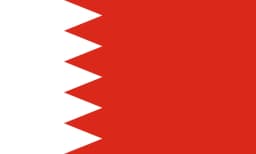
Phone Code
+973
Capital
Manama
Population
1.6M (2023)
Languages
Area
787 km²
Electricity
230 V
Plug types
BS 1363
Driving side
right
Native Name
البحرين
Region
Asia
Western Asia
Timezone
Arabian Standard Time
UTC+03:00
On This Page
Bahrain is an island nation in the Arabian Gulf, connected to Saudi Arabia by the King Fahd Causeway and known for its liberal atmosphere, financial services sector, and Formula 1 Grand Prix. Manama, the capital, offers modern shopping malls, traditional souqs, luxury hotels, and waterfront dining. Visitors are drawn to Bahrain Fort (Qal'at al-Bahrain), the Grand Mosque, Bahrain National Museum, Tree of Life, and pearl diving heritage. Bahrain provides accessible entry through e-visa and visa on arrival for most international visitors.
Visa Requirements for Bahrain
Bahrain offers multiple entry options for international visitors. Citizens of GCC countries (Saudi Arabia, UAE, Kuwait, Oman, Qatar) can enter visa-free. Many nationalities can apply for e-visa online through evisa.gov.bh before travel or obtain visa on arrival at Bahrain International Airport. E-visa application requires valid passport, passport photograph, accommodation details, return flight ticket, and visa fee payment. Visa on arrival is available for eligible nationalities at airport immigration. GCC residents holding valid residence permits can obtain visa on arrival regardless of nationality. Business travelers may require sponsorship from Bahraini companies. Processing for e-visa typically takes 3-5 business days.
Common Visa Types
E-Visa (Tourist)
For tourism, leisure travel, visiting friends and family, cultural events for eligible nationalities.
Visa on Arrival
For eligible nationalities and GCC residents arriving at Bahrain International Airport without advance visa.
GCC Resident Visa
For residents of GCC countries (Saudi Arabia, UAE, Kuwait, Oman, Qatar) holding valid residence permits.
Business Visa
For commercial meetings, conferences, trade missions with sponsorship from Bahraini company or organization.
Important Travel Information
•Passport must be valid for...
•E-visa must be printed and...
•GCC residents should carry valid...
•King Fahd Causeway connects Bahrain...
•Bahrain International Airport is the...
•Accommodation registration may be required....
•Desert climate: summers are extremely...
•Bahrain is relatively liberal among...
•Currency: Bahraini dinar (BHD) is...
The smallest Arab state packs an outsized punch. Bahrain is a 33-island archipelago in the Arabian Gulf where the ancient Dilmun civilisation once controlled the trade corridors between Mesopotamia and the Indus Valley — and where today a Formula 1 circuit, rooftop cocktail bars and two UNESCO World Heritage Sites coexist on a landmass smaller than most world capitals. Bahrain Fort (Qal'at al-Bahrain), a tell site with occupation layers spanning roughly four thousand years from Dilmun through the Portuguese colonial period, anchors the archaeological heritage. The Pearling Trail in Muharraq threads together restored merchant houses, oyster beds and the Bu Maher Fort along a 3.5-kilometre waterfront walk that tells the story of the pearl-diving economy that sustained the islands before oil. The Al-Fateh Grand Mosque, one of the largest in the world, welcomes non-Muslim visitors with free guided tours — an openness emblematic of Bahrain's position as the most socially liberal Gulf state. Manama's skyline juxtaposes the wind-tower architecture of the old Bab al-Bahrain souq with the sail-shaped Bahrain World Trade Center, the first skyscraper in the world to integrate wind turbines into its design. The Bahrain International Circuit at Sakhir hosts the season-opening F1 night race under floodlights against a desert backdrop. And the King Fahd Causeway, a 25-kilometre bridge to Saudi Arabia, makes the kingdom an easy gateway into or out of the wider Gulf.
Discover Bahrain
Dilmun heritage and the Pearling Trail
Bahrain's small footprint carries an outsized archaeological record. Bahrain Fort, a UNESCO-listed tell site, preserves roughly four thousand years of near-continuous occupation stretching from the ancient Dilmun civilisation — which once controlled Gulf trade between Mesopotamia and the Indus Valley — through the Kassite, Portuguese and Persian periods, all visible in stacked layers at a single site with its own museum. In Muharraq, the Pearling Trail, also UNESCO-listed, strings together 3.5 kilometres of restored merchant houses, warehouses and the Bu Maher Fort — the last intact landscape of the pearl-diving economy that made Bahrain the wealthiest islands in the Gulf before oil, and one that visitors can still experience directly by joining a traditional dhow crew on the oyster banks between October and March.
Formula 1 and the Gulf's most liberal weekend escape
The Bahrain International Circuit at Sakhir brought Formula 1 to the Middle East in 2004, and its floodlit night race — typically the season opener — remains one of the calendar's most visually striking events, cars threading a desert circuit lit entirely by artificial light. That same openness carries into daily life: as the most socially liberal Gulf state, Bahrain has a genuine bar and restaurant scene in neighbourhoods like Adliya and Juffair, complete with Friday brunches and live music, which is exactly why it functions as the regular weekend escape valve for visitors driving over from neighbouring Saudi Arabia via the 25-kilometre King Fahd Causeway.
The Grand Mosque and the mystery of the Tree of Life
The Al-Fateh Grand Mosque seats seven thousand worshippers beneath a 25-metre fibreglass dome, one of the largest of its kind anywhere, and its free guided tours — offered every day except Friday — explain Islamic calligraphy and architecture to non-Muslim visitors with a level of openness unusual even by Bahrain's own liberal standards. Out in the southern desert, the Tree of Life stands alone: a roughly 400-year-old mesquite tree thriving with no visible water source anywhere nearby, its survival still not fully explained, making it one of the country's most genuinely mysterious landmarks rather than merely a curiosity stop.
Ways to Experience This Destination
Bahrain Fort (Qal'at al-Bahrain, UNESCO) preserves roughly four thousand years of continuous habitation from the Dilmun civilisation through the Kassites, Portuguese and Persian periods, with a modern site museum. The Pearling Trail in Muharraq (UNESCO) covers 3.5 kilometres of restored pearl-merchant houses, warehouses and the Bu Maher Fort — the last intact landscape of the pearl-diving industry that once made Bahrain the richest islands in the Gulf. Traditional pearl-diving excursions (October to March) let visitors join dhow crews on the oyster banks for a hands-on glimpse of pre-oil Bahrain.
The Bahrain International Circuit at Sakhir introduced Formula 1 to the Middle East in 2004. The floodlit night race — typically the season opener — is among the most visually dramatic on the calendar, with cars threading through the desert under artificial light. Outside race weekends the circuit hosts endurance races, drag events and public track days where visitors can drive or be driven around the Grand Prix layout.
The Bab al-Bahrain souq in central Manama is a sensory maze of spices, oud perfumes, gold and hand-woven textiles. Bahraini cuisine blends Arab, Indian and Persian influences: machboos (spiced rice with lamb or hammour fish), muhammar (sweet date rice) and paper-thin regag bread with every breakfast. As the most liberal Gulf state, Bahrain has a genuine bar and restaurant scene — rooftop lounges in Adliya and Juffair, Friday brunches, live music — making it the weekend escape valve for visitors from neighbouring Saudi Arabia.
The Al-Fateh Grand Mosque seats seven thousand worshippers beneath a 25-metre fibreglass dome — the largest of its kind in the world. Free guided tours (except Fridays) explain Islamic calligraphy, architecture and faith to non-Muslim visitors with notable openness. The Beit al-Quran museum houses one of the Gulf's finest collections of Quranic manuscripts spanning centuries and calligraphic traditions from North Africa to Central Asia.
The Tree of Life (Shajarat al-Hayat), a solitary 400-year-old mesquite tree thriving in the barren southern desert with no visible water source, is one of Bahrain's most mysterious landmarks. The Al Areen Wildlife Park and Reserve protects Arabian oryx and desert gazelles. Offshore, the Amwaj Islands and Al Dar Islands offer beach resorts, kayaking, dolphin-watching trips and shallow-water snorkelling over Bahrain's coral gardens.
Money & Currency
Bahraini Dinar (BHD)
Currency code: BHD
Practical Money Tips
Bahraini Dinar — One of the World's Most Valuable Currencies
The Bahraini Dinar (BHD, BD) is one of the highest-valued currencies globally, fixed at approximately 1 BHD = 2.65 USD. It is subdivided into 1,000 fils (not 100 cents). Exchange rates against the USD are fixed and very stable. USD and Euros are widely accepted in major hotels and malls. Saudi Riyals (SAR) are commonly accepted, especially in shops near the King Fahd Causeway, as hundreds of thousands of Saudi visitors cross weekly.
ATMs Widespread in Manama — Excellent Cash Infrastructure
Bahrain has excellent ATM coverage in Manama, Riffa, and Muharraq. National Bank of Bahrain, Bank of Bahrain and Kuwait, and Arab Bank ATMs are widely distributed. International Visa and Mastercard work reliably. Bahrain International Airport arrivals hall has several ATMs. ATM daily limits may be low (BD 200–300); if you need larger cash amounts, use a bank teller.
Very Card-Friendly — Contactless and Mobile Payments Well Established
Bahrain is one of the Gulf's most card-friendly countries. Visa, Mastercard, and Amex are accepted at virtually all hotels, malls, restaurants, and tourist attractions. Contactless payments are standard. Apple Pay and Google Pay work across most modern POS terminals. Smaller traditional souq stalls, independent workshops, and dhow-trip operators may prefer cash.
Mid-to-High Cost Destination — Lower Than UAE or Qatar
Bahrain is generally less expensive than Dubai or Doha. Mid-range hotel: BD 40–80/night ($105–210). Dining at a good restaurant: BD 8–20 ($21–53) per person. The food court at Bahrain City Centre is excellent value at BD 2–4. Local harees and machboos at neighbourhood restaurants: BD 1.5–3. Bring cash for traditional market shopping, Al-Qaisaria souq, and tips.
Note: Always check current exchange rates before traveling. Currency exchange is available at airports, banks, and authorized money changers.
What currency is used in Bahrain?
Can I pay with Apple Pay, Google Pay, or contactless in Bahrain?
Where should I exchange money in Bahrain?
Is Bahrain expensive to visit?
Can I use US Dollars or Saudi Riyals in Bahrain?
Is tipping expected in Bahrain?
Are there any restrictions on bringing currency into Bahrain?
Does Bahrain have VAT?
Cities
Explore our city travel guides
Bahrain — Embassies worldwide
Popular Destinations
Top destinations with verified missions
All Countries by Continent
🌍Europe(2)
Embassies in Bahrain
These foreign embassies and consulates are based here. Choose a mission to open its in-depth guide and contact details.
Key origin countries


All countries by continent
Europe(1)

Do I need a visa to visit Bahrain?
It depends on your nationality. GCC citizens (Saudi Arabia, UAE, Kuwait, Oman, Qatar) enter visa-free. Many other nationalities can apply for an e-visa online in advance or obtain a visa on arrival at Bahrain International Airport if eligible.
How does the Bahrain e-visa work?
Apply online at evisa.gov.bh with a valid passport, passport photograph, accommodation details, return flight ticket and the visa fee. Processing typically takes 3-5 business days, and the e-visa is issued as single-entry for 14 days or multiple-entry for 3 months.
Can I get a visa on arrival at the airport?
Yes, for eligible nationalities — visa on arrival is available at Bahrain International Airport, typically for a 14-day single entry, with fees payable at the airport. GCC residents holding a valid residence permit can obtain visa on arrival regardless of their own nationality.
I hold a GCC residence permit but I'm not a GCC national — can I still enter easily?
Yes — GCC residents holding a valid residence permit (iqama or residence visa) can obtain visa on arrival at the airport or at the King Fahd Causeway, regardless of their nationality, as long as they carry both the residence permit and their passport.
What is the King Fahd Causeway?
It's a 25-kilometre bridge connecting Bahrain to Saudi Arabia, making it easy to enter or exit the kingdom by road. Eligible travellers can obtain a Bahrain visa directly at causeway immigration.
When is the best time to visit Bahrain?
November to March offers pleasant temperatures of 15-25°C. Summers (June to September) are extremely hot, reaching up to 45°C, so most travellers avoid outdoor activities during that period.
What currency does Bahrain use, and can I pay by card?
The Bahraini dinar (BHD) is one of the highest-valued currencies in the world. ATMs are widely available, and credit cards are accepted at hotels, malls and restaurants, though small transactions may still call for cash.
Is alcohol available, and is there a dress code?
Bahrain is relatively liberal among Gulf states, and alcohol is legally available in licensed venues. Even so, modest dress and respectful behaviour are expected in public, especially during Ramadan.
Planning a trip to Bahrain? Check what you need to enter and apply online in minutes.
Apply for your eVisaThis overview comes from Visaja's worldwide missions database (visaja.com), checked against official government sources; for binding answers, the mission itself always has the final word.