Russia
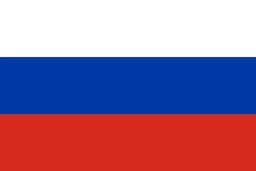
Phone Code
+7
Capital
Moscow
Population
146.1M (2025)
Languages
Russian · Abaza · Adyghe · Southern Altai · Bashkir
Area
17,075,400 km²
Electricity
220 V
Plug types
Schuko · Europlug
Driving side
right
Native Name
Россия
Region
Europe
Eastern Europe
Timezones
Kamchatka Standard Time
UTC+12:00
+25 more
On This Page
Russia is the world's largest country by area, spanning eleven time zones between the Baltic Sea and the Pacific coast, with territory across both European and Siberian Asia. Moscow is the political and cultural capital; St. Petersburg, the former imperial seat founded by Peter the Great, sits on the Baltic in the country's northwest. A unified e-visa lets citizens of more than 60 countries apply online for short stays without an invitation letter; other nationalities and longer stays require a traditional consular visa arranged through a registered host. Passport must be valid at least 6 months beyond the date of entry.
Russia Visa & Entry System
Russia offers two main visa pathways. The unified e-visa lets citizens of more than 60 countries — most EU nations, Japan, China, India, Singapore, Turkey and others, though not the UK, US, Canada or Australia — apply fully online for a single-entry visa without an invitation letter, hotel booking or other supporting documents, valid across the Russian Federation including Moscow and St. Petersburg. A traditional consular visa is required for stays beyond the e-visa's limit, multiple entries, or nationalities the e-visa does not cover; it involves an invitation or tourist voucher from a registered Russian host, confirmed accommodation, travel insurance valid in Russia, and a more demanding, paperwork-heavy application, which is why many travellers use a visa agency. See the visa categories below for the specific requirements and current fees.
Common Visa Types
Unified E-Visa
For tourism, business, guest or humanitarian visits. Available to citizens of more than 60 eligible countries. Apply fully online at evisa.kdmid.ru — a low fee, a few calendar days' processing, no invitation letter or hotel booking required. Valid across the Russian Federation, including Moscow and St. Petersburg. Single entry; no extensions once in Russia except in emergencies.
Tourist Visa (traditional)
For tourism where the e-visa does not fit — stays beyond 30 days, multiple entries, or a nationality not eligible for the e-visa. Apply at a Russian consulate or visa centre with an invitation letter or tourist voucher from a registered Russian tour operator.
Business Visa
For business meetings, conferences and commercial activities. Requires an official invitation from a registered Russian company issued through the Ministry of Foreign Affairs. Application similar to tourist visa but with business invitation. Multiple-entry options available (90 days, 180 days, 1 year). Does not authorise employment — a separate work permit is required.
Transit Visa
For transiting Russian territory to a third country. Required for land and rail transit (Trans-Siberian passengers crossing Russia to Mongolia or China need this). Some nationalities require transit visas even for airport connections without leaving the international zone. Requires onward ticket and destination country visa if applicable.
Essential Information for Russia Travellers
•Multiple governments, including the UK,...
•International payment cards may not...
•Visa Application Is Bureaucratic: minor...
•Registration Required: stays over 7...
•Language: Russian (Cyrillic script) dominates....
•Climate Extremes: Moscow winter (November-March)...
•Trans-Siberian Booking: tickets bookable via...
•Moscow Metro: one of the...
•Photography Restrictions: photographing military installations,...
Russia's scale is the defining fact of any trip here: crossing it end to end by rail takes over a week, and even a well-planned three-week trip only samples a handful of regions. Most first-time visitors anchor around Moscow and St. Petersburg, with the Golden Ring's medieval towns an easy multi-day add-on from Moscow. Lake Baikal and the wider Trans-Siberian route are the standard way to see Siberia, usually broken into stages rather than ridden non-stop. Kamchatka, in the far east, is a separate and far more remote trip reached only by air, better suited to travellers with more time and an appetite for genuine wilderness.
Discover Russia
Why the Trans-Siberian Splits Into Three Routes at Lake Baikal
The line runs as a single track from Moscow as far as Lake Baikal, then splits: the original Trans-Siberian continues northeast to Vladivostok, while the Trans-Manchurian and Trans-Mongolian branches turn south toward Beijing, via Harbin and Ulaanbaatar respectively — each requiring its own transit visas for the countries crossed. Riding the full Moscow-Vladivostok line non-stop takes six to seven days, which is why almost nobody does it that way; the standard approach is to break the journey at Yekaterinburg, marked as the exact border between Europe and Asia, at Novosibirsk, Siberia's largest city, or at Irkutsk, the closest major station to Lake Baikal.
Why Moscow and St. Petersburg Look Like Different Countries
Moscow's Kremlin developed organically over centuries as the seat of Russian power, its architecture layered from medieval fortress to imperial palace to Soviet-era additions. St. Petersburg, by contrast, was built from nothing on reclaimed Baltic swampland on Peter the Great's order, using Italian and Dutch architects brought in specifically to give the new capital a European look — which is why its canals, pastel palaces and grid-planned streets read so differently from Moscow's older, more layered centre. The city's northern latitude is also why the White Nights happen at all: for a few weeks around the summer solstice, the sun sits low enough below the horizon that the sky never fully darkens.
The Geology Behind Lake Baikal's Clarity
Baikal sits in an active continental rift valley that has been widening for roughly 25-30 million years, which is part of why it is both the world's oldest lake and, at 1,642 metres, its deepest — the rift keeps opening faster than sediment can fill it. That depth and age produced highly oxygenated water and a level of species isolation found almost nowhere else in freshwater, including the Baikal seal, the only entirely freshwater seal species on earth. In winter, strong winds sweep the ice clear of snow before it can insulate the surface, which is why the lake freezes into the transparent ice visitors walk and skate on rather than the opaque kind that forms elsewhere.
Why the Golden Ring Towns Sit Northeast of Moscow
The Golden Ring towns — Suzdal, Vladimir, Sergiev Posad and others — were themselves the centres of power in the medieval principalities that Moscow grew out of, before Moscow consolidated control and became the seat of the unified Russian state; that history is why the region's monasteries, kremlins and onion-domed cathedrals concentrate so specifically in this one corner northeast of the modern capital rather than spreading evenly across the country. The onion dome itself is a functional shape as much as a decorative one — its curve sheds heavy snow far more effectively than a flat or gently pitched roof, a practical answer to the region's winters that became a defining visual signature. Most of the Ring is reachable as day trips or a short multi-day loop directly from Moscow.
The Ring of Fire Mechanics Behind Kamchatka
Kamchatka sits directly on the Pacific Ring of Fire, where the Pacific Plate subducts beneath the Okhotsk Plate — the same collision that produces the peninsula's roughly 300 volcanoes, around 30 of them still active, along with its geysers and hot springs. Salmon run up the peninsula's rivers each summer to spawn, which is what draws the region's brown bears down to the water in concentrations rarely seen elsewhere, and why bear-watching trips are timed around the run rather than available year-round. There are no roads connecting Kamchatka to the rest of Russia, so every visit starts with a flight from Moscow or Vladivostok, followed by a guided expedition once on the ground.
How the Bolshoi and Mariinsky Keep Their Repertoire Alive
Both companies premiered much of the repertoire they're still known for — the Mariinsky staged the first productions of several Tchaikovsky ballets, and the Bolshoi has performed Swan Lake since 1877 — and both maintain staging traditions passed down through their own companies rather than reconstructed from outside. The dancers themselves largely come through the same training pipeline: St. Petersburg's Vaganova Academy, founded in the 19th century, feeds the Mariinsky directly, while Moscow has its own equivalent state ballet school feeding the Bolshoi, which is part of why each company's style stays recognisably distinct from the other's.
Ways to Experience This Destination
9,289 km from Moscow to Vladivostok — the world's longest railway journey, crossing eight time zones. Three routes share the same line as far as Lake Baikal before diverging: the Trans-Siberian continues to Vladivostok, the Trans-Manchurian branches toward Beijing via Harbin, and the Trans-Mongolian branches toward Beijing via Ulaanbaatar. Classes range from budget open-plan dormitory cars to shared 4-berth compartments to premium 2-berth cabins — fares vary by class, route and season, so check current pricing when booking. Best June-September.
Moscow's Kremlin, Red Square and St. Basil's Cathedral, the Bolshoi Theatre, Tretyakov Gallery and ornate Metro stations. St. Petersburg's Hermitage Museum (Winter Palace, 3 million+ items), Church of the Savior on Spilled Blood, Peterhof Palace fountains, Catherine Palace and the recreated Amber Room. June-July White Nights in St. Petersburg bring near-24-hour daylight.
The world's deepest and oldest freshwater lake (1,642 m deep, 25-30 million years old). Summer: boat trips, hiking the Great Baikal Trail, Olkhon Island's dramatic cliffs. Winter (February-March): walking and skating on crystal-clear frozen ice, ice caves, hovercraft trips. Gateway city Irkutsk retains historic Siberian wooden architecture.
A circuit of ancient Russian towns northeast of Moscow preserving onion-domed churches, monasteries and kremlins from the 12th-18th centuries. Suzdal (open-air museum town), Vladimir (UNESCO cathedrals), Sergiev Posad (spiritual heart of Russian Orthodoxy), Yaroslavl and Rostov Veliky. Day trips or 2-3 day circuits from Moscow.
The Kamchatka Peninsula in Russia's far east — active volcanoes, brown bears fishing for salmon, geysers, hot springs, and pristine wilderness. One of the planet's most remote inhabited regions. Accessible by air from Moscow or Vladivostok. Guided expeditions required for most areas. A serious adventure destination.
Bolshoi Theatre ballet and opera in Moscow, Mariinsky Theatre in St. Petersburg, world-class symphony orchestras, the Tretyakov Gallery (Russian art), the Russian Museum (St. Petersburg), and Tchaikovsky, Rachmaninoff and Stravinsky performed in the concert halls where their music premiered. Ticket prices vary widely by seating and performance — check current pricing when booking.
Money & Currency
Russian Ruble (RUB)
Currency code: RUB
Practical Money Tips
Foreign cards do not work — plan a cash-only trip
The single most important money fact for a visitor: foreign-issued Visa and Mastercard do not work anywhere in Russia — not in ATMs, not in shops or restaurants, and not through the mobile wallets linked to them. The international card networks do not operate in the country, and the domestic Mir system works only with cards issued by Russian banks. There is no workaround to plan for: the money you bring in cash is the money you have. Build the whole budget on that assumption before departure, and confirm the current situation close to travel, since payment access is a domain that changes.
Exchange cash at licensed bureaux — never on the street
Licensed exchange offices (обмен валюты, obmen valyuty) operate throughout Russian cities — in airports, banks, shopping centres and standalone bureaux. The structure of rates is stable even as the numbers move: airport and hotel desks are consistently the worst value, city-centre bureaux the best, so change only what the first day needs on arrival and the rest in town. Bring clean, undamaged notes — torn or worn bills can be refused outright — and expect euros and US dollars to be the currencies every office handles; other currencies may not be accepted outside the largest banks. Never change money with street changers: unofficial exchange is where visitors get cheated.
ATMs exist, but not for you
Russian cash machines are everywhere in cities and entirely beside the point for a foreign visitor: they serve domestically issued cards only. Do not build any part of the plan around withdrawing money after arrival. The working sequence is the one cash-only destinations always reward: estimate the full trip cost, carry it in euros or dollars, exchange in stages, and keep the reserve secured in more than one place.
Carrying and spending: small notes, split reserves
Treat the trip the way experienced travellers treat any cash economy. Split the reserve between luggage, person and the hotel safe rather than one wallet; carry a modest day-wallet you can open in public without exposing the rest. Keep a stock of small-denomination ruble notes for taxis, markets, metro tickets and street food — large notes are for the exchange office and the hotel, not the kiosk. When estimating the total, add a genuinely generous buffer: running out of cash in a country where your cards do not work is the one failure with no easy recovery.
Note: Always check current exchange rates before traveling. Currency exchange is available at airports, banks, and authorized money changers.
What currency does Russia use?
How much cash should I bring to Russia?
Can I use Apple Pay, Google Pay or contactless in Russia?
Should I bring euros or US dollars?
Is Russia expensive?
Is tipping expected in Russia?
How do I pay for taxis and transport?
Cities
Explore our city travel guides
Russia — Embassies worldwide
Popular Destinations
Top destinations with verified missions
All Countries by Continent
Embassies in Russia
These foreign embassies and consulates are based here. Choose a mission to open its in-depth guide and contact details.
Key origin countries


All countries by continent


How do I get a Russian visa as a tourist?
Citizens of more than 60 countries can apply online for the unified e-visa, which needs no invitation letter and covers most of the Russian Federation for short stays; travellers from other countries, or anyone wanting a longer or multiple-entry stay, need a traditional consular visa arranged through a registered Russian host — check the current eligible-country list and requirements before applying.
Will my credit or debit card work in Russia?
Not reliably — check current card acceptance before you travel, and plan to carry cash (Euros or US dollars) to exchange for Rubles at official exchange offices, which are widespread in Russian cities.
How long does the Trans-Siberian Railway actually take?
Riding Moscow to Vladivostok non-stop takes six to seven days, but almost no one does it that way — most travellers break the journey with stops at cities like Yekaterinburg, Novosibirsk or Irkutsk, turning it into a multi-week trip rather than a single continuous ride.
What's the best time to visit Lake Baikal?
It depends on what you want: summer (roughly June-September) is for boat trips, hiking and kayaking on open water, while February-March brings the lake's famous clear ice, when the surface is thick and transparent enough for skating, hovercraft trips and ice caves.
Is English widely spoken in Russia?
Only in a limited way, mostly in Moscow and St. Petersburg's tourist areas — outside those zones, English proficiency drops off quickly, and learning to read Cyrillic script helps considerably with signs, metro stations and menus.
Can I visit Kamchatka independently, or do I need a tour?
Guided expeditions are required for most of Kamchatka's wilderness areas, and the peninsula has no road connection to the rest of Russia, so trips start with a flight from Moscow or Vladivostok and continue with an organised guide once on the ground.
This overview comes from Visaja's worldwide missions database (visaja.com), checked against official government sources; for binding answers, the mission itself always has the final word.