Montenegro

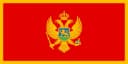
Flag of Montenegro

Phone Code

+382

Capital

Podgorica

Population

620,000

Native Name

Црна Гора

Region

Europe

Southern Europe

Timezone

Central European Time

UTC+01:00

Montenegro is a small Balkan country on the Adriatic Sea coast, bordered by Croatia, Bosnia and Herzegovina, Serbia, Kosovo, and Albania. Name means 'Black Mountain' (Crna Gora in Montenegrin). One of Europe's youngest countries, Montenegro was part of Yugoslavia (1945-1992), then Serbia and Montenegro union (1992-2006), finally gaining independence in 2006 via referendum. Despite tiny size (13,812 km², smaller than Connecticut), Montenegro packs dramatic diversity: Adriatic coastline with fjord-like Bay of Kotor, medieval walled towns, rugged Dinaric Alps mountains, Durmitor National Park, Tara River Canyon (deepest in Europe after Verdon Gorge), glacial lakes, and Orthodox monasteries. Podgorica, the capital, is modern city rebuilt after WWII. Kotor, the jewel, is UNESCO World Heritage medieval town with stunning bay setting. Visitors are drawn to Bay of Kotor (Boka Kotorska fjord-like bay, medieval Kotor Old Town, Perast village), Budva Riviera beaches (Budva Old Town, Sveti Stefan luxury island resort), Durmitor National Park (Tara Canyon rafting, Black Lake, skiing), Lovćen National Park (Njegoš Mausoleum mountain-top views), Ostrog Monastery (cliff-built Orthodox monastery), Skadar Lake (largest in Balkans, bird sanctuary), and Biogradska Gora virgin forest. Montenegro offers Croatia-like beauty at 30-40% lower prices, making it increasingly popular with European tourists and digital nomads.

Visa Requirements for Montenegro

Montenegro has liberal visa policies for tourism. Citizens of EU member states, United States, Canada, United Kingdom, Australia, New Zealand, and many other countries can enter visa-free for up to 90 days within any 180-day period. IMPORTANT: Although Montenegro is NOT in the EU or Schengen Area (candidate for EU membership since 2010, NATO member since 2017), it allows visa-free access to most nationalities that have Schengen visa-free privileges. Montenegro also accepts valid Schengen visas, US visas, and UK visas as equivalent to Montenegro visa - travelers holding these can enter visa-free regardless of nationality. For those requiring visas, embassy applications are available. Passport must be valid for 3 months beyond intended departure. Montenegro uses Euro as currency despite not being EU member (unilaterally adopted 2002). Tourist police registration required within 24 hours - hotels do automatically but Airbnb hosts must do manually (fine if not registered). Border crossings with Croatia, Albania, Bosnia, Kosovo, and Serbia typically smooth. Montenegro is EU candidate positioning itself as affordable Adriatic alternative to expensive Croatia.

Common Visa Types

Visa-Free Entry

Up to 90 days within any 180-day period; passport valid 3 months beyond stay; no advance application; stamped at border; MUST register with tourist police within 24 hours (hotels do automatically, Airbnb hosts must do manually - keep registration slip); cannot work; straightforward entry; crossing from Croatia very common.

For tourism or business for EU, US, UK, Canada, Australia, and many other countries.

Visa Waiver for Visa Holders

Can enter Montenegro visa-free for up to 30 days if holding valid Schengen, US, or UK visa or residence permit; show visa at border; useful for Chinese, Indian, Russian citizens with these visas; no separate Montenegro visa needed; must still register within 24 hours.

For citizens of countries requiring Montenegro visas who hold valid Schengen, US, or UK visas.

Embassy Visa

30-90 days typically; apply through Montenegro embassy or consulate; requires application form, passport, photos, hotel booking, return ticket, travel insurance, proof of funds; Montenegro has limited embassy network - may apply through Serbian embassies where Montenegro not represented; processing 5-15 days.

For nationalities not eligible for visa-free entry or visa waiver scheme.

Temporary Residence Permit

1 year, renewable; Montenegro increasingly popular with digital nomads (affordable, beautiful, uses Euro); requires proof of income/funds, health insurance, accommodation, background check; apply through Ministry of Interior; Montenegro considering formal digital nomad visa program; many remote workers use tourist visa and exit/re-enter every 90 days.

For long-term stays exceeding 90 days including remote workers, retirees, or those establishing businesses.

Important Travel Information

Tourist registration MANDATORY: ALL visitors must register with local tourist police within 24 hours of arrival. Hotels and official accommodations register automatically (keep white registration slip - 'white card'). Airbnb hosts, private rentals, staying with friends MUST register manually at nearest police station. Failure to register: €150-300 fine and possible deportation. Keep registration slip throughout stay - may be checked. Register again if changing accommodation.

Uses Euro but not EU: Montenegro unilaterally adopted Euro in 2002 (previously used German Mark) despite not being EU member. No permission from EU but tolerated. Advantage for travelers: no currency exchange, widely recognized prices, ATMs abundant. Montenegro is EU candidate (since 2010) and NATO member (since 2017). May join EU in late 2020s. Not in Schengen - has border controls. Customs union with EU for most goods.

Bay of Kotor unmissable: Boka Kotorska (Bay of Kotor) is fjord-like bay (technically drowned river canyon, not true fjord) with medieval towns and dramatic mountain backdrop. Kotor Old Town (UNESCO World Heritage) has Venetian architecture, city walls climbing 1,350 steps to fortress (views incredible, 90 minutes round-trip climb), cats everywhere (symbol of Kotor). Perast village: baroque architecture, two island churches (Our Lady of the Rocks man-made island). Avoid cruise ship days in Kotor (massive crowds 9am-4pm) - best early morning or evening.

Travel Overview

Montenegro packs an extraordinary diversity of landscapes into its compact territory: the fjord-like Bay of Kotor (UNESCO), Adriatic beach resorts in Budva and Ulcinj, the dramatic Durmitor mountain range with the Tara River Canyon (Europe's deepest), and medieval monasteries in remote valleys. The country has positioned itself as an affordable Mediterranean alternative to Croatia and Greece, with a growing tourism infrastructure, the euro as its currency, and visa-free access for most European visitors. The Adriatic coast is the main draw, but the mountainous interior offers rafting, hiking, and skiing that rival better-known Alpine destinations.

Discover Montenegro

The Boka Kotorska is southern Europe's great optical illusion — a drowned river canyon that reads as a fjord, its dark mountains dropping straight into still water with medieval towns stitched along the shore. Kotor is the anchor: a UNESCO-listed Venetian old town of marble lanes, campaniles and the cats that have become its unofficial emblem, backed by the 'ladder of Kotor' — ramparts climbing 1,350 steps to the San Giovanni fortress, a sweaty 90-minute round trip that pays out the definitive bay panorama. Timing is strategy: on cruise days the old town belongs to ship crowds from roughly 9 to 4, so walk the walls at first light or take the town back in the evening. Perast, twenty minutes along the shore, is sixteen churches and a string of palazzi facing two islets — Our Lady of the Rocks, built by hand over centuries of votive stone-dropping (renewed every 22 July in the fašinada boat procession), holds a museum and chapel reached by five-minute boat hop. Herceg Novi's bougainvillea stairways close the bay at its seaward gate.

Ways to Experience This Destination

Bay of Kotor & coastal heritage

The Bay of Kotor — often compared to a fjord — is Montenegro's crown jewel. The walled old town of Kotor (UNESCO), the islands of Our Lady of the Rocks and Sveti Djordje, the village of Perast, and the clifftop fortress hike above Kotor offer a concentrated Mediterranean experience. Herceg Novi at the bay's entrance adds Austro-Hungarian architectural charm.

Beaches & Adriatic coast

Budva's old town and surrounding beaches (Mogren, Bečići, Jaz) are the main beach destination. The fortified island of Sveti Stefan — now an Aman resort — is one of the most photographed sites in the Adriatic. Further south, Ulcinj's long sandy beach (Velika Plaža) and Ada Bojana's kite-surfing complete the coastal offering.

Mountains & adventure

Durmitor National Park (UNESCO) offers hiking, skiing, and the Tara River Canyon — Europe's deepest at 1,300 metres. The Tara River itself is one of the top white-water rafting experiences in Europe. Biogradska Gora National Park preserves one of Europe's last primeval forests. The mountainous interior is dramatically different from the coast.

Digital nomads & longer stays

Montenegro has become increasingly popular with remote workers drawn by affordable living costs, reliable internet in coastal towns, the euro as currency, beautiful surroundings, and a 90-day visa-free stay for EU citizens. Budva, Kotor, and Tivat are the main nomad hubs, with a growing co-working scene.

Money & Currency

Money & Currency

Euro (EUR)

Currency code: EUR

Practical Money Tips

Montenegro uses the euro (EUR)

Montenegro uses the euro as its de facto currency despite not being an EU member. For visitors from eurozone countries, no currency exchange is needed. Non-eurozone visitors can exchange currency at banks in Podgorica or Budva, or withdraw euros from ATMs. Montenegro offers excellent value compared to Croatia or Greece — meals, accommodation, and activities cost significantly less.

Cards accepted in coastal towns

Visa and Mastercard are widely accepted at hotels, restaurants, and shops in Budva, Kotor, Tivat, and Podgorica. Contactless payments are common in modern establishments. In smaller mountain towns, rural areas, and local markets, cash remains essential. Some ger camps and adventure operators prefer cash.

ATMs in all towns

ATMs are available in all towns of significant size. Major banks include CKB, NLB Montenegro, Erste Bank, and Hipotekarna Banka. Most accept Visa, Mastercard, and Maestro. ATMs are reliable but may have withdrawal limits.

Affordable destination

Montenegro offers excellent value for money. A restaurant meal costs roughly 8–15 EUR, a coffee 1–2 EUR, and mid-range accommodation 40–80 EUR/night on the coast in summer. Beach umbrellas and loungers typically cost 5–15 EUR/day. The interior is even more affordable.

Note: Always check current exchange rates before traveling. Currency exchange is available at airports, banks, and authorized money changers.

Common Money Questions

Diplomatic Network

Montenegro — Embassies worldwide

All Countries by Continent

Hosted missions

Embassies in Montenegro

These foreign embassies and consulates are based here. Choose a mission to open its in-depth guide and contact details.

Key origin countries

All countries by continent

Frequently asked questions

Most visitors don't: EU, US, UK, Canadian, Australian and many other citizens enter visa-free for 90 days in any 180 — note Montenegro is NOT in the EU or Schengen, so these days don't touch your Schengen allowance. The useful extra: holders of a valid Schengen, US or UK visa or residence permit can enter visa-free for up to 30 days regardless of nationality. Everyone must be registered with the tourist police within 24 hours of arrival.

Montenegro's one bureaucratic must: every visitor is registered with the local tourist authority within 24 hours. Hotels and official accommodation do it automatically — just keep the white slip they give you. Private rentals and stays with friends put the duty on YOU (or your host) at the nearest police station or tourist office. No slip risks a fine of €150-300 and questions at departure, so treat it as part of check-in, and re-register when you change towns.

Noticeably — the standing rule of thumb is 30-40% below Croatian prices for comparable coast, food and rooms, which is exactly why the Bay of Kotor has become the value play for Adriatic scenery. The gap narrows in July-August when Budva and Kotor run at full demand; the shoulder months (May-June, September-October) restore it fully. The euro is the currency despite non-EU status, which keeps budgeting simple.

Visaja keeps this page's contact details and visa guidance under continuous review — still, requirements can change at short notice, so confirm the essentials with the mission or the official government portal before you travel.