Lagos
Apply for your eVisa- Population:15.1M (2022)
- Area:1,171 km²
- Elevation:34 m
- Timezone:WAT (UTC+1)
- IATA:LOS
Overview
Lagos is Nigeria's largest city and economic and cultural capital — one of Africa's great megacities, spread across the mainland, lagoons and Atlantic islands. It is the engine of Afrobeats and Nollywood, a city of beaches and boat trips, art galleries and markets, legendary nightlife and food, pulsing with the energy that has made it the continent's creative powerhouse.
Lagos from the lagoon — Victoria Island's towers behind the water traffic.
Travel
Lagos is the largest city in Nigeria and one of the biggest and fastest-growing in the world — a vast, exuberant megacity of well over fifteen million people, spread across the West African mainland, a network of lagoons and a cluster of Atlantic islands. It is not Nigeria's political capital (that is Abuja), but it is the country's undisputed economic and cultural heart, and the creative engine of the continent. The geography divides the city: the older mainland and the historic Lagos Island, with its markets and colonial-era core, sit across the water from the wealthier islands of Victoria Island and Ikoyi — the business, dining and nightlife districts — and the rapidly expanding Lekki peninsula beyond, with its beaches, galleries and the new Eko Atlantic city rising on reclaimed land. Lagos is, above all, a cultural force: it is the home of Afrobeats, the genre that has conquered global music through artists like Burna Boy, Wizkid and Davido; the centre of Nollywood, the world's second-largest film industry by output; and the legacy home of the Afrobeat pioneer Fela Kuti, celebrated at the New Afrika Shrine and the annual Felabration. Its arts scene — the remarkable Nike Art Gallery, art fairs and a wave of galleries — its fashion, and its famously high-energy nightlife draw a creative crowd, while its food, from jollof rice and pepper soup to the smoky street-side suya, is a destination in itself. There are beaches too — the boat-access Tarkwa Bay, the lively Elegushi and the Lekki strands — and pockets of nature like the Lekki Conservation Centre with its long treetop canopy walkway. Lagos is intense — the traffic (“go-slow”) is legendary and it demands a little local know-how — but for travellers ready to embrace it, the city offers an unmatched window onto contemporary African urban life. The climate is hot and humid year-round, with a drier, more comfortable season from November to March (and the hazy harmattan winds).
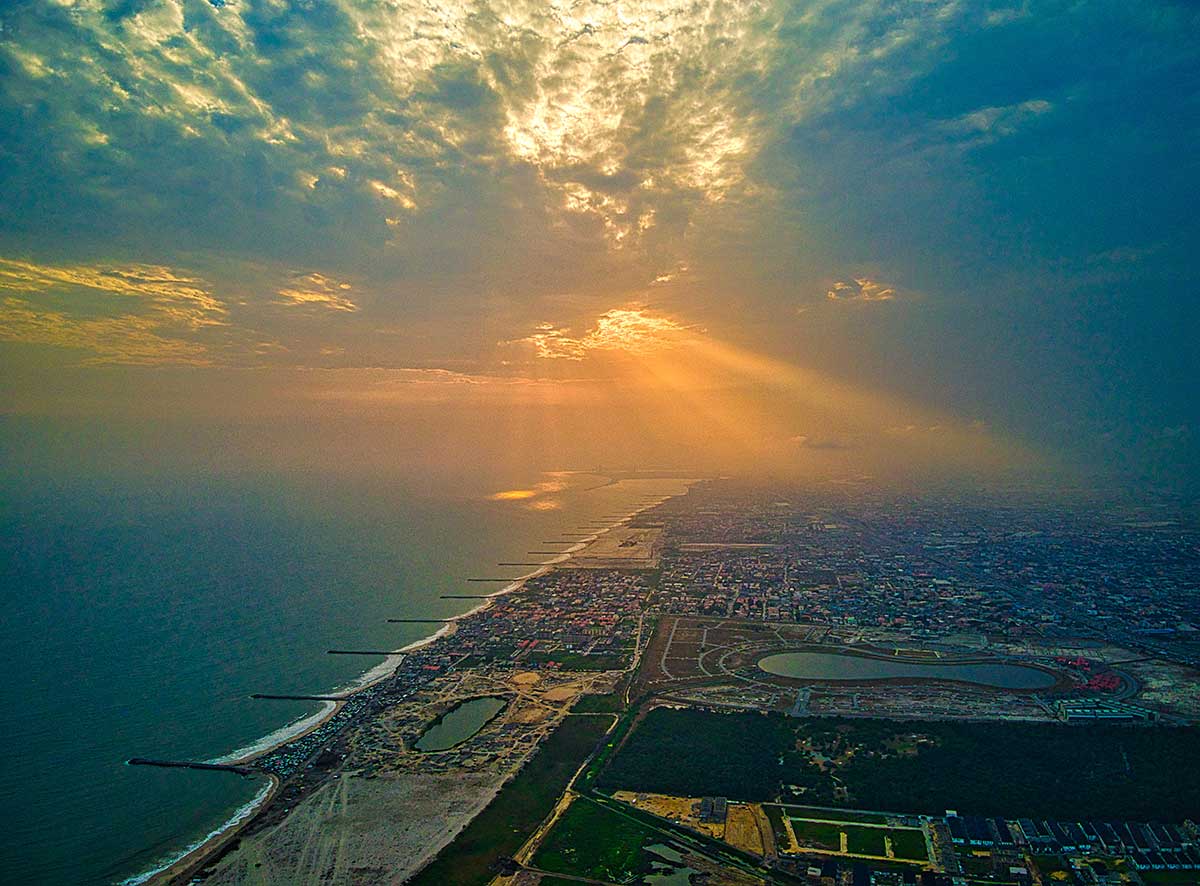
To understand Lagos is to grasp its geography of water and islands. The historic core is Lagos Island, the old commercial and trading heart, home to the teeming Balogun and Idumota markets, the National Museum and the city's origins. Across the lagoon lie the affluent islands that most visitors gravitate to: Victoria Island, the business and dining hub with corporate towers, restaurants, bars and hotels; leafy, upscale Ikoyi; and, stretching east, the booming Lekki peninsula, with its beaches, galleries, gated estates and shopping, beyond which the futuristic Eko Atlantic district is being built out into the sea. The bridges linking these islands to the densely populated mainland (Yaba, Surulere, the vast suburbs) carry the city's famous traffic. Lagos is a city of staggering scale and energy, of wealth and hustle side by side, and of constant motion — and simply experiencing that intensity, ideally with a local guide or host, is part of what makes a visit memorable. Boat trips on the lagoon offer a calmer, revealing perspective on this sprawling metropolis of the water.
Frequently asked questions
Diplomatic missions in Lagos
1 embassy based in this city, grouped by region.
Treat this Visaja page as your starting point: verify the current rules directly with the official source before you submit an application.