Introduction
Cusco Region (Región Cusco) covers 71,892 km² of south-central Peru, stretching from the Sacred Valley of the Incas at 2,800–3,000 m altitude through the Andean high plains and snow-capped peaks above 6,000 m to the cloud forests and lowland Amazon tributaries below 1,000 m in the region's northeast. The department spans four altitudinal zones — Quechua, Suni, Puna, and Selva Alta — each with distinct ecology and settlement. The regional capital, Cusco city (altitude 3,399 m), was the capital of the Inca Empire and is the most visited city in Peru.
Overview
Cusco Region concentrates more UNESCO-listed heritage and internationally known natural environments in a compact area than any other department in South America. The core triangle — Cusco city at 3,399 m, the Sacred Valley floor at 2,700–2,900 m, and Machu Picchu at 2,430 m — can be sequenced in four to five days with careful altitude-transition planning, but most visitors under-budget time for the Inca Trail (4 days, 43 km, permit-controlled), the Salkantay and Lares alternative treks (3–5 days each), and the cloud-forest transition zones. Altitude is the dominant planning variable: visitors arriving from Lima (sea level) to Cusco (3,399 m) experience soroche symptoms in the first 24–48 hours with high frequency; the standard mitigation is spending the first night in the Sacred Valley (200–700 m lower) or resting completely in Cusco on day one. Ticket and permit systems are the second planning constraint: Machu Picchu timed-entry tickets, sold online through the official government ticketing system, sell out weeks to months ahead in peak season (June–August), and Inca Trail permits (500 people per day total, 200 tourists) are released once annually and claimed by licensed operators within hours. The Boleto Turístico General covers 16 archaeological and museum sites across the region and is the standard multi-site access mechanism for everything except Machu Picchu — confirm the current price and the partial-circuit options when you buy.
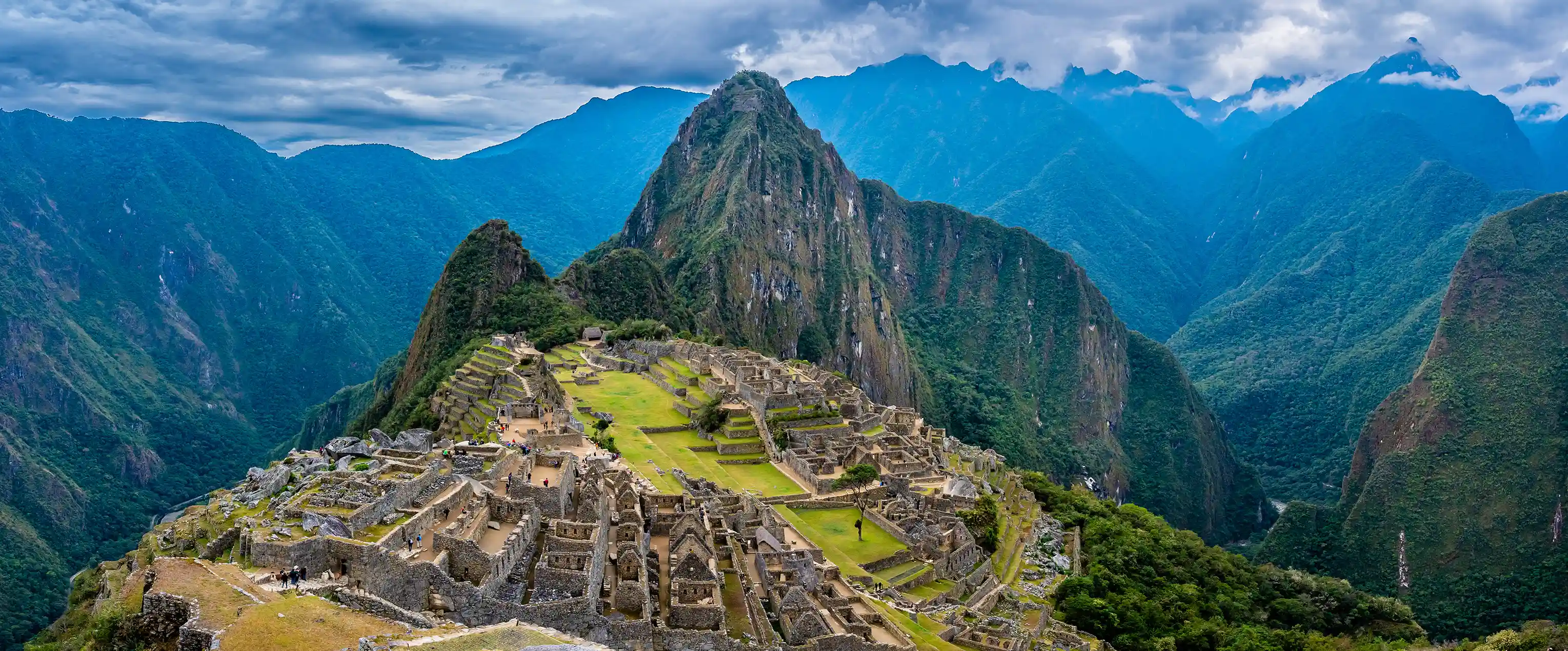
Machu Picchu — the Inca citadel at 2,430 m, reached from Cusco via the Sacred Valley.
© borisbelenky / Adobe Stock
Discover Cusco
Cusco city's visitability extends well beyond the immediate Plaza de Armas into four peripheral archaeological sites covered under the Boleto Turístico General: Sacsayhuamán (2 km north, megalithic Inca walls, hilltop platform with city panorama), Qenqo (4 km northeast, rock-carved ceremonial channels and underground passages), Puca Pucara (10 km northeast, red stone Inca checkpoint), and Tambomachay (11 km northeast, spring-fed ritual bathing fonts). The Boleto Turístico General (BTG), sold at the ticket office on Av. El Sol and online, covers these four sites plus 12 more across the Sacred Valley and the Cusco city museums, including the Qorikancha site museum. Three partial circuits are sold separately at a lower price each and target specific geographic clusters if you are only visiting a subset — worth doing the arithmetic against your actual itinerary, since the full pass only pays off across several days. The full BTG runs for 10 days; confirm current prices when you buy.
Ways to Experience This Destination
Machu Picchu (UNESCO), Ollantaytambo, Pisac, Sacsayhuamán, Chinchero, and Moray — the highest concentration of intact Inca sites anywhere in the Americas, accessible from Cusco city via the Boleto Turístico General.
Classic Inca Trail (4 days, permit required), Salkantay (5 days, no permit), Lares (3–4 days), and Ausangate Circuit (7 days) — all operating at 4,000–5,000 m altitude and requiring licensed guides.
Pisac artisan market (Tuesday, Thursday, Sunday), Chinchero weaving cooperatives, Andean textile traditions, and highland town culture along the 85-km Sacred Valley corridor.
Rainbow Mountain (Vinicunca, 5,100 m), Humantay Lake (4,200 m), Ausangate glacier circuit (6,372 m), and the Puna grasslands of the Andes above 4,000 m.
Manu Road descent through five altitudinal zones, Manu National Park UNESCO Biosphere Reserve, Wayqecha cloud-forest biological station, and Santa Teresa thermal springs at 1,600 m.
PeruRail and Inca Rail services from Ollantaytambo (1.5 h to Aguas Calientes) and Cusco Poroy station (3.5 h) connecting the Sacred Valley circuit to Machu Picchu.
Important Cusco Region Travel Notes
- Machu Picchu timed-entry tickets must be purchased online through the official government ticketing system, and before you buy train tickets — on-site sales no longer exist, and a train that does not match your entry slot is worthless. Peak season (June–August) sells out well ahead.
- Inca Trail permits: annual release in late January, sold through licensed operators only; popular operators sell out within hours of release — book 6–12 months ahead for peak season trekking.
- Boleto Turístico General (BTG): a 10-day pass covering 16 sites including Sacsayhuamán, the Pisac archaeological site, Ollantaytambo, Chinchero and Moray, sold at the Av. El Sol ticket office and online. Three cheaper partial circuits cover geographic subsets — check the current prices and match them against your actual itinerary rather than defaulting to the full pass.
- Altitude acclimatisation: Cusco city at 3,399 m causes soroche (altitude sickness) in many visitors arriving from sea level — plan a complete rest day on arrival, avoid alcohol and heavy meals, and consider spending the first night in the Sacred Valley (300–700 m lower) for easier adjustment.
- Altitude remedies: coca tea (mate de coca) is offered free at most Cusco hotels and is the ordinary local practice; bottled oxygen is available at pharmacies and many hotels. Anything beyond that belongs to a doctor or travel clinic BEFORE you travel — prescription altitude medication has real contraindications and the right choice depends on your health, your route and how fast you intend to ascend.
- Sacred Valley base advantage: staying the first night in Urubamba (2,863 m) or Pisac (2,972 m) before moving to Cusco city (3,399 m) is a recognized altitude-mitigation strategy — the valley floor is meaningfully lower.
- Rainbow Mountain (Vinicunca, 5,100 m): the trailhead is at 4,600 m — visitors who experienced significant soroche in Cusco city should complete 2–3 acclimatization days before attempting this hike; depart Cusco 04:00–05:00.
- Machu Picchu circuits and mountain permits: Circuit 1 and Circuit 2 are the standard citadel routes; Huayna Picchu mountain (400 permits/day) and Machu Picchu mountain (800 permits/day) require separate purchase on the same booking platform.
- Train advance booking: the panoramic and luxury services on the Ollantaytambo–Aguas Calientes line both require booking weeks ahead in peak season, and the price gap between the standard, panoramic and luxury tiers is wide — book directly with the rail operators and confirm current fares when you do.
- Pisac artisan market main days are Tuesday, Thursday, and Sunday — Sunday is the largest; the archaeological site above the town is a separate BTG entry and is often missed by visitors who only attend the market.
- Inca Trail closes entirely during February for conservation maintenance — alternative treks (Salkantay, Lares) remain open year-round but require wet-weather gear November–April.
- Maras salt mines: open daily with no closing day, for a small admission charged separately from the regional pass; reachable on a 4-km walking trail from Maras village, or by guided tour combining it with Moray in a half-day circuit from Urubamba.
Tourism & destination guides
Official government sites
Official Cusco regional government portal — regional administration, infrastructure, and public services for the department.
Official Ministry of Culture ticket reservation system for Machu Picchu timed-entry — purchase citadel circuits, Huayna Picchu, and Machu Picchu mountain permits.
Cities in Cusco
This overview comes from Visaja's worldwide missions database (visaja.com), checked against official government sources; for binding answers, the mission itself always has the final word.