Somalia
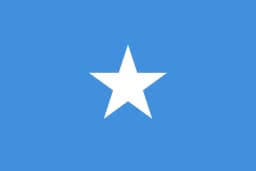
Phone Code
+252
Capital
Mogadishu
Population
11M (2017)
Languages
Somali · Arabic
Area
637,657 km²
Electricity
220 V
Plug types
Europlug
Driving side
right
Native Name
Soomaaliya
Region
Africa
Eastern Africa
Timezone
East Africa Time
UTC+03:00
On This Page
Somalia is a country in the Horn of Africa on the Indian Ocean and Gulf of Aden, bordered by Djibouti, Ethiopia and Kenya. Mogadishu serves as the capital (population 2.5 million). Somalia has a population of approximately 17 million and covers 637,657 km². The country gained independence from Britain (British Somaliland in the north) and Italy (Italian Somaliland in the south) in 1960, unifying as the Somali Republic. The Federal Government of Somalia, established in 2012, exercises authority across most of the country, while Somaliland (north-west) operates as a self-governed region with its own institutions, currency and passports, and Puntland (north-east) is a semi-autonomous region. Travellers should consult current government travel advisories before any visit and follow official guidance closely. Most travel to Somalia today is undertaken for business, diaspora visits or with established tour operators specialising in the region. Somaliland — particularly Hargeisa, Berbera and the Laas Geel rock-art site — is the most accessible region for adventurous travellers and has a small but growing tourism industry.
Visa Requirements for Somalia
Always check the latest official travel advisory for your nationality before planning a trip to Somalia, and follow the guidance issued by your government. Independent leisure tourism to Mogadishu and the federal-government-controlled south is extremely limited; most travel to those areas is for business, humanitarian work, journalism or diaspora visits, typically with professional security arrangements. For federal Somalia, check nationality eligibility and apply through the official portal at evisa.gov.so or the Somali mission before travel; do not assume visa-on-arrival availability, a fee or a duration from an older travel guide. Somaliland operates a separate entry system through its own authorities. A federal Somalia visa is not automatically valid for Somaliland and vice versa, so confirm the document and airport for each part of the itinerary. Somaliland sees a small but growing flow of adventure travellers visiting Hargeisa, Berbera and Laas Geel via local tour operators.
Common Visa Types
Somalia Visa
Official visa for entering federal Somalia (Mogadishu and most southern regions).
Somaliland Visa
For entry to Somaliland — a self-governed region in the north-west, based in Hargeisa.
Important Travel Information
- •Travel Advisories — Always Check Before You Go: Government travel advisories for Somalia change frequently and vary by region. Always consult your home country's official advisory (UK Foreign Office, US State Department, Australian DFAT, Canadian Global Affairs, German Auswärtiges Amt, etc.) before any travel and follow their guidance. Most independent leisure travel today focuses on Somaliland in the north-west, where the security environment is generally calmer and a small ecosystem of local operators caters to adventure travellers. For federal Somalia (Mogadishu and southern regions), travel is typically organised by employers, NGOs or specialised operators with their own security arrangements.
- •Somaliland — Where Most Visitors Go: Somaliland (north-west Somalia, capital Hargeisa, population 5.7 million, area 176,120 km²) operates as a self-governed region with its own government, currency (Somaliland shilling), passports and democratic elections. The main visitor highlights include Hargeisa (markets, the National Museum, the war memorial), Berbera (a port city on the Gulf of Aden with beaches and historic Ottoman architecture), Laas Geel (prehistoric rock-art caves 5,000-11,000 years old, with vivid paintings of cattle, giraffes and humans — one of Africa's most remarkable rock-art sites), and the Daallo Mountains in the east. Tourism infrastructure is basic: small hotels in Hargeisa (check current rates), a handful of restaurants, and guided tours arranged through local operators. Visitors typically arrive on direct flights from Addis Ababa, Nairobi or Dubai. Travellers should plan trips in advance, work with established local guides, and follow their home government's travel advisory.
- •Heritage and Coastline: Somalia's coastline — the longest of any African country at 3,025 km — runs along the Indian Ocean and Gulf of Aden. Berbera in Somaliland has a long history as a Red Sea trading port with surviving Ottoman-era buildings and a working harbour. The wider region preserves significant pre-Islamic and Islamic heritage, including ancient mosques in Mogadishu's old quarter and rock-art sites in the interior. Somali culture is rich in oral poetry, music and a distinctive cuisine influenced by Indian, Italian and Arabian trade — sambusas, anjero (a sourdough flatbread similar to injera), bariis iskukaris (spiced rice with meat) and camel meat are staples. Visitors interested in Somali culture and food can find it both inside the country and in the large Somali diaspora communities in Nairobi, Addis Ababa and Dubai.
Travel to Somalia today centres overwhelmingly on Somaliland in the north-west — a self-governed region with its own institutions, currency and elections that has built up a small but genuine adventure-tourism scene around heritage sites and the Indian Ocean coastline. Hargeisa, the Somaliland capital, is the typical entry point: the bustling Hargeisa Central Market, the National Museum and the war memorial monument anchor a day or two in the city, with simple hotels — check current rates — and locally-run guides arranging onward travel. The single most cited destination is Laas Geel, a complex of granite caves about an hour east of Hargeisa where vivid 5,000 to 11,000-year-old rock paintings of cattle, giraffes and human figures rank among the best-preserved prehistoric art on the African continent. Berbera, on the Gulf of Aden coast, is a Red Sea trading port with surviving Ottoman-era buildings, a working harbour, white-sand beaches and a growing dive scene around the offshore reefs. Inland to the east, the Daallo Mountains rise dramatically over the coastal plain with juniper-and-frankincense forests, while Zeila — the ancient port near the Djiboutian border — preserves the country's longest-standing Indian Ocean trading legacy. Somali culture is anchored in oral poetry, distinctive cuisine (sambusas, anjero flatbread, bariis iskukaris spiced rice, camel meat), and a coastline of 3,025 km — the longest of any African country. Federal Somalia (Mogadishu and the south) sees mostly business, humanitarian, journalism and diaspora travel, organised through professional operators with their own arrangements. International access: Somaliland via direct flights from Addis Ababa, Nairobi or Dubai to Hargeisa Egal International Airport; federal Somalia via Mogadishu Aden Adde International Airport. Government travel advisories vary significantly by region — always consult your home country's current guidance before booking.
Discover Somalia
Why Laas Geel's Paintings Have Survived for Thousands of Years
Laas Geel's rock art sits under natural granite overhangs that shelter the painted surfaces from direct rain and sun, and the region's consistently dry climate means the pigments — mineral-based paints that bond into the rock surface over time — never faced the freeze-thaw cycles or heavy moisture that destroy most open-air rock art elsewhere in the world. That combination of shelter and aridity is why the colours remain so vivid rather than faded to faint outlines, and why archaeologists can date different layers of painting across a range spanning thousands of years at the same site — later generations painted over or alongside earlier work rather than the entire site being a single-period creation. The cattle-herding scenes depicted are themselves a direct record of when pastoralism first spread through this part of the Horn of Africa, making the site as valuable to archaeologists as it is striking to visitors.
Why Berbera Became a Major Indian Ocean Trading Port
Berbera sits on a natural harbour sheltered enough for ships to anchor safely, positioned exactly where the seasonal monsoon winds that powered Indian Ocean trade for centuries made it a natural stopping point between Arabia, India and the African coast — sailing ships could time their arrival and departure around those predictable wind shifts, which is why a port formed here rather than at a less sheltered stretch of coast nearby. The surviving Ottoman-era buildings date from the period when Berbera sat within the wider Ottoman and later British sphere of Red Sea trade influence, and the town's continued use as a working harbour today is a direct continuation of the same trading function rather than a preserved-but-inactive heritage site.
Why Hargeisa, Not a Coastal City, Became the Capital
Hargeisa sits inland on a plateau rather than on the coast, a position that put it at the crossroads of overland trade and livestock routes connecting the interior grazing lands to the ports, which is why it grew into the region's administrative and commercial centre rather than a purely coastal town like Berbera taking that role. The Central Market's scale and constant activity reflects that same function — Hargeisa is still where livestock, goods and people from across the wider region actually converge, not just a capital city with government buildings. The National Museum's collection focuses heavily on the same pastoral and trading culture that built the city, which is why its exhibits connect directly to what visitors see in the market and on the roads leading into town.
Why Frankincense Trees Grow Specifically in the Daallo Range
Frankincense trees need a very particular combination of altitude, drainage and dry-season stress to produce the aromatic resin that made the region famous in ancient trade networks, and the Daallo range's elevation, rising sharply from the coastal plain, creates exactly that band of conditions along its slopes — which is why the trees concentrate there rather than growing across the wider lowlands. Zeila's history as a trading port predates Berbera's, sitting even closer to the narrow crossing point to Arabia across the Gulf of Aden, which made it one of the earliest points of contact between the Horn of Africa and Arabian trade networks — its long decline relative to Berbera came down to harbour siltation and shifting trade routes over the centuries, not any lack of historical importance.
Why Poetry, Not Writing, Carries Somali History
Somali remained primarily an oral rather than a written language for most of its history — a standard Latin-script writing system wasn't formally adopted until 1972 — which is why oral poetry became the primary vehicle for recording history, law, genealogy and current events, with skilled poets holding a role closer to historians and commentators than entertainers alone. That tradition is why poetry recitation still carries real social weight today, in Somalia and across the diaspora alike, in a way few other cultures' oral traditions have retained into the modern era. The diaspora itself is large and globally spread specifically because decades of displacement pushed Somali communities to resettle across East Africa, the Gulf, Europe and North America, which is why Somali restaurants, mosques and community centres are now genuinely global rather than concentrated in one or two neighbouring countries.
Ways to Experience This Destination
Granite cave complex 50 km east of Hargeisa with 5,000–11,000-year-old paintings of cattle, giraffes, antelopes and human figures — among the best-preserved prehistoric rock art in Africa, accessed via local guides on a half-day excursion.
Historic port town with Ottoman-era buildings, a working harbour, white-sand beaches and emerging dive operations on the offshore reefs of the Gulf of Aden — Somaliland's main coastal destination.
Somaliland's capital with its central market, National Museum, war memorial and a young and engaged urban culture — usually the entry-and-exit point for any adventure trip to the region.
Dramatic juniper-and-frankincense forests in the Daallo range east of Hargeisa, plus the ancient Indian Ocean port of Zeila near the Djiboutian border — for travellers extending beyond the standard Hargeisa–Berbera–Laas Geel circuit.
Somali oral poetry, anjero flatbread and bariis iskukaris cuisine, Italian-influenced touches in Mogadishu's old quarter, and family visits across one of the world's largest refugee diasporas — Somalia is also a destination for diaspora-heritage travel.
Money & Currency
Somali Shilling (SOS)
Currency code: SOS
Practical Money Tips
US Dollar Is the Practical Currency in Somalia
The Somali shilling (SOS) is the official currency but is rarely used in practice. USD is the dominant currency for hotels, transport, and services, particularly in Mogadishu. Bring sufficient USD in clean, undamaged notes before arriving — international exchange outside of Somalia is essentially unavailable.
No Functioning International ATM Network
There is no functioning international ATM network in Somalia. A small number of local bank branches in Mogadishu may offer limited services, but these cannot be relied upon. Plan your entire trip on the basis of cash brought from abroad.
International Cards Not Accepted
Visa and Mastercard are not accepted in Somalia. No international card terminals exist. A very small number of hotels in Mogadishu catering to NGO and diplomatic staff may have limited transfer arrangements, but these are exceptional.
Mobile Money (Dahabshiil/Hormuud) Widely Used Locally
Somali mobile money services — particularly Dahabshiil and Hormuud (EVC Plus) — are extremely widespread locally. As a foreign visitor you cannot easily use these services without a local account, but knowing they exist is helpful for understanding how local transactions work.
Note: Always check current exchange rates before traveling. Currency exchange is available at airports, banks, and authorized money changers.
What currency should I bring to Somalia?
Is it safe to travel to Somalia?
Can I use international bank cards or ATMs in Somalia?
Do Apple Pay or Google Pay work in Somalia?
What is the role of mobile money in Somalia?
How much USD should I bring?
Can I exchange Somali shillings when I leave?
Are there any special considerations for aid workers or journalists?
Somalia — Embassies worldwide
Popular Destinations
Top destinations with verified missions
Embassies in Somalia
These foreign embassies and consulates are based here. Choose a mission to open its in-depth guide and contact details.
Key origin countries


Accredited missions for Somalia
Is it safe to visit Somalia?
Check your government's current official travel advisory before planning any trip — most independent leisure travel today is to Somaliland in the north-west, where the security environment is generally calmer; travel to Mogadishu and the federal south is typically organised through employers, NGOs or specialised operators with their own arrangements.
Do I need a separate visa for Somaliland?
Yes — a federal Somalia visa is not automatically valid in Somaliland and vice versa, since the two operate separate entry systems; confirm the correct document and airport for each part of your itinerary if visiting both.
How do I get to Somaliland?
Direct flights connect Hargeisa Egal International Airport with Addis Ababa, Nairobi and Dubai; Hargeisa is the standard entry point, with local operators arranging onward travel to Berbera, Laas Geel and beyond.
Is Laas Geel worth the trip from Hargeisa?
Yes — it's one of Africa's best-preserved rock-art sites, reachable as a half-day excursion from Hargeisa with a local guide, and the vivid, thousands-of-years-old paintings are genuinely remarkable rather than a minor stop.
Can I travel around Somaliland independently, or do I need a guide?
Working with an established local operator is the standard and recommended approach — it covers permits, local knowledge and logistics that are difficult to arrange independently given the region's still-developing tourism infrastructure.
Can I visit Somalia to see family (diaspora travel)?
Yes — diaspora visits are common, particularly to Somaliland and to family networks across the wider region; the same guidance applies as for any visit: check current entry requirements and your government's travel advisory before planning.
Visaja keeps this page's contact details and visa guidance under continuous review — still, requirements can change at short notice, so confirm the essentials with the mission or the official government portal before you travel.