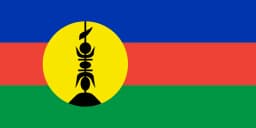
New Caledonia
Phone Code
+687
Capital
Nouméa
Population
278,500 (2017)
Languages
Area
18,576 km²
Electricity
220 V
Plug types
Europlug · Schuko
Driving side
right
Native Name
Nouvelle-Calédonie
Region
Oceania
Melanesia
Timezone
New Caledonia Standard Time
UTC+11:00
On This Page
New Caledonia, the French overseas territory in the South Pacific known for lagoon reefs, Isle of Pines white-sand beaches, Melanesian culture and endemic biodiversity, offers visa-free entry to US and UK passport holders for stays of up to 90 days for tourism or business. As an overseas territory of France (Territoire d'Outre-Mer), local authorities set and enforce entry rules independently of mainland France. Passports must be valid at least three months beyond the planned departure date with two blank pages for UK travellers, or six months beyond the length of stay for US travellers; entry is refused for invalid, lost or stolen documents. Travellers arriving from a yellow-fever transmission-risk country need a vaccination certificate, and customs rules require declaring cash, valuables above set thresholds, and anything potentially prohibited or dutiable.
New Caledonia Visa & Immigration System
New Caledonia follows French immigration rules as an overseas territory, with local authorities holding independent authority to set and enforce entry regulations. UK and US citizens may visit for up to 90 days for tourism or business without a visa. Passport requirements differ slightly by nationality: UK passports need at least three months' validity beyond the planned departure date with two blank pages, while US passports need six months' validity beyond the length of stay, and US travellers may also be asked to show proof of medical insurance. Travellers from yellow-fever transmission-risk countries need a vaccination certificate. Those planning to stay longer than 90 days, or to work or study, should apply for a long-term visa through the French visa website well in advance — processing can take time, so applying at least 30 days ahead is recommended. Residents must carry their residence document alongside their passport when crossing borders, or a certificate of application if the document is still pending. Customs rules require declaring anything potentially prohibited or dutiable, including cash and valuables above set thresholds. For questions on how requirements apply to your specific situation, contact the nearest French consulate or embassy.
Common Visa Types
Visa-Free Entry (90 days)
Tourism and business visits to New Caledonia for UK and US citizens, without a visa, for stays of up to 90 days. Requirements include a passport valid 6 months beyond the stay (US) or 3 months beyond departure with 2 blank pages (UK), a yellow fever vaccination certificate if arriving from a transmission-risk country, proof of medical insurance (US travellers may be asked), and proof of sufficient funds. Suitable for South Pacific lagoon exploration, Isle of Pines beach visits, Melanesian cultural experiences and business meetings.
French Long-Stay Visa (For stays over 90 days, work, or study)
For extended stays, work or study in New Caledonia beyond the 90-day visa-free period. Apply for a long-term visa through the French visa website or nearest French consulate at least 30 days before travel, since processing can take time. Requirements include a completed visa application, a passport with the required validity period, supporting documentation (an employment contract or school enrolment letter, for example), proof of accommodation, proof of financial means, travel insurance and the applicable fee.
Important Information for New Caledonia Travelers
•Check current travel advisories: as...
•La Tontouta International Airport: Most...
•UNESCO Lagoons: New Caledonia lagoons...
•Isle of Pines: Known as...
•Melanesian Culture: Strong Kanak indigenous...
•Endemic Biodiversity: Unique flora and...
•CFP Franc Currency: CFP Franc...
•French Official Language: French official...
Discover New Caledonia
The World's Largest Lagoon
New Caledonia's lagoon, enclosed by one of the longest continuous coral reef systems on the planet, is large and varied enough that it was inscribed as a UNESCO World Heritage Site across six separate marine zones rather than a single protected area — each zone protecting a different reef structure, from barrier reef to the rare "double barrier" formation found off the west coast, where an inner and outer reef run in parallel. Diving and snorkelling operators based in Nouméa and the outer islands work these zones for their differing marine life: turtle nesting sites, dugong feeding grounds and coral gardens that stay largely uncrowded compared to better-known Pacific dive destinations, simply because the lagoon is vast enough to spread visitors thinly across it.
The Isle of Pines: Araucaria Forests Meet White Sand
The Isle of Pines takes its name from the tall, columnar Araucaria columnaris pines that grow densely along its coastline, a distinctive silhouette found almost nowhere else and one of the reasons early European sailors singled the island out on sight. Beneath the pines sit some of the South Pacific's most photographed beaches — Kuto and Kanumera among them — with a lagoon shallow and clear enough close to shore for casual swimming, while traditional outrigger canoe trips out to the Piscine Naturelle, a shallow natural pool ringed by coral, are the island's signature excursion. The interior holds limestone caves and the Queen Hortense Cave, giving the island a mix of beach, forest and cave landscapes within a compact, easily explored area.
Kanak Culture at the Tjibaou Cultural Centre
The Tjibaou Cultural Centre in Nouméa, designed by architect Renzo Piano with a series of shell-like wooden structures inspired by traditional Kanak huts, is the country's principal institution for Kanak art, music and oral tradition, housing carved totems, ceremonial objects and rotating exhibitions that trace Melanesian artistic practice across the Pacific. Beyond Nouméa, tribal cultural centres and guided visits to Kanak villages in the Loyalty Islands and the interior of the mainland (Grande Terre) offer a more direct encounter with living custom — traditional wood carving, the ceremonial exchange of yams and woven pandanus items, and communal architecture built around the central case, the traditional round Kanak house.
Endemic Wildlife Found Nowhere Else
New Caledonia's long geological isolation produced an unusually high rate of endemism: the cagou, the flightless, ash-grey national bird with a distinctive bark-like call, survives today largely within predator-controlled reserves such as the Rivière Bleue Provincial Park, alongside kauri trees among the tallest and oldest in the Pacific and gecko species found on no other landmass on Earth. Rivière Bleue itself, a two-to-three-hour drive from Nouméa, combines cagou-spotting with forest walks past the park's flooded "cathedral" of drowned kauri trunks, a legacy of a dam built decades ago that left dead trees standing in the reservoir — now one of the park's most photographed sights.
Money & Currency
CFP Franc (XPF)
Currency code: XPF
Practical Money Tips
CFP Franc (XPF) — pegged to EUR at exactly 119.3317 XPF = 1 EUR; exchange EUR directly to XPF at BCI, Société Générale, BNP Paribas, or Banque de Nouvelle-Calédonie in Nouméa; USD, AUD, and NZD can be exchanged at main bank branches; no exchange of XPF back in most countries
New Caledonia uses the CFP Franc (XPF, also called Pacific Franc), which is pegged at a fixed rate of 119.3317 XPF = 1 EUR. This rate never changes — the peg is guaranteed by the French Treasury. Exchange EUR at BCI (Banque Calédonienne d'Investissement), Société Générale Nouvelle-Calédonie, BNP Paribas, or Banque de Nouvelle-Calédonie branches in Nouméa. USD, AUD, and NZD can also be exchanged at main bank branches but the rates are less favourable. XPF cannot easily be converted back to other currencies outside New Caledonia or other CFP Franc territories (French Polynesia, Wallis and Futuna) — avoid over-exchanging. Exchange rate: 1 USD ≈ 110–120 XPF; 1 AUD ≈ 70–80 XPF; 1 NZD ≈ 65–75 XPF.
ATMs available in Nouméa and larger towns — BCI, Société Générale, BNP Paribas, and Banque de Nouvelle-Calédonie ATMs accept Visa and Mastercard; limited or no ATMs in remote areas, the Loyalty Islands (Lifou, Maré, Ouvéa), and Isle of Pines; withdraw XPF in Nouméa before island-hopping
ATMs are readily available in Nouméa (city centre, Baie des Citrons, Anse Vata) and in Koumac, Koné, and Poindimié on the main island. BCI, Société Générale, and BNP Paribas ATMs accept Visa and Mastercard and dispense XPF. The Loyalty Islands (Lifou, Maré, Ouvéa) and Isle of Pines have very limited banking infrastructure — a post office (OPT) may have a basic ATM, but reliability is not guaranteed. Strategy: withdraw sufficient XPF in Nouméa before travelling to the islands. International card fees of XPF 300–600 per withdrawal are typical.
Card acceptance good in Nouméa — most hotels, restaurants, and supermarkets accept Visa and Mastercard; Apple Pay used in larger establishments; outside Nouméa and on the outer islands, cash is often essential; no tipping culture (French service charge included)
Visa and Mastercard are accepted at most hotels, restaurants, supermarkets (Carrefour, Casino) and larger shops in Nouméa. Apple Pay works at larger establishments that have NFC terminals. Google Pay works but is less commonly supported. Outside Nouméa and on the outer islands (Loyalty Islands, Isle of Pines), cash (XPF) is often the only option. Small restaurants, market vendors, boat operators, and tribal community homestays are cash-only. New Caledonia follows French tipping conventions — service charges are included by law, and tipping is not expected.
Expensive Pacific destination: mid-range hotel Nouméa XPF 15,000–30,000/night (EUR 126–252); restaurant main course XPF 2,500–5,000 (EUR 21–42); ferry Nouméa–Isle of Pines XPF 7,000–10,000 one way; Loyalty Islands flight XPF 10,000–20,000; baguette XPF 120
New Caledonia is one of the Pacific's most expensive destinations. Mid-range hotel in Nouméa: XPF 15,000–30,000/night (EUR 126–252). Budget accommodation near Baie des Citrons: XPF 8,000–15,000/night (EUR 67–126). Restaurant main course (Nouméa): XPF 2,500–5,000 (EUR 21–42). Local Caldoche or Kanak snack restaurant: XPF 900–1,800. Carrefour supermarket for self-catering. Ferry from Nouméa to Isle of Pines (Betico): XPF 7,000–10,000 one way. Flight Nouméa–Lifou/Maré/Ouvéa (Aircalin or Air Calédonie): XPF 10,000–20,000. Traditional Kanak firewalking ceremony at Lifou: varies. Baguette: XPF 120 (French-quality bakeries throughout Nouméa).
Note: Always check current exchange rates before traveling. Currency exchange is available at airports, banks, and authorized money changers.
What is the CFP Franc and how does it relate to the euro?
Do Apple Pay and Google Pay work in New Caledonia?
Can I use USD or Australian Dollars in New Caledonia?
Is tipping expected in New Caledonia?
Are Wise or Revolut useful in New Caledonia?
Can I exchange XPF back to my currency when I leave?
Are there ATMs on the Loyalty Islands and Isle of Pines?
Is New Caledonia expensive for tourists?
Embassies in New Caledonia
These foreign embassies and consulates are based here. Choose a mission to open its in-depth guide and contact details.
All countries by continent
Europe(1)

Accredited missions for New Caledonia
Why is New Caledonia's lagoon a UNESCO World Heritage Site?
It's inscribed across six separate marine zones rather than one continuous area, each protecting a different reef structure — including a rare "double barrier" reef formation — making it one of the most ecologically varied lagoon systems in the world despite its overall size.
What's the Piscine Naturelle on the Isle of Pines?
A shallow natural pool ringed by coral just offshore, reached by traditional outrigger canoe — one of the island's signature excursions and a calm, easy swimming spot distinct from the open lagoon beaches.
What can I see at the Tjibaou Cultural Centre?
Carved Kanak totems and ceremonial objects, rotating exhibitions on Melanesian art and oral tradition, and the building itself — a series of shell-like wooden structures designed by Renzo Piano and inspired by traditional Kanak huts.
What is a cagou?
New Caledonia's flightless, ash-grey national bird, known for a distinctive bark-like call — it survives mainly in predator-controlled reserves like Rivière Bleue Provincial Park, one of the best places to see it in the wild.
Is Nouméa or the Isle of Pines the better base for a first visit?
Nouméa suits travellers wanting the Tjibaou Cultural Centre, lagoon diving operators and easy day trips like Rivière Bleue; the Isle of Pines suits those prioritising beaches and a slower pace — many visitors combine a few days in each.
Visaja keeps this page's contact details and visa guidance under continuous review — still, requirements can change at short notice, so confirm the essentials with the mission or the official government portal before you travel.