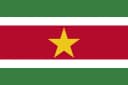
Suriname
Suriname is the smallest sovereign country in South America and the only Dutch-speaking one, a slice of the Guiana Shield where a narrow coastal plain holding almost the entire population gives way to rainforest covering well over ninety percent of the land. Its people are among the most plural on the continent — Hindustani, Javanese, Creole, Maroon, Chinese, Indigenous and Dutch communities sharing a capital whose wooden inner city is a World Heritage Site, one of three the country holds. Most nationalities travel here without a visa but need an entry document arranged online before departure, which makes the paperwork a booking-stage task rather than an airport one.
Suriname Visa & Entry Requirements
Suriname exempts the large majority of nationalities from the visa requirement for tourism and family visits, but almost every exempt traveller still needs an entry document, and it is not obtained the way older guidance describes: the old tourist card bought on arrival no longer exists, and its replacement — an Entry Fee voucher — has to be arranged online before departure. Airlines check for it, and a traveller without one is not carried. A shorter list of nationalities needs a visa instead of the voucher, applied for online in advance, so the first and most important step is to confirm which of the two lists your passport is currently on before booking anything. Several categories are exempt from the Entry Fee altogether: holders of passports from Caribbean Community member states, holders of diplomatic, official and service passports, and holders of a Persons of Surinamese Origin document, which also removes the visa requirement and allows a considerably longer stay. Separately from all of the above, every passenger travelling to or from Suriname must file a digital Immigration and Customs Form before the flight — it is completed per traveller, so check how the current rules treat children — which replaced the paper arrival and departure cards that used to be handed out on the plane. Passports should be valid for at least six months beyond arrival and carry a blank page for stamps. Tourist stays run up to ninety days, with extensions handled by the immigration service in Paramaribo. Overland arrivals from Guyana or French Guiana are subject to the same documents, which means the entry document must be in hand before reaching the river rather than obtained at the crossing. A yellow fever vaccination certificate is required of travellers aged one and over who are arriving from, or have transited more than twelve hours through, a country with risk of yellow fever transmission. Because every one of these rules has been revised before, confirm the current requirements through official channels close to your departure date rather than relying on older guidance.
Visa types
Tourism and family visits for nationals of the many countries Suriname exempts from the visa requirement — the route most visitors take.
Guides
Suriname is the rare destination where the journey inward is the trip rather than the preamble to it. Almost everyone lives on a thin coastal strip, and everything worth the flight sits south of the last road, on rivers and airstrips instead of highways — so how you actually move around decides more about a Surinamese itinerary than the list of things you want to see. The rhythm that works is unhurried days in Paramaribo at either end of the trip with a booked block of forest days between them. It stays quiet for the same reason it stays intact: the country takes a fraction of its neighbours' visitors, and nothing here is reached by accident.
Suriname travel guide →
The full guide — the reserve and how it is reached, the river villages, the turtle coast, the plural calendar and the interior-first plan.
Money in Suriname →
Surinamese dollars, city banks and the cash the interior runs on — the practical money guide.
Eating in Suriname →
Five kitchens that never merged, the warung's short morning hours, and the one dish every community makes its own way.
Getting around Suriname →
One coastal road, rivers doing the work inland, grass airstrips, and why the interior is arranged rather than improvised.
Health & safety in Suriname →
Certified malaria-free in 2025, the yellow fever rule as it actually reads, and how fast medical care thins out inland.
Cities & planning
Plan your trip
Booking links go to our partner Trip.com — we may earn a commission at no extra cost to you.
Embassies & missions
Frequently asked questions
Most nationalities do not, but almost everyone still needs an entry document. Visa-exempt travellers arrange an Entry Fee voucher online before departure; a shorter list of nationalities applies for a visa online instead. Which of the two applies to a given passport has been revised more than once, so confirm your own position through official channels before booking rather than relying on what was true for a friend last year.
No — older guidance still describes it, and it is out of date. The tourist card bought on arrival was replaced by an Entry Fee arranged online in advance, and airline staff check for a valid voucher before boarding — a traveller without one is not carried. Treat it as a booking-stage task rather than an airport one.
Yes, everyone does. It is a digital form that replaced the paper arrival and departure cards handed out on the plane, and it is required of every passenger travelling both to and from Suriname, with a separate form for each traveller — check how the current rules treat children. It is completed online in the days before the flight, so check the current submission window when you book.
Planning a trip to Suriname? Check what you need to enter and apply online in minutes.
Treat this Visaja page as your starting point: verify the current rules directly with the official source before you submit an application.