French Southern Territories
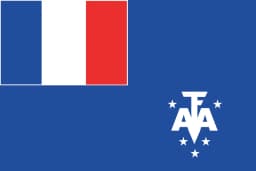
Phone Code
+262
Capital
Port-aux-Français
Population
196 (2012)
Languages
Area
7,829 km²
Driving side
right
Native Name
Territoire des Terres australes et antarctiques fr
Region
Africa
Southern Africa
Timezone
French Southern & Antarctic Time
UTC+05:00
On This Page
The French Southern and Antarctic Lands comprise one of Earth's most remote and inaccessible territories—scattered sub-Antarctic islands and archipelagos in the southern Indian Ocean where howling winds, towering waves, and extreme isolation create landscapes untouched by civilization except for small scientific research stations. This French overseas territory spans several island groups: the volcanic Kerguelen archipelago rising from abyssal depths 3,300 kilometers southeast of Madagascar, the Crozet Islands' dramatic cliffs hosting millions of seabirds, tiny Amsterdam and Saint-Paul islands as volcanic specks in vast ocean, and the Scattered Islands in the Mozambique Channel. No indigenous population has ever existed here—only rotating teams of 30-140 researchers and support staff occupy stations studying everything from atmospheric physics to penguin colonies, with populations fluctuating seasonally. The islands present landscapes of stunning desolation: glaciers calving into fjords, black sand beaches pounded by Southern Ocean swells, tussock grass bending before relentless winds, massive colonies of king penguins numbering hundreds of thousands, elephant seals hauling their bulk onto rocky shores, and albatrosses wheeling overhead on three-meter wingspans. Visiting requires special authorization from French Polar Institute (IPEV) and typically happens only aboard supply vessels making quarterly runs or rare expedition cruises charging astronomical prices for the privilege of landing on these pristine shores. These territories represent nature at its most raw and magnificent—places where human presence remains temporary footnote in landscapes shaped entirely by geology, weather, and wildlife creating ecosystems found nowhere else on Earth.
French Southern Territories Access & Authorization
The French Southern and Antarctic Lands are NOT open to general tourism and require special authorization for any visit. Access is controlled by the French Polar Institute Paul-Émile Victor (IPEV) and the Territory administration in Réunion. Authorization is typically granted only to accredited researchers joining scientific missions, essential support personnel, or participants on rare, extremely expensive expedition cruise ships that have secured advance permission to land. Tourist visits are extraordinarily limited—perhaps a few hundred people per year total across all islands, compared to zero in most years before expedition cruising emerged. To visit, you must either: 1) Join a scientific expedition (requires academic credentials and research purpose), 2) Book passage on one of the handful of expedition cruises visiting per year (typically departing from Réunion or South Africa, costing $15,000-$50,000+ for 2-3 week voyages), or 3) Secure special permission for documentary/media purposes. The Territory's prefecture in Saint-Pierre, Réunion, issues authorizations. No commercial flights serve the islands—access is entirely by sea via research vessel or expedition ship, with voyages taking days through some of Earth's roughest waters. Kerguelen receives quarterly supply ship Marion Dufresne from Réunion (5-day crossing), while other islands see even less frequent service. Weather can delay or cancel landings even for authorized vessels. There are no hotels, restaurants, or tourist infrastructure—visitors on expedition cruises typically don't disembark at research stations but make zodiac landings at approved sites to view wildlife while avoiding disturbance to scientific work and ecosystems. This is adventure travel at its most extreme and exclusive.
Common Visa Types
Scientific Mission Authorization
Accredited researchers joining IPEV scientific programs
Expedition Cruise Landing Permit
Pre-authorized landings by permitted expedition vessels
Essential French Southern Territories Information
•Special authorization from French Polar...
•Expedition cruises are only realistic...
•Weather is extreme and highly...
•All shore landings are weather-dependent—even...
•Strict environmental regulations prohibit approaching...
•No commercial infrastructure exists—no hotels,...
•Medical facilities are extremely limited—small...
•Communication with outside world is...
•Ocean crossings from Réunion/Cape Town...
•Best visiting window is November-March...
•Supply ships to research stations...
•Kerguelen receives most expedition cruise...
•Photography conditions challenging—constant wind makes...
•Currency is Euro but essentially...
•The territory is legally part...
•Endemic and endangered species require...
Visiting the French Southern Territories represents one of Earth's most challenging and exclusive travel experiences—these sub-Antarctic islands scattered across the southern Indian Ocean see only scientific researchers, essential personnel, and rare expedition cruise passengers willing to endure multi-day ocean crossings through stormy seas for fleeting encounters with pristine wilderness. The Kerguelen archipelago—largest of the island groups—rises from abyssal ocean depths as volcanic peaks and plateaus covering 7,215 square kilometers (larger than Delaware), with dramatic fjords, glaciers, windswept tundra, and Port-aux-Français research station housing 50-110 people depending on season. Wildlife dominates the landscape: massive king penguin colonies numbering hundreds of thousands of birds packed onto beaches, elephant seals weighing up to 4 tons hauled out on rocky shores, fur seals defending territories, wandering albatrosses nesting on tussock slopes, and endemic Kerguelen shags fishing coastal waters. The Crozet Islands—five volcanic islands northeast of Kerguelen—host Alfred Faure station and even more spectacular seabird colonies with millions of macaroni penguins, plus unique king penguin colony at Baie du Marin. Tiny Amsterdam Island (55 km²) and Saint-Paul Island (7 km²) rise as volcanic cones farther north in slightly warmer waters, hosting huge populations of rockhopper penguins, Amsterdam albatross (endangered species breeding nowhere else), and fur seals. The islands present landscapes of stark beauty: black volcanic cliffs plunging into churning ocean, green tussock grass and low vegetation (no trees grow here), glacial features on Kerguelen's higher elevations, and skies filled with seabirds. Weather is notoriously harsh—Kerguelen experiences strong winds averaging 35 km/h year-round with gusts exceeding 200 km/h, frequent rain and sleet, and temperatures rarely exceeding 15°C even in summer. For the extremely limited number of visitors who reach these shores—whether researchers stationed for months or expedition cruisers on brief landings—the experience delivers profound sense of Earth's wildness and the insignificance of human presence in landscapes shaped entirely by nature's most powerful forces.
Discover French Southern Territories
Kerguelen Archipelago: Desolation Islands
The Kerguelen Islands (also called Desolation Islands after Captain Cook's apt 1776 description) sprawl across 7,215 square kilometers of sub-Antarctic ocean as France's third-largest territory, comprised of one large island (Grande Terre) and 300+ smaller islands and islets. The landscape delivers stark grandeur: jagged volcanic peaks rising to 1,850 meters at Mont Ross (Kerguelen's highest point, glaciated and challenging to climb), deep fjords cutting into coastline like Norwegian landscapes transplanted to southern latitudes, windswept plateaus covered in tussock grass and low vegetation, and glaciers flowing from higher elevations. Port-aux-Français research station on eastern coast serves as tiny human outpost—collection of utilitarian buildings housing 50-110 people including researchers, technical staff, and occasional medical personnel, with modern laboratories, small chapel, meteorological station, and basic amenities. The station feels like industrial outpost dropped into wilderness—functional architecture designed for harsh conditions rather than aesthetics, connected to field sites and historic sites via rough tracks passable only in tracked vehicles. Wildlife concentrations stagger the imagination: beaches at Baie du Morbihan and Presqu'île Rallier du Baty host king penguin colonies numbering hundreds of thousands—dense masses of birds covering ground in all directions with constant cacophony of trumpeting calls. Elephant seals haul massive bodies onto beaches during breeding season, with huge bulls fighting for dominance. Introduced reindeer (brought by Norwegians in early 1900s, now numbering 3,000-4,000) graze interior valleys—controversial presence as non-native species. The islands' history includes brief whaling and sealing operations (wiped out seal populations), failed agricultural settlements, and secret German weather/raider base during WWII.
Sub-Antarctic Wildlife Spectacle
The French Southern Territories host extraordinary concentrations of marine mammals and seabirds taking advantage of nutrient-rich Southern Ocean waters. King penguins—standing nearly a meter tall with brilliant orange neck markings—gather in colonies exceeding 200,000 pairs on Kerguelen and Crozet Islands, creating dense rookeries where every square meter hosts nesting birds, with chicks forming brown fluffy masses and constant movement as adults return from fishing trips. Macaroni penguins (named for flamboyant yellow crest resembling 18th-century fashion) number in millions on Crozet Islands alone—one of Earth's largest concentrations. Rockhopper penguins with punk-rock crests hop up cliffs on Amsterdam and Saint-Paul. Southern elephant seals—Earth's largest seals—haul out by thousands during October-November breeding season, with massive 4-ton bulls establishing harems and engaging in violent battles, their deep bellowing echoing across beaches. Antarctic fur seals crowd rocky shores despite near-extinction from 19th-century hunting. The islands serve as crucial albatross breeding grounds: wandering albatross with record 3.5-meter wingspan nest on exposed slopes returning to same mate year after year, Amsterdam albatross (critically endangered, only ~130 individuals remaining) breeds exclusively on Amsterdam Island, and black-browed and grey-headed albatrosses wheel overhead on seemingly effortless glides. Southern giant petrels scavenge beaches, white-chinned petrels fish offshore waters, and endemic Kerguelen shags and terns patrol coasts. The wildlife viewing—for the fortunate few who reach these shores—surpasses most other sub-Antarctic sites due to massive population densities and lack of human disturbance.
Crozet Islands: Windswept Seabird Kingdom
The Crozet archipelago—five volcanic islands (Île de la Possession, Île de l'Est, Île aux Cochons, Îlots des Apôtres, Îles Pingouins) 2,400 kilometers southeast of South Africa—rises from Southern Ocean as dramatic cliffs, steep slopes, and rocky coastlines hosting one of Earth's most spectacular seabird concentrations. Alfred Faure station on Île de la Possession accommodates 18-30 researchers studying everything from atmospheric physics to penguin population dynamics. The islands' biology astounds: Île aux Cochons alone hosts estimated 2 million pairs of macaroni penguins (though recent satellite imagery suggests dramatic recent decline requiring investigation), making it potentially the largest penguin colony on Earth by number of individuals. King penguins number in hundreds of thousands across several beaches, particularly Baie du Marin's famous colony accessible from station. The islands serve as critical breeding habitat for multiple albatross species—wandering albatross pairs engage in elaborate courtship dances on tussock slopes, while thousands of other seabirds create constant noise and movement. Île aux Cochons ('Pig Island,' named by early explorers mistaking seal calls for pigs) and Île de l'Est remain virtually unexplored by humans—too dangerous to land on except in exceptional conditions, making them even more pristine than other sub-Antarctic sites. The Crozet Islands experience some of Southern Ocean's most violent weather with near-constant winds, frequent storms, and rare calm days when landings become possible. Research here focuses on long-term monitoring of climate change impacts on sub-Antarctic ecosystems, with data sets extending decades showing population shifts and environmental changes.
Amsterdam & Saint-Paul: Volcanic Twins
Amsterdam Island (55 km², permanent population ~25 at Martin-de-Viviès station) and Saint-Paul Island (7 km², uninhabited) rise as isolated volcanic cones in southern Indian Ocean, positioned 85 kilometers apart at latitudes where Southern Ocean's fury moderates slightly compared to Kerguelen and Crozet farther south. Amsterdam Island features distinctive rounded profile rising to Pic de la Dives (881 meters) with station occupying narrow coastal strip on northern coast. The island hosts Amsterdam albatross—one of world's rarest seabirds with entire species (approximately 130 individuals) breeding exclusively on plateau grasslands here, making it critically endangered focus of intensive conservation efforts. Fur seal populations recovered from 19th-century hunting to number in thousands. Introduced cattle from failed 19th-century settlement attempt still roam wild until recent eradication program. Saint-Paul Island appears as volcanic crater partially collapsed into sea creating unique formation—horseshoe-shaped island surrounding small harbor accessible only through narrow break in crater rim. The harbor provides rare sheltered anchorage in this region, historically used by whalers and sealers. Hot springs bubble up on beaches from volcanic activity. The island hosts massive fur seal colonies (over 60,000) and important seabird populations despite tiny size. Neither island sees regular visitors—supply ships call at Amsterdam 4 times yearly while Saint-Paul remains essentially untouched. Research focuses on endangered species conservation, invasive species control, and long-term ecosystem monitoring. The islands' relative warmth (compared to Kerguelen/Crozet) supports slightly different vegetation and wildlife assemblages.
Extreme Sub-Antarctic Environment
The French Southern Territories experience some of Earth's harshest maritime climates characterized by relentless winds, frequent precipitation, moderate temperatures prevented from extremes by ocean influence, and constant cloud cover. Kerguelen exemplifies conditions: average wind speeds exceed 35 km/h year-round with gusts regularly topping 150 km/h and record gusts exceeding 200 km/h capable of damaging buildings and making outdoor work dangerous. Rain or sleet falls 300+ days per year, sunshine is rare luxury, and temperatures range from near-freezing in winter to rarely exceeding 15°C in summer—persistently cool and damp. The islands sit in the 'Roaring Forties' and 'Furious Fifties' latitudes where lack of land masses allows Southern Ocean winds to circle Antarctica building massive swells and storms. This climate shapes every aspect of life and landscape: buildings require reinforcement against winds, outdoor work often becomes impossible, supply ships face multi-day delays waiting for weather windows to land, and expedition cruises may sail thousands of kilometers only to find conditions preventing landings. Yet this harsh environment sustains extraordinary ecosystems—constant winds mix nutrient-rich waters supporting massive phytoplankton blooms feeding krill and fish populations that sustain millions of seabirds and marine mammals. Vegetation consists of tussock grass, low herbs, mosses, and lichens creating windswept moorland without trees (none grow at these latitudes/conditions). Glaciation during ice ages shaped current topography, with glaciers still present on Kerguelen's highest peaks. The environment demands respect—hypothermia risk exists year-round, winds can knock people over, ocean waters kill within minutes of immersion, and isolation means emergency help may be days away.
Scientific Research & Conservation
The French Southern Territories function primarily as vast outdoor laboratory where researchers study sub-Antarctic ecosystems, climate change impacts, atmospheric physics, marine biology, and more through year-round programs coordinated by French Polar Institute (IPEV). Research stations maintain continuous presence: Port-aux-Français (Kerguelen) accommodates largest contingent with laboratories, meteorological station, and field equipment supporting projects from penguin population studies to upper atmosphere physics; Alfred Faure (Crozet) focuses on seabird monitoring and marine ecosystem research; Martin-de-Viviès (Amsterdam) specializes in endangered species conservation and invasive species control. Scientific work includes: long-term monitoring of penguin and seabird colonies providing decades of data on climate change effects, tracking programs using satellite tags to follow albatrosses and elephant seals revealing migration patterns spanning entire Southern Ocean, atmospheric research measuring greenhouse gases and ozone with data feeding into global climate models, marine biology studies investigating cold-water ecosystems, and conservation programs for critically endangered Amsterdam albatross requiring intensive nest monitoring and introduced species removal. The territories have legal protection as nature reserve with strict environmental regulations—no waste disposal, all refuse must be shipped out, landing sites are strictly limited, and biosecurity protocols prevent introduction of non-native species (though several already exist from historical activities). This isolation creates natural experiment where scientists can study ecosystems with minimal human interference beyond research activities themselves. Publications from research here contribute significantly to understanding climate change, seabird ecology, and Southern Ocean ecosystem functioning.
Expedition Cruising & Extreme Access
For civilians, the only realistic access to the French Southern Territories comes via expedition cruise ships making rare voyages through southern Indian Ocean, typically visiting as part of longer itineraries including other sub-Antarctic islands. A handful of operators (Heritage Expeditions, Ponant, Oceanwide Expeditions, others) run 1-3 cruises per year, usually departing from Réunion, Cape Town, or Fremantle, with 15-25 day voyages costing $15,000-$50,000+ depending on cabin class and inclusions. These ships carry 50-200 passengers with ice-strengthened hulls, zodiacs for landings, and expedition staff including naturalists and historians. Visiting requires months of advance planning—operators must secure authorization from Territory administration, submit detailed visit plans, demonstrate environmental compliance, and pay fees. Even with permission, weather determines success—ships may spend days waiting for conditions allowing zodiac landings, and many planned shore visits get cancelled due to wind, waves, or ice. Permitted landing sites avoid research stations (except sometimes Port-aux-Français where brief visits may occur) focusing on wildlife areas: king penguin colonies, elephant seal beaches, and albatross nesting sites where passengers can observe from short distances under strict guidelines (no approaching wildlife, stay in designated areas, decontaminate boots to prevent disease/seed transfer). Landings typically last 1-3 hours before returning to ship. The experience is supremely weather-dependent and requires acceptance that thousands of dollars and weeks at sea may yield only brief glimpses of islands through fog and rain. Yet for those who successfully land, walking among massive penguin colonies and watching albatrosses soar in pristine sub-Antarctic wilderness creates unforgettable encounters available to only a few hundred people per year.
History: Sealers, Whalers, & Failed Colonization
The French Southern Territories remained unknown to humans until relatively recent discovery—British navigator Captain Cook sighted Kerguelen in 1776 (naming it 'Desolation Island' for its barren appearance), while other islands were discovered by various navigators in early 1800s. France took formal possession of Kerguelen and other islands in 1893, though earlier explorers had claimed them. The 19th century brought sealers and whalers who nearly exterminated fur seal and elephant seal populations—hunting was so intensive that some seal species disappeared from islands for decades until recolonization from other sub-Antarctic sites. Several failed colonization attempts included Norwegian whalers establishing brief settlements, and most bizarrely, a 1920s-1950s sheep farming venture on Kerguelen that introduced sheep, rabbits, rats, and other non-native species (some still present despite eradication efforts). Germans operated secret weather station and raider supply base on Kerguelen during WWII—bunkers and equipment remain. Permanent scientific presence began in 1950 with establishment of Port-aux-Français, followed by stations on Crozet and Amsterdam islands in 1960s. The islands gained official status as French overseas territory in 1955. Today's historical remnants include ruined whaling stations with rotting equipment and massive whale bones scattered across beaches, abandoned farm buildings, shipwrecks along dangerous coasts, and artifacts from early exploration. This history provides context for current conservation efforts attempting to reverse damage from introduced species and hunting while maintaining sustainable research presence.
Ways to Experience This Destination
Join accredited scientific mission requiring advanced degrees and research purpose—spend 2-14 months at research station conducting fieldwork studying sub-Antarctic ecosystems, wildlife, climate, or atmospheric physics in extreme isolation.
Book passage on rare expedition ship visiting sub-Antarctic islands—2-3 week voyage from Réunion/Cape Town with zodiac landings at permitted sites to view king penguin colonies, elephant seals, and albatrosses in pristine wilderness (weather permitting).
Document extraordinary concentrations of sub-Antarctic wildlife—massive king penguin colonies, albatross breeding grounds, elephant seal rookeries, and dramatic volcanic landscapes found nowhere else on Earth.
Experience Earth's wildest maritime environment at its most remote—traverse stormy Southern Ocean, land on islands visited by only hundreds of people per year, witness nature at its most powerful and untouched.
Money & Currency
Euro (€, EUR)
Currency code: EUR
Practical Money Tips
Euro (EUR) — official currency, but no commercial economy exists on the territory
The French Southern and Antarctic Territories (Terres australes et antarctiques françaises, TAAF) use the euro as their official currency. However, this is largely academic for travelers — the TAAF comprises several uninhabited subantarctic island groups (Kerguelen Islands, Crozet Islands, Amsterdam Island, Saint Paul Island, and the Scattered Islands in the Indian Ocean) with no permanent civilian population. There are no ATMs, no banks, no shops, no hotels, and no commercial services of any kind. The only inhabitants are rotating scientific and military personnel stationed at research bases who are fully supplied by France. No tourist currency exchange applies.
No ATMs or banking services — territory is inaccessible to conventional travelers
There are zero ATMs, bank branches, payment terminals, or any commercial financial infrastructure anywhere in the French Southern Territories. The territory is administered by France but has no public access infrastructure. Access is exclusively via French polar research vessels (Marion Dufresne and Astrolabe, operated by IPEV — French Polar Institute) which supply the scientific stations on Kerguelen, Crozet, Amsterdam, and the Scattered Islands. No private vessel landings are permitted without authorization from TAAF administration in Saint-Pierre, Réunion Island.
No payment infrastructure of any kind — the territory is not a tourist destination
No card payments, no contactless terminals, no Apple Pay, no Google Pay, and no cash transactions exist in the French Southern Territories. There is literally nothing to buy — no shops, no restaurants, no accommodation, no guides, and no services for the public. Scientific personnel at Kerguelen (Port-aux-Français base), Crozet (Alfred Faure base), and Amsterdam (Martin de Viviès base) are provisioned directly by IPEV and do not need money on-site. The TAAF is one of the most remote and inaccessible territories on Earth.
Extreme remoteness — access only through authorized scientific expeditions
The only realistic way a non-military visitor might ever reach the French Southern Territories is aboard a dedicated expedition cruise vessel. A small number of specialized polar expedition companies (e.g., Ponant, Heritage Expeditions) occasionally include Kerguelen or Crozet on ultra-rare itineraries, requiring both TAAF authorization and careful multi-week voyage planning from Réunion or South Africa. Such expeditions cost approximately €15,000–30,000+ per person. If you are planning one, all financial arrangements are made in advance through the expedition operator — there are no on-site expenses. Budget planning for the TAAF means budgeting for the expedition itself, not for in-territory spending.
Note: Always check current exchange rates before traveling. Currency exchange is available at airports, banks, and authorized money changers.
Can tourists visit the French Southern Territories?
What currency would I need if I somehow reached the TAAF?
Are there ATMs or card payment on the Kerguelen Islands?
How are the research stations supplied?
Is there any postal service or internet on the TAAF?
What wildlife can be seen in the French Southern Territories?
Is there a visa requirement for the French Southern Territories?
What are the Scattered Islands and can they be visited?
Can I visit the French Southern Territories as a tourist?
Not through general tourism—every visit requires special authorization from the French Polar Institute (IPEV), granted only to accredited researchers, essential support staff, or passengers on rare, pre-authorized expedition cruises.
How do I get there?
There are no commercial flights—access is entirely by sea, either aboard an expedition cruise departing from Réunion, Cape Town, or Fremantle (15-25 day voyages costing $15,000-$50,000+), or by joining an accredited scientific mission through IPEV.
What wildlife can I see?
Colonies of king penguins numbering hundreds of thousands, macaroni penguins in the millions on Crozet, southern elephant seals weighing up to 4 tons, and multiple albatross species including the critically endangered Amsterdam albatross, found nowhere else on Earth.
Is landing on the islands guaranteed if I book an expedition cruise?
No—every landing is weather-dependent, and even authorized, pre-planned vessels may spend days waiting for calm conditions or have shore visits cancelled entirely by wind, waves, or ice.
What's the weather like?
Harsh and relentless—average winds exceed 35 km/h year-round with gusts topping 200 km/h, rain or sleet falls on 300+ days a year, and temperatures rarely climb above 15°C even in summer.
When is the best time to visit?
November through March (austral summer) brings relatively milder temperatures, longer daylight, and peak wildlife breeding activity, though conditions remain harsh throughout the year.
Are there hotels or restaurants on the islands?
No commercial infrastructure exists at all—there are no hotels, restaurants, or shops, and expedition cruise ships provide all accommodation and meals for the entire voyage.
Visaja keeps this page's contact details and visa guidance under continuous review — still, requirements can change at short notice, so confirm the essentials with the mission or the official government portal before you travel.