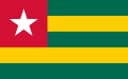
Togo

Flag of Togo

Phone Code

+228

Capital

Lome

Population

8.8 Million

Native Name

Togo

Region

Africa

Western Africa

Timezone

Greenwich Mean Time

UTC±00

Togo is a narrow West African republic stretching from the Atlantic coast at Lomé up to the Burkina Faso border, bordered by Ghana and Benin, with Ewe, Mina, Kabye and Tem as its major national languages alongside official French. It holds one UNESCO World Heritage Site, Koutammakou in the far north-east, where the Batammariba people still live in their distinctive fortified takienta towers. Togo no longer offers visa on arrival; all non-ECOWAS travellers apply through the official e-visa portal in advance, while ECOWAS citizens travel visa-free.

Visa Requirements for Togo

Togo operates an e-visa-only policy: there is no visa on arrival. All non-ECOWAS travellers — including all EU, UK, US, Canadian, Australian, Swiss and most other passport holders — apply through the official Togolese government portal at voyage.gouv.tg at least 5–6 business days before travel. The standard tourist e-visa is single-entry, valid for 15 days, and is paid by international card on the portal — check the current fee on voyage.gouv.tg; longer-stay tourist e-visas are available up to 90 days at additional cost. ECOWAS member-state nationals (Benin, Burkina Faso, Cabo Verde, Côte d'Ivoire, the Gambia, Ghana, Guinea, Guinea-Bissau, Liberia, Mali, Niger, Nigeria, Senegal, Sierra Leone) enter visa-free under the regional free-movement protocol for stays up to 90 days, with the yellow-fever certificate still required. Passport must be valid at least 3 months from the planned date of arrival (6 months for residents of Togo); one blank page is needed. The yellow-fever vaccination certificate (issued at least 10 days before departure, on the WHO yellow card) is mandatory for entry — Togo lies in the WHO yellow-fever transmission zone and the certificate is checked at all points of entry. Online registration: travellers must complete the online registration formality through the official Togolese procedures portal both before arrival and before departure (the requirement is integrated into the e-visa flow on voyage.gouv.tg). Transit through Lomé requires a visa unless you remain airside on a single connecting itinerary; check with your airline. Currency declaration applies to amounts equivalent to USD 10,000 or greater on entry and exit. Land borders with Ghana, Benin and Burkina Faso may close periodically for elections in any of the bordering countries — verify accessibility close to travel. Business visas, work permits, study visas and long-term residence are issued through the same portal or through the Togolese embassy abroad with sponsoring documentation. Verify the current travel advisory of your home country's foreign ministry before booking — UK FCDO, US State Department, German Auswärtiges Amt, French Ministère de l'Europe, Swiss EDA, Austrian BMEIA, Italian Farnesina and Australian Smartraveller all maintain Togo pages.

Common Visa Types

E-Visa Tourist (15 Days)

15 days single entry; passport valid 3+ months from arrival; one blank page; yellow-fever certificate mandatory; online application at voyage.gouv.tg at least 5–6 business days before travel; fee paid by international card on the portal, check current cost at voyage.gouv.tg; printed e-visa approval and online registration certificate presented at any port of entry.

Tourism, family visit and short business travel for almost all non-ECOWAS nationalities — applied online at voyage.gouv.tg before travel. The standard e-visa for the Lomé–Lake Togo–Kpalimé–Koutammakou circuit and for travellers spending up to two weeks in the country.

E-Visa Tourist (up to 90 Days)

Up to 90 days, single or multiple entry depending on selection; passport valid 3+ months from arrival; one blank page; yellow-fever certificate mandatory; online application at voyage.gouv.tg at least 5–6 business days before travel; cost varies with duration; online registration certificate to complete in the same flow.

Extended tourism, multi-region itineraries (Lomé + Atakora north + Plateaux centre), family visits and longer cultural travel — same e-visa portal as the 15-day visa, with extended duration confirmed at the application stage.

ECOWAS Visa-Free Entry

Stays generally up to 90 days; passport or ECOWAS national identity card; yellow-fever certificate still required; entry by air at Gnassingbé Eyadéma International Airport (LFW, Lomé) or by land at the major Togo frontier posts with Ghana (Aflao–Lomé), Benin (Hilakondji–Sanvee Condji) and Burkina Faso (Cinkassé).

Citizens of the 14 other ECOWAS member states (Benin, Burkina Faso, Cabo Verde, Côte d'Ivoire, the Gambia, Ghana, Guinea, Guinea-Bissau, Liberia, Mali, Niger, Nigeria, Senegal, Sierra Leone) under the regional free-movement protocol.

Business, Work, Study & Transit Visa

Business visa 30 days to 12 months, requires invitation from a Togo-registered host; work visa 1 year renewable, requires employment contract and labour-permit pre-clearance; study visa requires university acceptance (Université de Lomé and Université de Kara); transit visa 24–72 hours for travellers passing through Lomé to a neighbouring country; processing 4–8 weeks for the longer-term categories, the standard 5–6 working days for transit.

Business activity, employment, study and short transit through Lomé. Lomé hosts ASKY Airlines (the Pan-African regional carrier headquartered in Lomé, with hub flights across West and Central Africa) and the Port of Lomé (one of the deepest natural ports of West Africa, a major trans-shipment hub for the Sahel hinterland — important context for business travellers).

Important Travel Information

Togo no longer offers visa on arrival — all non-ECOWAS travellers apply through the official e-visa portal at voyage.gouv.tg at least 5–6 business days before travel. Standard tourist e-visa is 15 days single entry, paid by international card on the portal — check the current fee on voyage.gouv.tg; longer-stay tourist visas are available up to 90 days. Online registration certificate is integrated into the same e-visa flow and must be completed before arrival and before departure. ECOWAS member-state nationals enter visa-free under the regional free-movement protocol for stays up to 90 days, with the yellow-fever certificate still required.

Yellow-fever vaccination certificate is mandatory for entry — issued at least 10 days before departure, on the WHO yellow card, presented on arrival. Togo lies in the WHO yellow-fever transmission zone. Malaria prophylaxis is also recommended; the country is in a year-round malaria-endemic zone.

Gnassingbé Eyadéma International Airport (LFW, Lomé) is the principal gateway, with direct flights from Paris (Air France, around 6.5 hours), Brussels (Brussels Airlines), Istanbul (Turkish Airlines), Casablanca (Royal Air Maroc), Addis Ababa (Ethiopian) and Frankfurt (seasonal Lufthansa); ASKY Airlines, the Pan-African regional carrier headquartered in Lomé, operates hub services across West and Central Africa from Cotonou and Abidjan to Bamako, Conakry, Dakar, Accra, Lagos, Kinshasa, Brazzaville, Douala and Libreville. Land borders: Aflao–Lomé with Ghana (the most-used West African crossing, very busy on weekends), Hilakondji–Sanvee Condji with Benin (on the Lagos–Lomé–Accra coastal highway) and Cinkassé with Burkina Faso (the main northern overland route).

Travel Overview

Togo packs an unusually complete West African circuit into a small footprint — a 600-kilometre strip that runs comfortably as a 7- to 14-day trip from the Atlantic coast to the Sahel-edge Atakora Mountains. Lomé, the coastal capital, anchors the itinerary with the Grand Marché, the Akodessewa Fetish Market (the largest functioning vodun ritual-supply market in West Africa) and the Atlantic beachfront, and is unusually well-connected by air for a country of its size. East along the coast, Togoville and Aného carry the country's vodun heritage, from the pilgrimage centre on Lake Togo to the September Yêkê Yêkê Glidji festival. Inland, the Plateaux region around Kpalimé offers mountains, waterfalls and cocoa and coffee country, while Fazao-Malfakassa and Kéran national parks protect elephant, hippo and leopard populations further north. The crown of the country sits in the far north-east: Koutammakou, the UNESCO-listed Land of the Batammariba, where fortified mud-and-thatch takienta towers still house entire families. The Harmattan dry season, November to February, is the standard travel window.

Discover Togo

Togo's compact, elongated shape means a single north-south route can realistically cover coast, mountains and the Batammariba heartland without the backtracking that larger West African countries demand. A typical two-week itinerary spends two to three days in Lomé, adds a lake-and-vodun detour to Togoville and Aného, climbs into the Plateaux around Kpalimé for waterfalls and coffee country, then continues north through Sokodé and Kara before finishing at Koutammakou near the Benin border. Shorter one-week trips usually drop the far north and focus on Lomé, the coast and Kpalimé instead. Road quality varies significantly by season and region, so building a day of slack into any itinerary that includes the northern leg is worth doing regardless of time of year.

Ways to Experience This Destination

Koutammakou — UNESCO Land of the Batammariba

Koutammakou, the Land of the Batammariba (UNESCO World Heritage 2004), in the Tamberma valley of north-east Togo near the Benin border, is the country's cultural showpiece — a 50,000-hectare landscape of the famous takienta (or tata sombamba): tall, fortified two-storey mud-and-thatch towers in which the Batammariba people have lived for centuries. Each takienta integrates granary, kitchen, sleeping quarters and ancestral shrines into a single architectural sculpture; hundreds of them are scattered across the valley, often grouped in family compounds. The Batammariba initiation rituals (the difoani initiation cycle every five years for young men, the akotugbalega for young women) and their living architecture make Koutammakou one of the most powerful cultural-tourism destinations in West Africa. Best access from Kara or Kandé; community-tourism agreements with local guides ensure a respectful and well-informed visit.

Lomé — Grand Marché, Akodessewa Vodun Market & Atlantic Beachfront

Lomé, the coastal capital on the Ghanaian border, anchors any Togo itinerary with a comfortable 2–3-day stay. The Grand Marché (the great covered city-centre market, run primarily by the famous 'Nana Benz' women traders who built the post-independence wax-print fabric industry) and the Akodessewa Fetish Market (the largest functioning vodun ritual-supply market in West Africa, serving traditional priests and herbalists from Togo, Benin, Ghana and Nigeria) are the everyday cultural attractions. Lomé Cathedral, the Plage de Lomé Atlantic beachfront, the iconic Hôtel 2 Février (the 36-storey 1980 modernist tower that defines the city skyline), the new Lomé Marina and the small National Museum (Musée National du Togo) anchor the urban itinerary. The Lomé Friday-night live music scene at venues like Le Kilimanjaro is one of the most lively in West Africa.

Togoville, Aného & the Vodun Coast

East of Lomé, the Atlantic coast and the inland Lake Togo carry the country's deepest cultural layer. Togoville, on the north shore of Lake Togo 35 km east of Lomé, is the historical heart of Togolese vodun and a continuous pilgrimage centre — the small Catholic basilica of Notre-Dame du Lac stands beside the royal palace of the Mlapa dynasty, and pirogue trips cross Lake Togo from Agbodrafo on the southern shore. Aného, further east on the Atlantic, is the small coastal town with its 19th-century cathedral, the lively fish market on the lagoon and the Glidji-Anyron quarter — host of the annual Yêkê Yêkê Glidji vodun festival each September, when the chief priest divines the colour of the year's sacred stone (with white symbolising peace and prosperity for the year ahead), one of the most evocative religious calendar events in West Africa.

Kpalimé, Mount Agou & the Plateaux Region

The Plateaux region around Kpalimé, 120 km north-west of Lomé, is the country's mountain and forest counterpoint to the coast. Mount Agou (986 m, the highest point in Togo, with a clear-day view to Lake Volta in Ghana on one side and the Atlantic on the other), the Kpime, Womé and Kamalo waterfalls, the working cocoa and coffee plantations of the Plateaux (Togolese arabica is exported to specialty roasters in Europe and North America), the butterfly forests around Kloto (over 1,000 species recorded, with the Centre des Papillons specialising in tropical species) and the traditional batik and weaving workshops of Kpalimé town make a comfortable 2–3-day extension. The town itself has its substantial Friday market, several small art galleries and is the base for half-day hikes up Mount Agou and to the surrounding waterfalls.

Fazao-Malfakassa & Northern Atakora Wildlife

Togo's two major national parks — Fazao-Malfakassa in the centre and Kéran in the north — protect the country's elephant, hippopotamus, antelope (kob, hartebeest, roan), buffalo, leopard and around 250 bird species. Fazao-Malfakassa, west of Sokodé, is the country's largest park at around 1,920 km² and protects the largest remaining elephant population in southern Togo within a remote, lightly-tracked landscape of wooded savannah and the Fazao escarpment. Kéran in the north, near the Burkina Faso border and adjacent to Benin's Pendjari complex, is part of the wider West African transboundary wildlife corridor. The dry season (November to April) is the standard wildlife-viewing window.

Kara, Sokodé & the Kabye North

The central and northern axis from Atakpamé through Sokodé to Kara is the cultural and geographic counterweight to coastal Lomé — Sokodé (the country's second-largest city, a Muslim-majority centre with the great Friday Mosque and the historical Tem-Kotokoli sultanate, host of the Adossa-Gadao knife festival each summer), Kara (the home of the Kabye people, with the dramatic Kara Mountains and the surrounding Atakora foothills, host of the Evala wrestling festival each July when young Kabye men compete in the traditional initiation contest) and the small university town of Pya. The whole region offers a quieter, more agricultural counterpoint to the great cultural set-pieces of Lomé and Koutammakou.

Togolese Cuisine, Vodun Heritage & Hospitality

Togolese cuisine is one of the great kitchens of the Bight of Benin coast: fufu (yam or cassava pounded paste with peanut, palm-nut or vegetable sauce), akoumé (fermented corn flour porridge), gboma dessi (a spinach-and-fish stew, the everyday national dish), grilled tilapia and dorade from Lake Togo and the Atlantic, akpan (fermented corn drink), the celebrated Lomé palm wine (sodabi when distilled), abolo cornbread, koliko cassava chips, the great fish-and-rice traditions of the coastal towns and the local beers (Pils, Ngok and Awooyo are the major brands). Vodun is the cultural substrate that ties south Togo and south Benin together — Togoville, the Akodessewa market in Lomé and the annual Yêkê Yêkê Glidji vodun festival in September form the country's vodun trail. Togolese hospitality (the akwaba welcome of the Ewe south, the togba of the Kabye north) is the strongest single first impression for international travellers.

Money & Currency

Money & Currency
CFA

West African CFA Franc (XOF)

Currency code: XOF

Practical Money Tips

The CFA Franc Is Pegged to the Euro

Togo uses the West African CFA franc (XOF), which is pegged to the euro at a fixed rate. EUR is straightforward to exchange at banks and bureaux in Lomé. USD is also widely accepted for exchange. The peg means the euro exchange rate to XOF is predictable and stable.

ATMs Available in Lomé — Limited Outside

Ecobank, Société Générale, and BTCI have ATMs in Lomé accepting international Visa and Mastercard cards. Outside the capital, ATMs are found in main regional cities but coverage declines significantly in rural areas.

Cards at Larger Hotels — Mobile Money Is Dominant Locally

International credit cards are accepted at larger hotels and some restaurants in Lomé. Mobile money platforms — Flooz (by Moov Africa) and T-Money (by Togocel) — are the dominant everyday payment method for locals but require local SIM registration.

Cash Required for Markets and Regional Travel

Markets, street food, shared taxis (taxi-brousse), and businesses outside Lomé require XOF cash. Carry sufficient for your full regional itinerary before leaving the capital.

Note: Always check current exchange rates before traveling. Currency exchange is available at airports, banks, and authorized money changers.

Common Money Questions

Hosted missions

Embassies in Togo

These foreign embassies and consulates are based here. Choose a mission to open its in-depth guide and contact details.

All countries by continent

Cultural Institutes

Cultural institutes — Togo

Language courses, exams, libraries and cultural programmes with a local branch.

Frequently asked questions

Yes, unless you're an ECOWAS citizen, in which case entry is visa-free for stays up to 90 days. All other nationalities apply online through the official e-visa portal at voyage.gouv.tg at least 5-6 business days before travel — Togo no longer offers visa on arrival.

Yes, it's mandatory for all arrivals, ECOWAS citizens included. The WHO yellow card must be issued at least 10 days before departure and is checked at every point of entry, since Togo lies within the WHO yellow-fever transmission zone.

At least 5 to 6 business days before departure, applied through the official voyage.gouv.tg portal. Standard tourist e-visas cover 15 days single entry, and longer-stay options up to 90 days are available at the application stage.

Need help checking visa requirements or applying for Togo?

Apply for your eVisa

Visaja keeps this page's contact details and visa guidance under continuous review — still, requirements can change at short notice, so confirm the essentials with the mission or the official government portal before you travel.