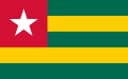
Togo
Togo is a narrow West African republic stretching from the Atlantic coast at Lomé up to the Burkina Faso border, bordered by Ghana and Benin, with Ewe, Mina, Kabye and Tem as its major national languages alongside official French. It holds one UNESCO World Heritage Site, Koutammakou in the far north-east, where the Batammariba people still live in their distinctive fortified takienta towers. Togo no longer offers visa on arrival; all non-ECOWAS travellers apply through the official e-visa portal in advance, while ECOWAS citizens travel visa-free.
Visa Requirements for Togo
Togo operates an e-visa-only policy: there is no visa on arrival. All non-ECOWAS travellers — including all EU, UK, US, Canadian, Australian, Swiss and most other passport holders — apply through the official Togolese government portal at least 5–6 business days before travel. The standard tourist e-visa is single-entry, valid for 15 days, and is paid by international card on the portal — check the current fee there; longer-stay tourist e-visas are available up to 90 days at additional cost. ECOWAS member-state nationals (Benin, Burkina Faso, Cabo Verde, Côte d'Ivoire, the Gambia, Ghana, Guinea, Guinea-Bissau, Liberia, Mali, Niger, Nigeria, Senegal, Sierra Leone) enter visa-free under the regional free-movement protocol for stays up to 90 days, with the yellow-fever certificate still required. Passport must be valid at least 3 months from the planned date of arrival (6 months for residents of Togo); one blank page is needed. The yellow-fever vaccination certificate (issued at least 10 days before departure, on the WHO yellow card) is mandatory for entry — Togo lies in the WHO yellow-fever transmission zone and the certificate is checked at all points of entry. Online registration: travellers must complete the online registration formality through the official Togolese procedures portal both before arrival and before departure (the requirement is integrated into the e-visa flow). Transit through Lomé requires a visa unless you remain airside on a single connecting itinerary; check with your airline. Currency declaration applies to amounts equivalent to USD 10,000 or greater on entry and exit. Land borders with Ghana, Benin and Burkina Faso may close periodically for elections in any of the bordering countries — verify accessibility close to travel. Business visas, work permits, study visas and long-term residence are issued through the same portal or through the Togolese embassy abroad with sponsoring documentation. Verify the current travel advisory of your own country's foreign ministry before booking.
Visa types
E-Visa Tourist (15 Days)
Tourism, family visit and short business travel for almost all non-ECOWAS nationalities — applied online through the official government portal before travel. The standard e-visa for the Lomé–Lake Togo–Kpalimé–Koutammakou circuit and for travellers spending up to two weeks in the country.
E-Visa Tourist (up to 90 Days)
Extended tourism, multi-region itineraries (Lomé + Atakora north + Plateaux centre), family visits and longer cultural travel — same e-visa portal as the 15-day visa, with extended duration confirmed at the application stage.
ECOWAS Visa-Free Entry
Citizens of the 14 other ECOWAS member states (Benin, Burkina Faso, Cabo Verde, Côte d'Ivoire, the Gambia, Ghana, Guinea, Guinea-Bissau, Liberia, Mali, Niger, Nigeria, Senegal, Sierra Leone) under the regional free-movement protocol.
Business, Work, Study & Transit Visa
Business activity, employment, study and short transit through Lomé. Lomé hosts ASKY Airlines (the Pan-African regional carrier headquartered in Lomé, with hub flights across West and Central Africa) and the Port of Lomé (one of the deepest natural ports of West Africa, a major trans-shipment hub for the Sahel hinterland — important context for business travellers).
Guides
Togo packs an unusually complete West African circuit into a small footprint — a 600-kilometre strip that runs comfortably as a 7- to 14-day trip from the Atlantic coast to the Sahel-edge Atakora Mountains. Lomé, the coastal capital, anchors the itinerary with the Grand Marché, the Akodessewa Fetish Market (the largest functioning vodun ritual-supply market in West Africa) and the Atlantic beachfront, and is unusually well-connected by air for a country of its size. East along the coast, Togoville and Aného carry the country's vodun heritage, from the pilgrimage centre on Lake Togo to the September Yêkê Yêkê Glidji festival. Inland, the Plateaux region around Kpalimé offers mountains, waterfalls and cocoa and coffee country, while Fazao-Malfakassa and Kéran national parks protect elephant, hippo and leopard populations further north. The crown of the country sits in the far north-east: Koutammakou, the UNESCO-listed Land of the Batammariba, where fortified mud-and-thatch takienta towers still house entire families. The Harmattan dry season, November to February, is the standard travel window.
Togo travel guide →
The full guide — the vodun coast, Koutammakou's tower-houses and the one road that decides it all.
Money in Togo →
The CFA franc in practice — the euro peg, mobile money and a cash-first budget.
Eating in Togo →
The starch stays constant; the cuisine lives in the sauce — what to order by name.
Getting around Togo →
One road runs the whole country — every transport decision is which vehicle you put on it.
Health & safety in Togo →
Two things settled weeks before you land — and one decided fifty times a day, on a motorbike.
Cities & planning
Plan your trip
Booking links go to our partner Trip.com — we may earn a commission at no extra cost to you.
Regions
Embassies & missions
Accredited missions for Togo
Cultural institutes — Togo
Language courses, exams, libraries and cultural programmes with a local branch.
Frequently asked questions
Do I need a visa to visit Togo?
Yes, unless you're an ECOWAS citizen, in which case entry is visa-free for stays up to 90 days. All other nationalities apply online through the official Togolese government portal at least 5-6 business days before travel — Togo no longer offers visa on arrival.
Is a yellow fever certificate required to enter Togo?
Yes, it's mandatory for all arrivals, ECOWAS citizens included. The WHO yellow card must be issued at least 10 days before departure and is checked at every point of entry, since Togo lies within the WHO yellow-fever transmission zone.
How long before travel do I need to apply for a Togo e-visa?
At least 5 to 6 business days before departure, applied through the official government portal. Standard tourist e-visas cover 15 days single entry, and longer-stay options up to 90 days are available at the application stage.
What currency is used in Togo?
The West African CFA Franc (XOF), permanently pegged to the euro at 655.957 XOF to 1 EUR. ATMs work for Visa and Mastercard in Lomé and the major regional capitals, but cash is essential outside those areas.
When is the best time to visit Togo?
November to February, the Harmattan dry season, offers the most comfortable temperatures and is the standard window for Koutammakou and the national parks. April to early July is the main rainy season in the south and Plateaux — the Kpalimé waterfalls are at their most spectacular then, but roads can be affected.
Do I need a guide to visit Koutammakou?
It's strongly recommended. Community-tourism agreements arranged through guides based in Kara or Kandé ensure a respectful visit to what remains a living residential community, not a museum site, and help navigate which areas and moments are open to outside visitors.
Is French necessary for travel in Togo?
Yes, for independent travel beyond upscale hotels. French is the official language and the everyday language of business and government; English is limited mainly to the diplomatic and NGO sector, so working French is strongly recommended for any independent itinerary.
Can I combine Togo with a trip to Ghana or Benin?
Yes. Togo's neighbours are easily reached through major land border crossings — Aflao-Lomé with Ghana and Hilakondji-Sanvee Condji with Benin are both well-used and sit on established coastal routes. Land borders can close periodically around elections in any of the bordering countries, so it's worth checking accessibility close to travel.
Planning a trip to Togo? Check what you need to enter and apply online in minutes.
Visaja keeps this page's contact details and visa guidance under continuous review — still, requirements can change at short notice, so confirm the essentials with the mission or the official government portal before you travel.