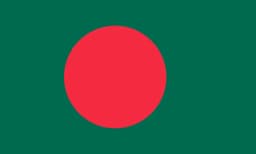
Bangladesh
Phone Code
+880
Capital
Dhaka
Population
171.5M (2023)
Languages
Bangla
Area
147,570 km²
Electricity
220 V
Plug types
NEMA 1-15 · Europlug · AC power plugs and sockets: British and related types · BS 1363 · Type K
Driving side
left
Native Name
Bangladesh
Region
Asia
Southern Asia
Timezone
Bangladesh Standard Time
UTC+06:00
On This Page
Bangladesh is a densely populated South Asian nation with rich cultural heritage, the world's longest natural beach at Cox's Bazar, and the world's largest mangrove forest in the Sundarbans. Dhaka, the bustling capital, features Mughal-era architecture, vibrant markets, and museums including Lalbagh Fort and Ahsan Manzil. Visitors are drawn to Cox's Bazar beach, Sundarbans tiger reserve, tea plantations of Sylhet, historic mosques at Bagerhat, and the riverine landscapes of Bengal delta. Bangladesh offers visa on arrival at its main international airports for many nationalities; travelers should confirm current entry options before departure, as electronic visa availability has varied.
Visa Requirements for Bangladesh
Most foreign nationals require a visa to enter Bangladesh. Visa on arrival is available at Hazrat Shahjalal International Airport in Dhaka and Shah Amanat International Airport in Chattogram for eligible nationalities, including US, UK, EU, Australia, Canada, and others, granted at the immigration officer's discretion for single-entry tourist or business stays with a valid passport, return or onward ticket, and proof of funds and accommodation (business visitors typically need an invitation letter). An electronic visa has operated through the evisa.gov.bd portal, but its availability has varied — confirm the current status before relying on it. Travelers who are not eligible for visa on arrival, or who need longer stays, work permits, or study visas, should apply in advance through a Bangladesh diplomatic mission. Some SAARC nationals enjoy visa-free entry for short stays.
Common Visa Types
E-Visa (Tourist/Business)
For tourism, business meetings, conferences, or visiting friends and family for eligible nationalities.
Visa on Arrival
For eligible nationalities arriving at Dhaka or Chattogram airports without advance visa.
SAARC Visa-Free Entry
For citizens of SAARC countries (India, Pakistan, Nepal, Bhutan, Sri Lanka, Maldives, Afghanistan) for short visits.
Work Visa / Long-Term Visa
For employment with work permit from Bangladesh Investment Development Authority or study at Bangladeshi institutions.
Important Travel Information
•Passport must be valid for...
•E-visa approval must be printed...
•Visa on arrival is available...
•Registration with local police required...
•Travel during monsoon season (June-October)...
•Photography of military installations, government...
•Currency exchange: Bring USD or...
•Health precautions: Vaccinations for hepatitis...
Bangladesh is one of South Asia's most underestimated travel destinations, offering a rare combination of riverine culture, ecological scale, and layered history. Dhaka provides an intense introduction with Mughal-era landmarks, dense market districts, and one of the world's busiest urban riverfronts. Beyond the capital, the country opens into very different landscapes: the Sundarbans mangrove system (UNESCO), historic mosque architecture in Bagerhat (UNESCO), tea-garden hills in Sylhet, and the long Bay of Bengal coastline around Cox's Bazar. Bangladesh works best for travelers who value cultural immersion and regional contrasts over checklist tourism. Distances can be moderate but travel speeds vary by season and infrastructure, so well-paced itineraries are essential. For visitors interested in delta geographies, living river economies, and Bengali cultural traditions, Bangladesh offers depth that is difficult to find elsewhere in the region.
Discover Bangladesh
Dhaka: Mughal forts and one of the world's busiest riverfronts
Dhaka introduces Bangladesh at full intensity. Lalbagh Fort, an unfinished 17th-century Mughal complex, and Ahsan Manzil, the pink-painted former residence of the Dhaka Nawabs on the Buriganga River, anchor the old city's Mughal-era architecture, while the surrounding market districts run at a pace and density that can feel like nowhere else in South Asia. The Buriganga riverfront itself is part of the experience: one of the world's busiest urban waterways, where wooden launches and cargo boats work the water constantly, giving visitors an immediate sense of how central river life remains to a country built across a delta.
The Sundarbans and the mosque city of Bagerhat
The Sundarbans, a UNESCO World Heritage mangrove forest shared with neighbouring India, is the largest mangrove ecosystem on Earth and the last significant habitat of the Bengal tiger in the wild; guided eco-cruises through its tidal channels combine wildlife spotting with a landscape found almost nowhere else. Inland, the historic mosque city of Bagerhat, also UNESCO-listed, preserves a remarkable concentration of 15th-century Islamic architecture, most famously the Sixty Dome Mosque (Shat Gombuj Mosque), whose actual dome count runs closer to eighty but which remains one of the largest and best-preserved sultanate-era mosques anywhere in South Asia.
Cox's Bazar's long beach and the Sylhet tea hills
Cox's Bazar holds a genuine geographic superlative: an unbroken natural sea beach running roughly 120 kilometres along the Bay of Bengal, widely cited as the longest of its kind in the world, drawing both domestic beach tourism and a smaller but growing number of international visitors. Far to the northeast, the tea gardens of Sylhet offer an entirely different register — terraced hillsides of tea bushes, a cooler upland climate, and a slower travel pace that contrasts sharply with both Dhaka's density and the coastal energy of Cox's Bazar, rounding out a country that packs an unusual range of landscapes into a relatively compact footprint.
Ways to Experience This Destination
River ports, ferries, and water-linked settlements reveal Bangladesh's everyday life across one of the world's largest delta systems.
Mangrove routes in the Sundarbans for biodiversity-focused travel, including estuarine landscapes and guided eco-cruises.
Bagerhat, Paharpur, and Dhaka's historic core for travelers interested in Islamic, Buddhist, and Mughal-era heritage layers.
Cox's Bazar and surrounding coastlines for Bay of Bengal itineraries, seasonal beach stays, and marine-facing travel routes.
Sylhet tea gardens and nearby upland zones for slower-paced routes focused on landscapes and regional cultural variation.
Money & Currency
Bangladeshi Taka (BDT)
Currency code: BDT
Practical Money Tips
Bangladeshi Taka — Exchange Only at Banks or Authorised Money Changers
The Bangladeshi Taka (BDT, ৳) is the official currency and is non-convertible outside Bangladesh. Exchange USD, EUR, or GBP only at Bangladesh Bank-licensed exchange houses, or at arrival counters at Hazrat Shahjalal International Airport (Dhaka). Street changers operate illegally. Keep all exchange receipts — hotels and some merchants may ask for them, and you'll need them to reconvert Taka on departure.
ATMs Available in Dhaka and Major Cities — Limited in Rural Areas
Dutch-Bangla Bank (DBBL) has the widest ATM network across Bangladesh, including rural branches. BRAC Bank, Prime Bank, and City Bank ATMs are common in Dhaka, Chittagong, and Sylhet. International Visa and Mastercard are accepted at DBBL and a handful of other networks. Outside major cities — in the Sundarbans region, Cox's Bazar hinterland, and the Chittagong Hill Tracts — ATMs are scarce. Withdraw in cities before venturing into rural Bangladesh.
bKash Mobile Money is Dominant — Physical Cards Less Common Outside Hotels
Bangladesh has a highly developed mobile financial services sector dominated by bKash (65M+ users), Nagad, and Rocket. As a foreign visitor, you cannot typically open a bKash account — but your accommodation or local fixer/guide can use it. Foreign Visa and Mastercard work at upscale hotels, airline offices, and larger restaurants in Dhaka. Most shops, markets, rickshaws, and restaurants operate cash-only. Apple Pay and Google Pay are not widely functional.
One of South Asia's Most Affordable Destinations
Bangladesh is exceptionally affordable for international visitors. Budget guesthouse in Dhaka: BDT 500–1,500/night ($5–14). Local dal-bhat meal: BDT 50–150 ($0.50–1.40). Mid-range restaurant: BDT 300–800 ($3–7) per person. A comfortable mid-range trip runs BDT 2,000–4,000/day ($18–37). Carry small denominations — change for BDT 500/1,000 notes can be difficult at small vendors.
Note: Always check current exchange rates before traveling. Currency exchange is available at airports, banks, and authorized money changers.
What currency is used in Bangladesh?
Can I pay with Apple Pay, Google Pay, or contactless cards in Bangladesh?
Where can I exchange money in Bangladesh?
How expensive is Bangladesh for tourists?
Are there ATMs outside Dhaka in Bangladesh?
Is tipping expected in Bangladesh?
Can I use USD directly in Bangladesh?
Can I take Taka out of Bangladesh?
Cities
Explore our city travel guides
Regions in Bangladesh
Explore different regions and their cities.
Bangladesh — Embassies worldwide
Popular Destinations
Top destinations with verified missions
All Countries by Continent
Embassies in Bangladesh
These foreign embassies and consulates are based here. Choose a mission to open its in-depth guide and contact details.
Key origin countries


All countries by continent
Europe(1)

Accredited missions for Bangladesh
Austrian Embassy in New Delhi
Based in New Delhi, India
Chilean Embassy in New Delhi
Based in New Delhi, India
Colombian Embassy in New Delhi
Based in New Delhi, India
Mexican Embassy in New Delhi
Based in New Delhi, India
Namibian High Commission in New Delhi
Based in New Delhi, India
Peruvian Embassy in New Delhi
Based in New Delhi, India
Embassy of Poland in New Delhi
Based in New Delhi, India
Embassy of Portugal in New Delhi
Based in New Delhi, India
Do I need a visa to visit Bangladesh?
Most foreign nationals do. Citizens of the US, UK, EU, Australia, Canada and many other countries can obtain visa on arrival at eligible airports, while certain SAARC nationals enjoy visa-free short stays. Everyone else, or anyone needing a longer stay, should apply in advance through a Bangladesh diplomatic mission.
Where can I get a visa on arrival?
Visa on arrival is available only at Hazrat Shahjalal International Airport in Dhaka and Shah Amanat International Airport in Chattogram, granted at the immigration officer's discretion for a 30-day single-entry tourist or business stay. It is not available at land borders.
Can I apply for an e-visa online before travelling?
An electronic visa has operated through the evisa.gov.bd portal, typically valid up to 30 days, but its availability has varied over time — confirm the current status before relying on it, and have visa on arrival or an embassy application as a backup plan.
Do SAARC country citizens need a visa?
Citizens of SAARC countries — India, Pakistan, Nepal, Bhutan, Sri Lanka, Maldives, Afghanistan — can often enter visa-free for short visits, though terms vary by bilateral agreement and typically range from 30 to 90 days. Check the specific requirements for your nationality.
What if I'm entering Bangladesh by land border?
Visa on arrival is only issued at the Dhaka and Chattogram international airports, not at land border crossings. If entering by land, you must apply for your visa in advance through a Bangladesh diplomatic mission.
When is the best time to visit Bangladesh?
Travel is easiest outside the monsoon season (June-October), when flooding and heavy rain can disrupt journeys, and outside cyclone season, which typically runs April-May and October-November.
What vaccinations or health precautions should I take?
Vaccinations for hepatitis A, typhoid and Japanese encephalitis are recommended, and malaria prophylaxis is advised for travel to the Sundarbans and Chittagong Hill Tracts.
How should I handle money in Bangladesh?
Bring USD or EUR to exchange at banks or authorized exchange houses. ATMs are available in cities, and credit cards are accepted at major hotels and restaurants, but cash is essential elsewhere.
Visaja keeps this page's contact details and visa guidance under continuous review — still, requirements can change at short notice, so confirm the essentials with the mission or the official government portal before you travel.