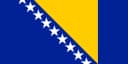
Bosnia and Herzegovina
Bosnia and Herzegovina is a mountainous country in the western Balkans, bordered by Croatia, Serbia and Montenegro and touching the Adriatic only along a short stretch of coast around Neum, with its capital in Sarajevo. Its Ottoman and Austro-Hungarian eras left bazaars, mosques, churches and boulevards side by side, and its three official languages, Bosnian, Croatian and Serbian, are mutually intelligible. Many nationalities, including EU citizens, can visit visa-free for up to 90 days in any 180-day period, holders of a valid multiple-entry Schengen, EU or US visa can enter without a separate one, and others apply through an embassy or consulate of Bosnia and Herzegovina.
Booking links go to our partner Trip.com — we may earn a commission at no extra cost to you.
Visa Requirements for Bosnia and Herzegovina
Bosnia and Herzegovina offers visa-free entry to citizens of the United States, United Kingdom, Canada, Australia, New Zealand, EU/EEA countries, and many others for stays of up to 90 days in any 180-day period. Citizens of EU member states, Schengen states, Andorra, Albania, Liechtenstein, Monaco, Montenegro, North Macedonia, San Marino, Serbia, Switzerland and the Holy See can enter with a valid national identity card instead of a passport. Additionally, nationals who would otherwise need a visa can enter without one if they hold a valid multiple-entry visa or residence permit issued by a Schengen state, an EU member state or the United States: each continuous stay may last up to 30 days, the total may not exceed 90 days in any 180-day period, and the stay must fall within the validity of that visa or permit — check the current rule before relying on it. Visitors must have a passport valid for at least 3 months beyond intended departure, proof of accommodation, and sufficient funds; border police may ask for evidence of funds for each day of the intended stay. Those requiring visas should apply through Bosnia and Herzegovina embassies or consulates before travelling, submitting application forms, photographs, travel itinerary, and financial proof. Make sure your passport is stamped on entry and exit, since the stamps are how border police check that a visitor has kept within the 90-day limit. Hotels and other accommodation providers register their foreign guests with the authorities; a visitor staying with friends or family for longer than three days must be reported to the police or the Service for Foreigners' Affairs within 48 hours of entry. Stays beyond the visa-free limit require a residence permit.
Visa types
Visa-Free Entry
For tourism, business, or visiting for citizens of US, UK, Canada, EU, Australia, and other eligible nationalities.
Schengen, EU or US Visa/Residence Permit Entry
For nationals who would otherwise need a visa but hold a valid multiple-entry visa or residence permit issued by a Schengen state, an EU member state or the United States, for tourism or business visits.
Short-Stay Visa (Type C)
For nationalities requiring visas for tourism, business, cultural, sports, or visiting purposes up to 90 days.
Long-Stay Visa (Type D)
For stays exceeding 90 days including work, study, family reunification, or long-term residence in Bosnia and Herzegovina.
Guides
Bosnia and Herzegovina is a country of mountains and fast green rivers, with its capital, Sarajevo, in a valley ringed by peaks and Mostar, the town of the Old Bridge, in the stony, Mediterranean-influenced south of Herzegovina. The road and the railway between the two follow the Neretva through its canyon for much of the way, which makes that valley the natural backbone of a first visit and the train the scenic way to make the journey. The Ottoman and Austro-Hungarian past is not kept behind glass here: it is the everyday fabric of the old quarters, the coffee houses and the market lanes. Away from the Neretva line, the country opens into highlands and river valleys that reward a slower second trip.
Bosnia and Herzegovina travel guide →
The full guide — Mostar beyond the bridge, the royal and vizier towns, the Una and the 1984 slopes, and the stay-in-Mostar plan.
Money in Bosnia and Herzegovina →
The convertible mark, its fixed euro rate and the cash small places still run on — the practical money guide.
Eating in Bosnia and Herzegovina →
Why only the meat pie is burek, ćevapi in somun, and Bosnian coffee beside Herzegovina's wines.
Getting around Bosnia and Herzegovina →
The train through the Neretva canyon, buses for everything else, winter tyre rules and real border checks.
Health & safety in Bosnia and Herzegovina →
Marked paths in the hills, winter mountain roads, carrying your ID and the three emergency numbers.
Cities & planning
Regions
Embassies & missions
Accredited missions for Bosnia and Herzegovina
Frequently asked questions
Do I need a visa to visit Bosnia and Herzegovina?
Citizens of the US, UK, Canada, Australia, New Zealand, EU/EEA countries and many others can enter visa-free for up to 90 days in any 180-day period. Holders of a valid multiple-entry Schengen, EU or US visa or residence permit can also enter without a separate visa. Everyone else needs a Short-Stay Visa (Type C), applied for through an embassy or consulate of Bosnia and Herzegovina before travelling.
Can I enter Bosnia and Herzegovina with a national ID card?
Yes, if you are a citizen of an EU member state, a Schengen state, Andorra, Albania, Liechtenstein, Monaco, Montenegro, North Macedonia, San Marino, Serbia, Switzerland or the Holy See. Everyone else needs a passport.
Can I enter Bosnia and Herzegovina with a Schengen visa?
If you hold a valid multiple-entry visa or residence permit issued by a Schengen state, an EU member state or the United States, you can enter without a separate visa. Each continuous stay may last up to 30 days, the total may not exceed 90 days in any 180-day period, and the stay must fall within the validity of your visa or permit. Check the current rule before relying on it.
How is the 90-day limit counted?
Visa-free visitors can stay up to 90 days in any 180-day period, looking back from each day of the stay. Border police check the entry and exit stamps in your passport, so make sure you are stamped both ways: a missing stamp can lead to a fine when you leave, and overstaying can affect future entry.
Do I need to register with the police during my stay?
Hotels and other accommodation providers register their foreign guests for you. If you stay with friends or family for longer than three days, the stay must be reported to the police or the Service for Foreigners' Affairs within 48 hours of entry.
How long must my passport be valid for Bosnia and Herzegovina?
At least three months beyond the date you plan to leave the country. Citizens who can travel on a national ID card need a valid card instead.
Can border police ask me to prove I have enough money?
Yes. Border police may ask for evidence of sufficient funds for each day of the intended stay, which can be shown in cash or by card, or with a letter of invitation or an accommodation booking paid in advance. The daily amount is set by the authorities, so check the current figure if you expect to be asked.
Can I visit Bosnia and Herzegovina on a day trip from Croatia or Montenegro?
Yes, but it is a full international border crossing: Bosnia and Herzegovina is outside the EU and the Schengen area, so you need a passport or eligible ID card that meets its entry rules, and there are checks on both sides. If you travel on a Schengen visa, it must still allow a further entry for your return to Croatia.
Planning a trip to Bosnia and Herzegovina? Compare hotels and flights and book in minutes.
Booking links go to our partner Trip.com — we may earn a commission at no extra cost to you.
Visaja keeps this page's contact details and visa guidance under continuous review — still, requirements can change at short notice, so confirm the essentials with the mission or the official government portal before you travel.