Libya
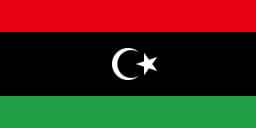
Phone Code
+218
Capital
Tripoli
Population
7.4M (2024)
Languages
Area
1,759,541 km²
Electricity
127 V
Plug types
Europlug · AC power plugs and sockets: British and related types · Schuko · Type L
Driving side
right
Native Name
ليبيا
Region
Africa
Northern Africa
Timezone
Eastern European Standard Time
UTC+02:00
On This Page
Libya is the fourth-largest country in Africa by area (1.76 million km², most of it Sahara) and the eleventh-longest coastline on the Mediterranean (about 1,770 km), bordered by Tunisia and Algeria to the west, Niger and Chad to the south, Sudan to the southeast and Egypt to the east, with a population of around 7 million concentrated almost entirely along the coast and the northern oases. Tripoli, the capital, sits on the Mediterranean and preserves one of the most photogenic Old Medinas in North Africa, with its Marcus Aurelius Arch (165 CE), the Gurgi Mosque, the Karamanli Mosque, the Red Castle (Saraya al-Hamra) housing the National Museum of Libya, and the early-twentieth-century architecture of the streets around Maydan al-Shuhada. Libya is best known internationally for its remarkable concentration of UNESCO World Heritage sites: Leptis Magna, the largest preserved Roman city in the Mediterranean (more extensive in some respects than Pompeii), with the Severan Basilica, Hadrianic Baths, the harbour and the Forum; Sabratha, the second great Roman city of Tripolitania, with its three-storey Roman theatre (one of the most photographed Roman ruins in the world); Cyrene, the Greek and Roman city in the Cyrenaica region with its Sanctuary of Apollo; the Old Town of Ghadamès, the 'Pearl of the Desert' Berber oasis on the Tunisian-Algerian border with its layered subterranean architecture; and the Rock-Art Sites of Tadrart Acacus in the Fezzan, with prehistoric paintings and engravings spanning over 12,000 years. Beyond the World Heritage circuit, the Sahara around Sebha, Ghat and the Ubari oasis lakes, the Acacus mountains, the Greco-Roman necropoleis of Cyrenaica, and the green-mountain ecology of Jebel Akhdar offer a remarkable natural and cultural depth. Libyan cuisine — bazin (a hard barley dough served with stew that is the national dish), shorba (the traditional Ramadan soup), couscous, sharmoula, the Libyan tea ritual with mint and groundnuts, and a strong Italian influence on the Libyan bread and pasta tradition — anchors the food side. Arabic is the official language; Berber (Amazigh) languages survive in Ghadamès, Yefren, Nalut and Zuwarah; Italian is still widely understood by older urban populations and through ongoing trade and family ties across the Mediterranean; English is increasingly spoken in business and tourism. Independent travel is at present limited by the security situation and most foreign ministries advise against all but essential travel — readers should consult the home country's current travel advisory before any planning.
Visa Requirements for Libya
Libya requires most foreign visitors to obtain a visa before travel. On 29 June 2026 the Government of National Unity designated Wafed and E-VISA LIBYA as the official systems for electronic visas and foreign entry and residence processing, replacing previous electronic channels. Travellers must use the current official system and the Libyan mission or sponsor handling their case; tourism and regional travel still commonly require a registered Libyan operator or host to provide an invitation and arrange permits. Common requirements include a passport with at least six months validity and blank pages, a photograph, purpose and accommodation details, an invitation when required, a yellow fever certificate after travel from an endemic country, and proof of funds. Visa on arrival is not a routine fallback. Travellers carrying evidence of past travel to Israel can be denied entry. Travel permits are required for movement to many regions outside Tripoli, including the desert (Akakus, Ghadamès, Ghat), Cyrenaica, archaeological sites and oases, and are normally arranged through the registered operator. The Libyan dinar (LYD) is the currency and the country remains substantially cash-based. Air links and internal access are subject to disruption. Before any planning, the home country's foreign ministry advisory is the authoritative reference for the security situation.
Common Visa Types
Tourist Visa (with Tour Operator Sponsorship)
For tourism with a registered Libyan tour operator — the standard category for visiting Leptis Magna, Sabratha, Cyrene, the Old Town of Ghadamès and the Tadrart Acacus rock-art sites. Independent tourism without an operator is not currently practical.
Business Visa
For meetings, oil-and-gas sector activity, infrastructure and reconstruction work, and trade missions with Libyan partners — the most common category for current foreign visitors.
Work / Residence Visa
For long-term employment with a Libyan or international employer in oil and gas (major international energy companies have long operated in Libya), engineering, NGO and humanitarian work, diplomatic missions and UN agencies.
Transit Visa
For travellers transiting through Libyan airports en route to a third country with limited time in the country.
Important Travel Information
•Most foreign visitors require advance...
•Travellers carrying any evidence of...
•WHO yellow fever vaccination certificate...
•Travel permits are required for...
•Tripoli International Airport (TIP) and...
•The Libyan dinar (LYD) is...
•Arabic is the official language;...
•Best travel windows are October...
•Modest dress is expected throughout...
•Pork and pork products are...
•Internet and mobile coverage is...
•The current security situation in...
Libya holds one of the densest archaeological landscapes on the Mediterranean — five UNESCO World Heritage Sites in a single country and a Roman heritage rivalled only by Italy itself. Leptis Magna, on the coast about 130 km east of Tripoli, is the largest preserved Roman city in the Mediterranean, founded by the Phoenicians as Lpqy and rebuilt as a Roman provincial capital by Septimius Severus, who was born there in 145 CE; the Severan Basilica, the Forum, the Hadrianic Baths, the New Forum, the Severan Arch, the harbour and the amphitheatre form an ensemble that in scale surpasses Pompeii, even if it is much less visited. Sabratha, 65 km west of Tripoli, preserves one of the most spectacular Roman theatres in the world — three storeys of marble columns reconstructed in the 1930s, still hosting occasional performances — alongside the Temple of Liber Pater, the harbour and the museum's mosaic collection. Cyrene, in the green Jebel Akhdar of the Cyrenaica, is the great Greek and Roman city of eastern Libya, founded as a Greek colony by Battus the Stammerer around 631 BCE and developed as the capital of Cyrenaica through Hellenistic and Roman times — the Sanctuary of Apollo, the Greek and Roman necropolises, the Temple of Zeus and the Theatre extend across a remarkable plateau setting overlooking the Mediterranean. The Old Town of Ghadamès, on the Tunisia-Algeria border, is the 'Pearl of the Desert' — a Berber oasis town with a layered subterranean architecture in which the streets are partly covered to provide shade and air circulation, and homes are decorated with the distinctive geometric Ghadamès style; the women's roof-terrace circulation network above the male-dominated streets below is one of the most ingenious vernacular urban designs in North Africa. The Rock-Art Sites of Tadrart Acacus in the Fezzan, near Ghat in the south-west, preserve prehistoric paintings and engravings spanning over 12,000 years — from the wet-Sahara hunters and herders of the Holocene to the camel period — across one of the most spectacular sandstone-and-canyon landscapes of the central Sahara. The Ubari Lakes, the Acacus mountains, the historic Saharan trade routes through Ghat and Ghadamès, and the Greco-Roman necropoleis of the Cyrenaica plateau extend the cultural depth well beyond the headline UNESCO sites. Tripoli, the capital, has a remarkable Old Medina with the Marcus Aurelius Arch (165 CE), the Karamanli Mosque, the Gurgi Mosque, the Souq al-Mushir, the Red Castle (Saraya al-Hamra) housing the National Museum of Libya, and the early-twentieth-century architecture of the streets around Maydan al-Shuhada. Libyan cuisine — bazin (the hard barley dough that is the national dish, served with lamb and tomato stew), shorba (the traditional Ramadan soup), couscous, sharmoula and the strong Libyan-Italian culinary heritage in bread, pasta and pastry — combines with the consistently warm Libyan hospitality to define the food and people experience. Independent tourism is at present limited and is normally arranged through specialist Libyan tour operators who know the current security context and can secure the necessary travel permits; the home country's current travel advisory is the authoritative reference.
Discover Libya
Leptis Magna: Rome's Grandest African City
Leptis Magna is the Mediterranean's best-kept imperial secret: a complete Roman metropolis on the Libyan shore, grander in preserved extent than Pompeii and — in the periods when visits have run — walked by handfuls of people rather than thousands. Septimius Severus, born here in 145 CE, rebuilt his hometown as a showcase when he took the purple: the Severan Basilica's carved pilasters, the colonnaded street to the polygonal harbour, the Hadrianic Baths' marble halls, the theatre gazing over the sea and the medusa-headed New Forum survive in an ensemble that archaeology textbooks lean on. The honest frame is non-negotiable here: with most ministries advising against all but essential travel, what follows describes patrimony rather than promotes itineraries — access, when undertaken at all, runs exclusively through registered Libyan operators who arrange the permits, the escort conventions and the day's realities. Sabratha, west of Tripoli, completes Tripolitania's Roman pair with its three-storey theatre facade, the most photographed classical ruin in North Africa. Both wait, magnificently intact, for the circumstances they deserve.
Cyrene and the Green Mountain: The Greek East
Eastern Libya holds the other classical civilization: Cyrene, founded around 631 BCE by Greek colonists from Santorini following a Delphic oracle, grew into one of the Hellenic world's great cities — its Sanctuary of Apollo terraced into the Jebel Akhdar's spring line, its Temple of Zeus outscaling the Parthenon, its necropolis carving thousands of tombs into the plateau edges, all overlooking the Mediterranean from the rare green uplands that give the 'Green Mountain' its name. Apollonia, the city's port, runs its ruins into the sea below. The Cyrenaica's landscape alone — juniper forest, red-earth wadis, the escarpment falling to the coast — upends every Libya-as-desert assumption. The same register applies as everywhere in the country: this is heritage to know now and visit when conditions genuinely permit, through the operator-and-permit system, against current advisories. The scholarship meanwhile continues — Cyrene's inscription on the World Heritage in Danger list is itself part of the story owed to readers.
Ghadamès: The Pearl of the Desert
Ghadamès solved desert urbanism seven centuries before climate engineering had a name. The old town — UNESCO-listed, at the meeting point of Libya, Tunisia and Algeria — is effectively one continuous building: whitewashed houses interlocking over covered streets that tunnel cool, dim and ventilated beneath the Saharan glare, while an entirely separate circulation network runs across the rooftops — historically the women's domain, a second city in the light above the men's city in the shade below. Interiors blaze with the signature Ghadamsi decoration: red geometric painting, mirrors, brass on white plaster. The community relocated to modern housing in the 1980s but families maintain their ancestral houses, return in the hottest months when the old town outperforms concrete, and host the October festival that fills the lanes with music and the old life. As a crossroads of the trans-Saharan caravan trade, Ghadamès banked its wealth in architecture — and that architecture, empty or full, remains among the Sahara's supreme achievements, held in trust for better travel days.
The Acacus: Twelve Thousand Years on Stone
In the far southwestern Fezzan, the Tadrart Acacus raises a sandstone dreamscape — arches, needles, canyon mazes in rust and black — whose rock faces hold one of humanity's longest visual archives: paintings and engravings spanning twelve millennia, from the hippo-and-elephant fauna of the green Sahara through pastoral herds, chariots and horses to the camel caravans of historical time. The sequence IS climate history, drawn by its witnesses — giraffe where dunes now run, dancers and cattle from the Sahara's lake period — and it made the Acacus a UNESCO site in 1985 and a Danger-listed one since 2016, vulnerable to vandalism precisely because guardianship is thin. The nearby Ubari lakes — palm-ringed saltwater mirrors set improbably among towering dunes — and the old caravan town of Ghat complete the Fezzan's ensemble. Deep-desert expeditions here defined Saharan travel's golden age and will again; for now the register holds: patrimony documented, conditions monitored, the operator-permit-advisory triad governing any essential presence.
Tripoli: The Medina on the White Sea
Tripoli's old medina compresses the city's whole biography between harbour and square: the Marcus Aurelius Arch — Africa's only standing Roman triumphal arch — marks the classical foundation at the medina's heart; the Karamanli and Gurgi mosques layer Ottoman elegance (painted wood, Kufic tile, forest-of-columns prayer halls) over the lanes; the Souq al-Mushir's coppersmiths and gold rows carry the trades; and the Red Castle, the Saraya al-Hamra fortress that every era refortified, anchors the seafront with the National Museum's collection — Leptis marbles, Garamantian finds, the country's memory under one roof (holdings and access varying with the times). Around Martyrs' Square, Italian-era Mediterranean modernism — arcades, cinemas, the cathedral-turned-mosque — gives the boulevards their faded-elegant line, and the corniche cafés pour the mint-and-peanut tea ritual at sunset. Tripoli is where essential travellers actually spend their Libyan hours, and where the city's famous private hospitality — the unannounced-guest ethic — outlasts every headline.
Bazin, Tea and the Italian Thread: Libya at the Table
Libyan culture survives most vividly at the table, which travels even when travellers cannot. Bazin is the national centrepiece and a communal ritual: a dense barley dough mounded on the shared platter, lamb-and-tomato stew pooled around it, eaten by hand from the family circle — an invitation to bazin is Libya's true welcome. Shorba, the peppery lamb-and-orzo soup perfumed with dried mint, opens every Ramadan evening and most family lunches; couscous crosses the border from the Maghreb in Libyan dress; sharmoula cools grilled fish on the coast. The Italian half-century left its accidental gifts — Tripoli's bakeries turn out proper pane and pasta al forno, macchiato culture thrives, and gelato survived where occupation did not. Tea is the social engine: brewed long, poured high into small glasses, three rounds by custom with roasted peanuts floated in the last. Libyan hospitality — fierce, unconditional, older than every state that has governed it — remains the account every visitor, aid worker and returning exile gives first. The table is where Libya waits.
Ways to Experience This Destination
Leptis Magna and Sabratha are the two great Roman cities of Tripolitania, both UNESCO World Heritage sites and among the most extensive Roman archaeological landscapes anywhere in the Mediterranean. Leptis Magna, 130 km east of Tripoli, was the birthplace of the emperor Septimius Severus (145 CE) and the showpiece of Severan urbanism — the Severan Basilica, the New Forum, the Hadrianic Baths, the harbour, the amphitheatre and the Severan Arch are spread over an immense site. Sabratha, 65 km west of Tripoli, preserves one of the most spectacular Roman theatres in the world (three storeys of marble columns reconstructed in the 1930s), the Temple of Liber Pater, the harbour and a small museum with one of the most important mosaic collections in North Africa.
Cyrene, in the green Jebel Akhdar of the Cyrenaica, is the great Greek and Roman city of eastern Libya, founded by Greek colonists from Thera (Santorini) around 631 BCE and developed as the capital of Cyrenaica through Hellenistic and Roman times. The Sanctuary of Apollo, the Temple of Zeus, the Greek and Roman necropolises, the Theatre and the Agora extend across a remarkable plateau overlooking the Mediterranean. The wider Cyrenaica region also includes the harbour city of Apollonia (Cyrene's port), the city of Ptolemais and the green-mountain landscape of the Jebel Akhdar.
The Old Town of Ghadamès, on the Tunisia-Algeria border in north-western Libya, is one of the most distinctive vernacular urban landscapes in the Sahara — a Berber oasis town with a layered subterranean architecture in which the streets are partly covered to provide shade and air circulation, and homes are decorated with the distinctive geometric Ghadamès interior style of red and white painted plaster. The women's roof-terrace circulation network above the male-dominated streets below is one of the most ingenious vernacular urban designs in North Africa. UNESCO World Heritage since 1986. The town also lies at one of the great historic trans-Saharan caravan crossroads.
The Rock-Art Sites of Tadrart Acacus, in the Fezzan in south-western Libya near Ghat, preserve prehistoric paintings and engravings spanning over 12,000 years — from the wet-Sahara hunters and herders of the Holocene (with paintings of giraffe, elephant, antelope and cattle no longer found in the desert) to the horse and camel periods. UNESCO World Heritage since 1985. The surrounding sandstone-and-canyon landscape is one of the most spectacular in the central Sahara, and combines well with the Ubari oasis lakes (a chain of saltwater lakes set among high dunes) and the historic caravan town of Ghat.
Tripoli's Old Medina is one of the most photogenic Old Medinas of North Africa — a network of narrow streets between the Mediterranean and Maydan al-Shuhada, anchored by the Marcus Aurelius Arch (165 CE), the only Roman triumphal arch standing in Africa. The Karamanli Mosque, the Gurgi Mosque, the Souq al-Mushir, and the Red Castle (Saraya al-Hamra) housing the National Museum of Libya complete the historic core. Beyond the Medina, the early-twentieth-century Mediterranean modernist architecture along the corniche, around Maydan al-Shuhada and on the boulevards out toward the airport adds a distinctive architectural layer to the city.
Libyan cuisine combines North African and Mediterranean traditions: bazin (a hard barley dough served with lamb-and-tomato stew, the national dish), shorba (the traditional Ramadan soup of lamb, tomato, chickpeas and orzo, eaten across Libya), couscous in the Tunisian-Libyan style, sharmoula spice paste, the Libyan tea ritual with mint and groundnuts, and a strong Italian-Libyan culinary heritage that survives in bread, pasta, pastry and ice-cream traditions. The hospitality of Libyan households (the cultural value of the unannounced guest) remains the strongest first impression for almost every international visitor — surviving every successive period of the country's history.
Money & Currency
Libyan Dinar (LYD)
Currency code: LYD
Practical Money Tips
Libyan Dinar (LYD) is the only currency — bring all cash in USD or EUR; no international bank cards work; exchange at official banks for legal rate or via authorised changers
The Libyan Dinar (LYD) is the sole official currency, divided into 1,000 dirhams. Foreign credit and debit cards — including Visa, Mastercard, and international bank cards — do not function in Libya. ATMs are non-operational for foreign cards. Visitors must bring all currency as physical USD or EUR cash and exchange into LYD upon arrival or at official banks (Bank of Commerce & Development, Sahara Bank). The official exchange rate and the parallel market rate can differ; only exchange at licensed institutions. Carry small denominations of USD and EUR for flexibility. LYD is not exchangeable outside Libya.
No functioning ATMs for international visitors — domestic Libyan bank cards only; bring your entire trip budget in USD or EUR cash before arriving
Libya's banking system has been severely disrupted by the political situation since 2011. International Visa and Mastercard withdrawals are not supported anywhere in the country. Even domestic ATMs are unreliable due to regular cash shortages. Most organised tour groups pre-arrange USD or EUR cash with their operators. Budget travellers are extremely rare in Libya; the near-universal entry point is a registered Libyan tour operator who handles logistics including money exchange. Carry enough USD or EUR cash for your entire trip.
No card payments, Apple Pay, or Google Pay — 100% cash economy; USD and EUR accepted in tourist contexts; only LYD in local markets and government-facing services
No international card payment infrastructure operates in Libya. Apple Pay, Google Pay, and contactless payments are unavailable. USD and EUR are accepted in some tourist-adjacent contexts (some hotels, tour operators, and guided services) and are often preferred over LYD. For all other transactions — local restaurants, petrol, domestic transport, entry fees — only LYD is accepted. Ensuring you have enough LYD exchanged for day-to-day expenses while keeping USD or EUR for emergencies is essential practice.
Budget guide: local lunch LYD 5–15; guesthouse LYD 50–120/night; tour operator packages typically quoted in USD; guided desert tour USD 100–300/day
Libya is not a standard independent-traveller destination. The vast majority of visitors enter on organised tours, with costs pre-arranged in USD. Approximate costs for those inside a tour: full-day guided tour (Leptis Magna, Sabratha, Ghadames) USD 80–200 per person. Overnight desert camp (Ubari Lakes, Akakus) USD 100–300 per person/day all-inclusive. Local tea: LYD 1–3. Street food or cafeteria meal: LYD 5–15. Mid-range hotel (Tripoli): LYD 100–200/night. Official museum/site entry: LYD 3–10. Your tour operator's package price (arranged before entry) usually covers the bulk of expenses.
Note: Always check current exchange rates before traveling. Currency exchange is available at airports, banks, and authorized money changers.
Can I use my bank card or credit card in Libya?
Does Apple Pay or Google Pay work in Libya?
How do I get Libyan Dinars?
Can I travel independently in Libya without a tour operator?
Is USD accepted in Libya?
What is the safest way to carry money in Libya?
Are Libyan Dinars useful outside Libya?
What travel insurance covers Libya?
Libya — Embassies worldwide
Popular Destinations
Top destinations with verified missions
All Countries by Continent
🌍Europe(2)
Embassies in Libya
These foreign embassies and consulates are based here. Choose a mission to open its in-depth guide and contact details.
All countries by continent
Europe(1)

Accredited missions for Libya
Can I visit Libya right now?
The plain answer first: most major foreign ministries currently advise against all but essential travel to Libya, and that guidance — not any travel writing — is the authoritative reference, checked shortly before any planning. Where essential travel proceeds, it runs entirely through registered Libyan operators or sponsors who arrange the visa invitation, regional permits and current-conditions judgment. Tourism in the ordinary sense awaits better circumstances; what is documented here is what will be waiting.
How does the Libya visa system work?
Through the officially designated electronic systems — Wafed and E-VISA LIBYA, named as the current channels in mid-2026 — together with the Libyan mission or sponsor handling your case: tourism categories require a registered operator's invitation, business needs a Libyan host letter, and travel permits for anywhere beyond Tripoli (the archaeological sites, the desert, the Cyrenaica) are arranged with the visa. Processing runs weeks; visa on arrival is not a fallback. Rules have changed repeatedly — verify the current system before anything else.
Is Leptis Magna really comparable to Pompeii?
In preserved extent, it exceeds it: Leptis is a complete Roman metropolis — basilica, forum, baths, theatre, harbour — built to imperial-showcase standard by its native son Septimius Severus, and its African remoteness spared it the stripping that European sites endured. Sabratha's three-storey theatre and Cyrene's Greek sanctuaries complete a classical ensemble rivalled only by Italy itself. Access follows the operator-permit-advisory reality above; the ruins' patience is the one certainty.
Will an Israeli stamp prevent entry to Libya?
Yes — absolutely: Israeli passports, Israeli visas or stamps, and even the Egyptian or Jordanian border stamps that imply an Israeli crossing mean denied entry, applied as a hard rule. The solutions are the standard ones — a clean passport, or any regional travel history sequenced with Libya before Israel — and given Libya's document scrutiny, assume the strict reading.
When would one travel to Libya, conditions permitting?
October to April, decisively: the Mediterranean coast turns mild for the Roman circuit, and the Sahara — where summer regularly exceeds 45°C — becomes traversable for the Fezzan's rock art and the Ubari lakes. Ramadan reshapes daily rhythms countrywide (no public eating or drinking in daylight), and Ghadamès's October festival marks the old town's liveliest week. All of it framed, as ever, by the current advisory.
What practical realities should essential travellers expect?
A cash economy first: international cards barely function, so budgets travel as US dollars or euros exchanged in Tripoli, with the dinar for daily spending. Modest dress throughout and no alcohol anywhere (prohibited outright). Flights and internal links are disruption-prone — verify routings directly and repeatedly. Arabic leads, Italian surfaces among older Tripolitanians, English grows in business. And insurance requires a specific Libya rider with evacuation cover — the non-negotiable line in every essential-travel checklist.
This overview comes from Visaja's worldwide missions database (visaja.com), checked against official government sources; for binding answers, the mission itself always has the final word.