Saint Kitts and Nevis
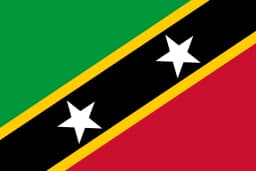
Phone Code
+1
Capital
Basseterre
Population
46,922 (2025)
Languages
Area
269 km²
Electricity
230 V
Plug types
NEMA 1-15 · NEMA 5-15 · AC power plugs and sockets: British and related types · BS 1363
Driving side
left
Native Name
Saint Kitts and Nevis
Region
Americas
Caribbean
Timezone
Atlantic Standard Time
UTC-04:00
On This Page
Saint Kitts and Nevis is a two-island nation in the Eastern Caribbean, part of the Lesser Antilles, with Basseterre on Saint Kitts as the capital. At around 53,000 people and 261 square kilometres, it is the smallest sovereign state in the Western Hemisphere by both population and area. British colonization began in 1623, making Saint Kitts and Nevis among the earliest-settled islands in the Caribbean; the country became independent in 1983 as a Commonwealth realm. Citizens of the US, Canada, the UK, the EU and many other countries enter visa-free for up to 90 days.
Visa Requirements for Saint Kitts and Nevis
Saint Kitts and Nevis offers visa-free entry to citizens of the United States, Canada, the United Kingdom, European Union member states and most Commonwealth countries — roughly 130 nationalities in total — for tourism and business for up to 90 days. A passport valid at least 6 months beyond the intended stay is required, along with a return or onward ticket; proof of sufficient funds may be requested. Entry stamps are issued on arrival at Robert L. Bradshaw International Airport on Saint Kitts or Vance W. Amory International Airport on Nevis, with no advance application needed. Citizens of countries not on the visa-free list can generally obtain a visa on arrival or should apply in advance through a Saint Kitts and Nevis High Commission or Consulate. See the visa categories below for the specific requirements, including the Citizenship by Investment programme.
Common Visa Types
Visa-Free Entry (Tourism/Business)
For tourism or business for citizens of United States, Canada, United Kingdom, EU, and approximately 130+ countries.
Visa on Arrival
For eligible nationalities not qualifying for visa-free entry but allowed to obtain visa at airport.
Citizenship by Investment Program
Economic citizenship program allowing foreign investors to obtain Saint Kitts and Nevis citizenship and passport through investment, one of world's oldest programs (established 1984).
Important Travel Information
•Brimstone Hill Fortress — UNESCO...
•Saint Kitts Scenic Railway —...
•Island-Hopping Saint Kitts and Nevis:...
•Beach Paradise and Water Activities:...
•Compact Size and Easy Exploration:...
•Cost and Budget: Saint Kitts...
Saint Kitts and Nevis packs an outsized range of experiences into the smallest sovereign state in the Western Hemisphere. Brimstone Hill Fortress, the Caribbean's best-preserved British fort and a UNESCO World Heritage Site, crowns an 800-foot hilltop with panoramic views across both islands. Basseterre, the capital on Saint Kitts, anchors a compact island circled by the historic Scenic Railway, a narrow-gauge line built for the sugar trade and now a tourist journey through former plantations and rainforest. A short ferry ride away, Nevis trades Saint Kitts' liveliness for a quieter, more exclusive atmosphere of historic plantation inns, golden-sand Pinney's Beach, and the dormant volcano of Mount Nevis rising over it all. Diving and snorkelling reveal shipwrecks and coral gardens in warm, clear water, while the compact size of both islands means a Brimstone Hill morning, a beach afternoon, and a Basseterre evening are all realistic on the same day.
Discover Saint Kitts and Nevis
Why Brimstone Hill Earned Its “Gibraltar of the West Indies” Nickname
Brimstone Hill's fortifications were built directly from volcanic stone quarried on the hill itself, raised over a full century of construction between 1690 and 1790 — the elevation was chosen specifically because it commands sightlines across the entire island and out toward Nevis, Statia, Saba, St. Barths and Montserrat on a clear day, making it nearly impossible to approach undetected. That visibility, along with the sheer thickness of its outer walls and bastions, is what earned it the “Gibraltar of the West Indies” nickname — and it's what actually explains the scale once you're walking the ramparts rather than just reading about them.
Why Nevis Feels Like a Different Island Entirely
Nevis is its own separate volcanic cone across a narrow channel from Saint Kitts, and its smaller size meant it never developed the cruise-ship infrastructure and larger resort chains that shape Saint Kitts' coast — instead, several of its old sugar-plantation great houses were converted into small inns rather than torn down, which is why Nevis' accommodation still leans toward historic properties rather than large hotels. Pinney's Beach runs along the calm, leeward side facing Saint Kitts, sheltered enough for the string of beach bars along it, while Mount Nevis itself, the dormant volcano the island is built around, is reachable only by a guided rainforest hike, since there's no road to the summit.
Why the Railway Follows the Old Sugar Route, Not a Scenic Loop
The line's route wasn't designed for tourism — it was built between 1912 and 1926 specifically to move cut sugar cane from plantations around the island to the central factory in Basseterre, which is why it circles the coastline instead of cutting through the interior, tracing the boundary of the old plantation belt rather than the island's most scenic terrain by design. Sugar production ended in 2005 after more than 350 years, and the line was converted to carry passengers instead of cane; because its schedule is built around cruise-ship arrivals, it doesn't run every day, so checking ahead matters more here than for most attractions.
Why Saint Kitts' Two Coastlines Feel So Different
Saint Kitts sits between the calm Caribbean Sea to its west and the open Atlantic to its east, which is why Frigate Bay has two distinct sides just minutes apart — the south-facing Caribbean side stays calm enough for swimming and snorkelling, while the Atlantic side gets real surf and wind. Turtle Beach, on the quieter southeastern peninsula, sees seasonal sea-turtle nesting because its Atlantic-facing sand and lower development levels match the conditions turtles need to come ashore undisturbed. The shipwrecks and coral gardens that make for good diving sit mostly on the calmer Caribbean side, where visibility holds up better than in the more wave-churned Atlantic waters.
What You're Actually Climbing on Mount Liamuiga
Mount Liamuiga is Saint Kitts' dormant volcano and highest point, and the guided hike to its crater rim follows old volcanic slopes through increasingly dense rainforest as the trail gains elevation — the crater itself, roughly a kilometre across, is what gives the summit its dramatic drop rather than a simple peak. The climb takes a full day mostly because of the terrain rather than the distance: the upper slopes are steep and often muddy, which is why a guide familiar with current trail conditions is standard practice here rather than an optional add-on.
Ways to Experience This Destination
The UNESCO-listed “Gibraltar of the West Indies” covers 38 acres on an 800-foot hilltop, built 1690-1790 by the British military and enslaved Africans. Walk the ramparts and explore the museum's fortress and island-history exhibits, then take in views across Saint Kitts, Nevis and neighbouring islands on a clear day.
A short ferry ride from Basseterre reaches a quieter, more exclusive island: historic plantation inns, golden Pinney's Beach with its beach bars, and a guided hike up the dormant Mount Nevis volcano through rainforest to panoramic views.
A restored narrow-gauge railway, originally built in 1912 to move sugar cane, now circles the island past former plantations, villages and rainforest with views across the channel to Nevis — a unique way to absorb the island's sugar-era history.
Frigate Bay's calm Caribbean side and livelier Atlantic strip, quiet Cockleshell Beach looking toward Nevis, and turtle-nesting Turtle Beach anchor a coastline suited to swimming, snorkelling and diving on shipwrecks and coral gardens in warm, clear water.
Saint Kitts' dormant volcano offers a guided hike through rainforest to the crater rim — a full-day undertaking rewarded by views over the island and, on clear days, across to neighbouring islands.
Money & Currency
East Caribbean Dollar (XCD)
Currency code: XCD
Practical Money Tips
Eastern Caribbean Dollar — USD Universally Accepted
Saint Kitts and Nevis uses the Eastern Caribbean dollar (XCD), pegged at XCD 2.70 per USD. US dollars are accepted nearly everywhere alongside local currency. Euros are not widely accepted — exchange to USD or XCD on arrival.
ATMs Available in Basseterre and Charlestown
ATMs are found in Basseterre (St. Kitts) and Charlestown (Nevis) at branches of Bank of St. Kitts, RBTT Bank, and FirstCaribbean. They dispense XCD. International Visa and Mastercard work reliably.
Cards Widely Accepted at Tourist Venues
Visa and Mastercard are standard at hotels, restaurants, and larger shops. American Express is accepted at upscale resorts. Apple Pay and Google Pay work at modern terminals in both islands.
Cash for Local Markets and Tips
Keep XCD or USD cash for local vendors, rum shops, minibus taxis, and tipping. Service is not automatically included — 10–15% is customary at restaurants.
Note: Always check current exchange rates before traveling. Currency exchange is available at airports, banks, and authorized money changers.
What currency is used in Saint Kitts and Nevis?
Can I use US dollars in Saint Kitts and Nevis?
Are there ATMs in Saint Kitts and Nevis?
How expensive is Saint Kitts and Nevis?
Can I exchange euros in Saint Kitts and Nevis?
Is a service charge included in restaurant bills?
Do Apple Pay and Google Pay work in Saint Kitts and Nevis?
Is the XCD accepted outside Saint Kitts and Nevis?
Accredited missions for Saint Kitts and Nevis
German Embassy in Port of Spain
Based in Port of Spain, Trinidad and Tobago
Royal Thai Embassy in Ottawa
Based in Ottawa, Canada
British High Commission in Bridgetown
Based in Bridgetown, Barbados
United States Embassy in Bridgetown
Based in Bridgetown, Barbados
Do I need a visa for Saint Kitts and Nevis?
Most visitors don't — citizens of the US, Canada, UK, EU member states and most Commonwealth countries enter visa-free for tourism or business for 90 days. Citizens of other countries can obtain a visa on arrival or should check requirements with the nearest High Commission before travel.
How do I get between Saint Kitts and Nevis?
The Sea Bridge ferry runs multiple daily trips between Basseterre and Charlestown, taking about 45 minutes. Flying is also possible on a short 15-minute hop, though the ferry is the more common and affordable option.
How many days do I need for both islands?
A common split is three days on Saint Kitts and two on Nevis — enough time for Brimstone Hill, the Scenic Railway and beaches on Saint Kitts, plus the Mount Nevis hike and Pinney's Beach on Nevis.
Is Saint Kitts and Nevis good for diving?
Yes — dive sites include several shipwrecks and coral gardens with warm year-round water (26-29°C). Both introductory dives and certification courses are widely available through local dive shops.
Do I need a rental car?
It helps for flexibility, though taxis are readily available (agree the fare beforehand) and both islands are small enough to circle by car in a few hours. Driving is on the left, British-style.
What is the Citizenship by Investment programme, and does it affect visiting as a tourist?
It's a long-standing programme letting investors obtain a Saint Kitts and Nevis passport in exchange for a real estate investment or a contribution to a government fund — it has nothing to do with tourist visits, which remain visa-free and require no investment at all. It's really only relevant if you're exploring a second passport rather than planning a trip.
Planning a trip to Saint Kitts and Nevis? Check what you need to enter and apply online in minutes.
Get your digital arrival cardTreat this Visaja page as your starting point: verify the current rules directly with the official source before you submit an application.