
Travel guide
India Travel Guide
India is a continent disguised as a country — 28 states, 22 constitutionally recognised languages and a civilisation thousands of years deep — and its distances decide more about a trip than any list of sights. The Golden Triangle out of Delhi is the classic first circuit; beyond it, most trips choose one other India rather than all of them — Rajasthan's palaces and desert, Kerala's backwaters, the ghats of Varanasi or the Himalaya — because covering the ground between them takes real days by train or plane. And then there is the food: every state has its own cuisine, with a spice complexity that Indian food abroad barely hints at.
Updated 2026-09-19
Deep dives
Deep dive
Goa and the Konkan: The Enclave and Its Coast →
Goa is a 451-year Portuguese enclave the beaches were added to — which explains everything from the basilicas to the pace. Reading the north-south gradient, the Konkan escape valve, and the season.
Deep dive
Himalayan India: Three Mountain Worlds →
India holds three different Himalayas — how to choose between them and acclimatize. The rain-shadow deserts of Ladakh and Spiti stay open when the monsoon closes everything else; the drenched green east lies under Kangchenjunga.
Itinerary
India in Two Weeks: The Triangle Plus One →
The two-week India route that survives contact with India: the Golden Triangle done properly, then ONE region. Deeper Rajasthan or the Kerala south — with the trains, the buffer days and the fork explained.
Deep dive
Kerala: India's Maritime Exception →
Kerala faced the ocean while the rest of India faced the plain. That explains Kochi's trading layers, the backwaters where water is the road, the tea ladder into the Ghats, and monsoon-season Ayurveda.
Deep dive
Rajasthan: Why the Palaces Survived →
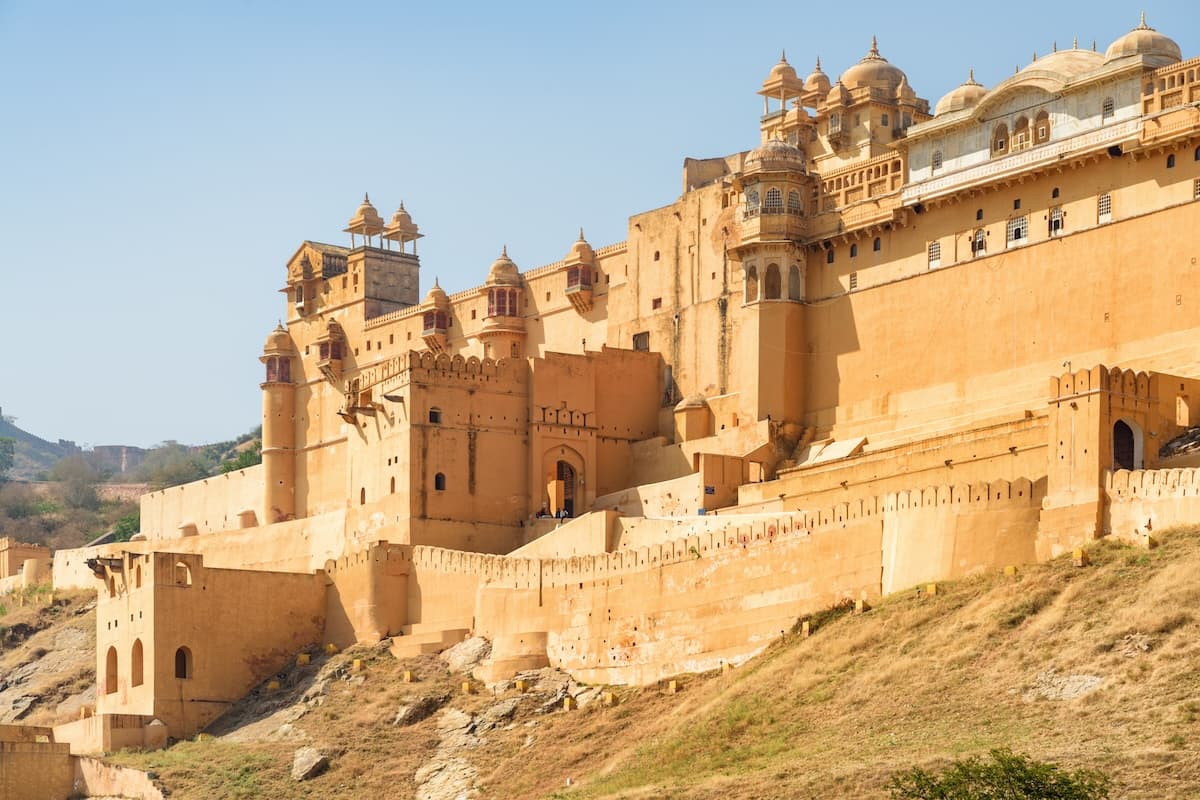
Rajasthan's forts are intact because its kings survived — and its palaces became hotels for a precise historical reason. Reading the colour-coded cities, the living Thar, and the classic loop.
Deep dive
The Golden Triangle: Three Capitals, Three Empires →
Delhi, Agra and Jaipur are the capitals of three different imperial ideas — a layered conquerors' city, the Mughal apex, and a planned Rajput showpiece. How to read the Triangle and route it well.
Deep dive
Varanasi and Bodh Gaya: Reading the Threshold City →
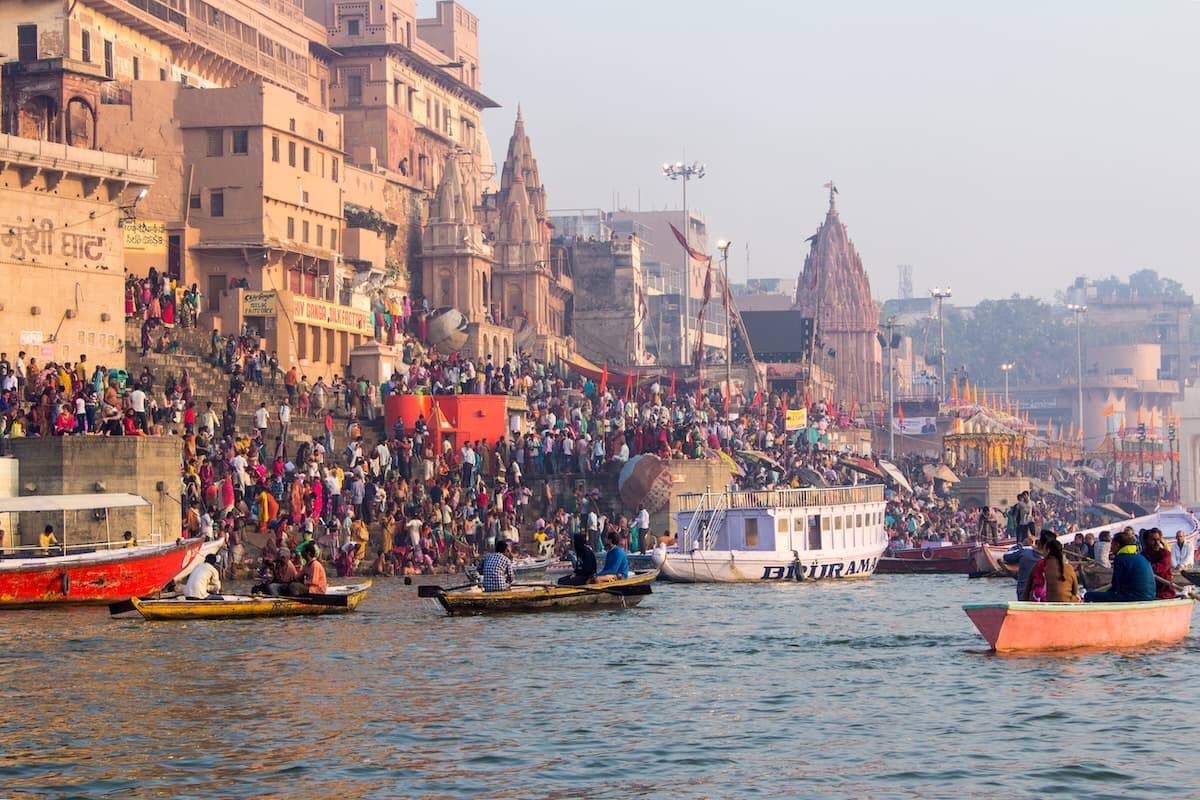
Varanasi's ghats face the sunrise across an empty far bank — a city built as a threshold. How to read the river liturgy respectfully, and why the Buddha's sites sit deliberately next door.
Ways to Experience This Destination
India's most popular circuit. Delhi: Red Fort (UNESCO), Jama Masjid (one of India's largest mosques), Humayun's Tomb (precursor to the Taj), Chandni Chowk (chaotic market that's a sensory experience in itself), and India Gate. Agra: the Taj Mahal (arrive at sunrise or sunset to avoid crowds; foreign visitors pay a separate, higher entry fee, so check the current price), Agra Fort, and the Baby Taj (Itimad-ud-Daulah). Jaipur: Hawa Mahal (Palace of Winds), Amber Fort (ride up by elephant or jeep), City Palace, and jewel and textile markets. Connected by train or car, 5-7 days ideal.
Rajasthan is the India of the maharajas: Udaipur (Lake Palace floating on Lake Pichola, City Palace), Jodhpur (the blue city with imposing Mehrangarh Fort), Jaisalmer (the golden fortress in the Thar Desert, camel camps under the stars), and Pushkar (sacred lake, camel fair in November). Heritage hotels — palaces and havelis converted into accommodation — offer a lodging experience unique in the world. Thar Desert camel safaris with overnight camping define the Rajasthan experience.
Kerala (southwest) is tropical, serene India. The backwaters of Alappuzha (Alleppey) are navigated by houseboat — wooden house-boats gliding through coconut groves, rice paddies, and fishing villages for 1-2 days. Munnar offers tea plantations on endless green hills. Thekkady (Periyar) for elephant spotting in the jungle. Kovalam and Varkala for beaches. Ayurveda is a living tradition in Kerala — 7-21 day retreats with massages, diet, and yoga prescribed by Ayurvedic doctors. Kerala cuisine (appam with stew, fish curry in coconut milk on banana leaf, karimeen) is among India's most refined.
Varanasi (Benares) on the Ganges is India's most intense experience: one of the world's oldest continuously inhabited cities and Hinduism's holiest, where pilgrims bathe in the river at dawn to purify themselves, where cremations at Manikarnika Ghat are a visible part of daily life, where the nightly Ganga Aarti (fire, bells, and chanting ceremony) transforms the ghats into a spiritual spectacle, with thousands of small lamps set floating downstream. Boating the Ganges at dawn is one of the most impactful moments of any trip. Sarnath, where Buddha gave his first sermon, is 10 km away. Rishikesh, in the Himalayan foothills, calls itself the yoga capital of the world.
Ladakh — the “Little Tibet”, a Union Territory in its own right since 2019 — is studded with Buddhist monasteries clinging to cliffs at 3,500+ metres (Thiksey, Hemis, Lamayuru), Pangong Lake (intense blue at 4,350 metres, the iconic 3 Idiots filming location), and mountain roads crossing some of the world's highest motorable passes. Darjeeling, in West Bengal, offers tea plantations with views of Kangchenjunga (8,586 m, world's third-highest peak) and the Darjeeling Himalayan Railway (UNESCO Toy Train). Manali and Shimla are former colonial hill stations in Himachal Pradesh. The Markha Valley trek (Ladakh), Hampta Pass crossing, and the Chadar route — walked on the frozen Zanskar River in winter — are legendary.
City guides
Frequently asked questions
No — English is an official language of government and is widely spoken in cities, tourist areas and by anyone working in travel, which makes India one of the easiest deep-culture destinations for English speakers. Hindi dominates the north and regional languages lead elsewhere (Tamil, Malayalam, Bengali and many more), so English thins in rural areas — but menus, signage and goodwill cover the gap, and a few words of Hindi or the local language earn warmth out of all proportion to the effort.
One region done properly, or the Golden Triangle plus one region — not more. India rewards depth and punishes sampling: the distances are subcontinental, and a trip that tries to touch Rajasthan, Kerala, Varanasi and the Himalaya spends its days in transit rather than in India. The classic first shape is Delhi-Agra-Jaipur plus either Rajasthan (by hired car) or Varanasi (by overnight train); a south-only alternative pairs Kerala's backwaters and hills with Goa or Tamil Nadu. Overnight trains are the architecture that makes two weeks feel bigger — each one converts a travel day into a night's sleep.
The north winter circuit — the Golden Triangle, extended into Rajasthan — is the classic first India: the densest concentration of world-class monuments, the best-established traveler infrastructure, and easy overnight-train and hired-car logistics. The gentler alternative is starting south: Kerala runs at a calmer pitch, and Goa's beach towns make a soft landing before the bigger cities. The Himalaya is its own trip on its own calendar — summer, when the plains empty — and is better treated as a dedicated journey than a first-trip add-on.
Entry rules, visa types and practical notes live on the India overview.
Visaja keeps this page's contact details and visa guidance under continuous review — still, requirements can change at short notice, so confirm the essentials with the mission or the official government portal before you travel.