Introduction
Rajasthan is India's largest state by area and the one most shaped by its own aridity — a desert and semi-desert region whose Rajput kingdoms built hill forts, walled cities and palaces on a scale that outlasted them. Four of those cities, each with a distinct colour and character, carry most of what visitors come for; between and beyond them lie the Thar Desert, a tiger reserve inside a ruined fort, and craft traditions that still operate as working trades.
Overview
Rajasthan is a circuit, and understanding that is most of the planning. Its four headline cities — Jaipur, Udaipur, Jodhpur and Jaisalmer — sit far apart across genuinely large distances, and the trip you get depends almost entirely on how many of them you try to fit into the days you have. Attempt all four in a week and you will spend it in vehicles; take two or three at a proper pace and the state opens up. Each has a different character and, famously, a different colour: Jaipur's rose-washed planned grid, Udaipur's white marble around artificial lakes, Jodhpur's blue-painted old town beneath a fort on a cliff, and Jaisalmer's honey sandstone rising straight out of the desert. Around them, the state offers things none of the cities can: camel and jeep journeys into the Thar, tiger safaris at Ranthambore where the animals move through ruined fortifications, the sacred lake and autumn camel fair at Pushkar, and a network of former palaces and merchant houses now working as hotels. Rajasthan's crafts are not a souvenir economy but a living one — block printing, gem cutting, blue pottery and miniature painting are all worked here commercially. The season decides everything else: winter is the reason to come, and high summer is genuinely punishing.
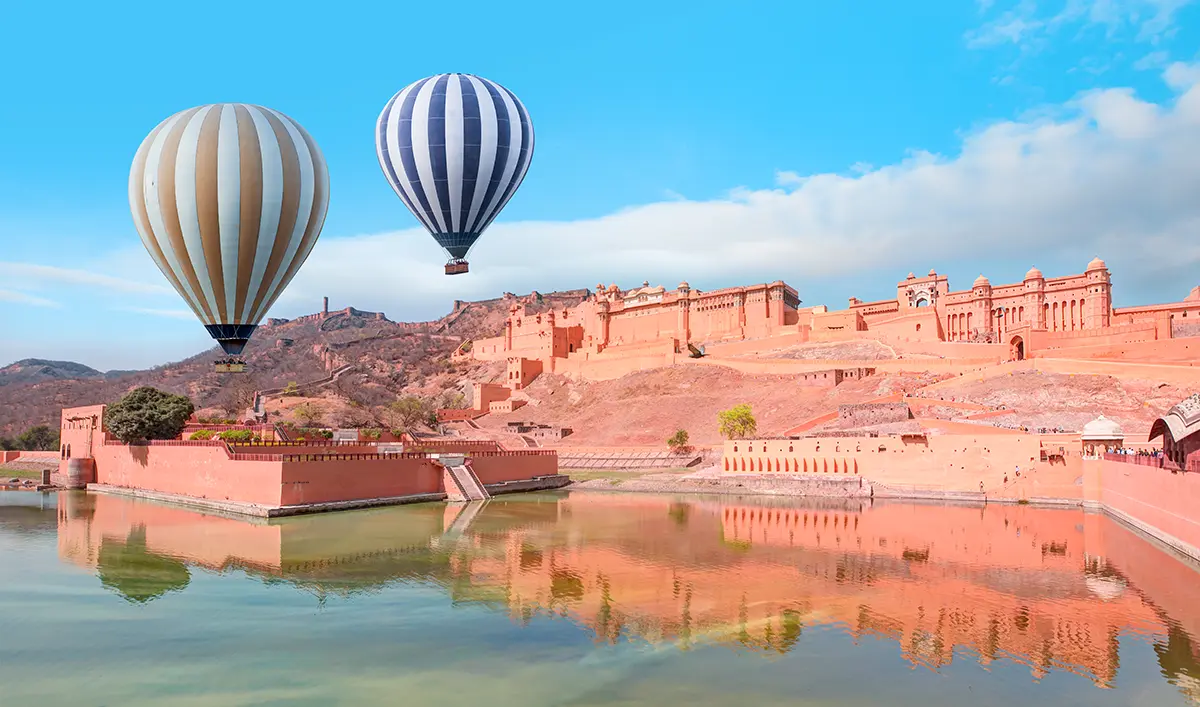
The majestic Amber Fort in Rajasthan, an UNESCO World Heritage Site showcasing Rajput architecture with colorful hot air balloons drifting overhead
© muratart / Adobe Stock
Discover Rajasthan
The classic route runs Jaipur to Udaipur to Jodhpur to Jaisalmer, and the distances are the part itineraries underestimate: Jaipur to Jaisalmer alone is over five hundred kilometres and most of a day on the road, with the others separated by long half-days. Ten days to a fortnight covers the four without misery; a week comfortably covers two, or three at a push if you use the overnight trains. Jaipur, the capital and the usual entry point, is its own destination — the planned pink grid, the palaces and the observatory live in the Jaipur city guide rather than restated here. What follows adds the shape of the state around it: which cities suit which trip, what lies between them, and where the desert, the wildlife and the crafts sit. If your time is short, the honest advice is to pick the two cities whose character appeals most and travel slowly between them, rather than collecting all four as a checklist.
Ways to Experience This Destination
Mehrangarh rising from its cliff above blue Jodhpur, Udaipur's marble palaces on their lakes, Jaisalmer's living desert fort, and Jaipur's planned grid — each city a different character and a real distance from the next.
Camel and jeep journeys to the dunes beyond Jaisalmer, overnight camps from basic to luxurious, and the quieter sand further out that rewards the extra drive.
Pushkar's sacred lake, ghats and rare Brahma temple with its autumn livestock fair, and the Sufi shrine at Ajmer that draws pilgrims from across South Asia.
Northern India's most reliable tiger viewing, in a park built around a tenth-century fort where the animals move through stepwells and collapsed pavilions.
Hand block printing in the villages outside Jaipur, quartz-based blue pottery, gem cutting for the international trade, and miniature painting in family studios.
The conversion economy that saved these buildings — courtyard havelis, room-by-room forts and a handful of famous palace hotels, at every level of budget.
Planning Notes for Rajasthan
- Distances are the thing itineraries get wrong: Jaipur to Jaisalmer is over 500 km and most of a day by road, with long half-days between the other cities. Allow ten days to a fortnight for all four, or pick two and travel slowly.
- November to February is the season — pleasant days, genuinely cold desert nights, and the weather forts and camel trips need. May and June regularly exceed 45°C in the west and are inadvisable for a first visit.
- Camel safari quality varies enormously. Book through an established operator, confirm exactly what is included, prefer sunset over midday, and ask how far out the camp is — the quieter dunes are worth the extra drive. Jeep alternatives exist for anyone whose back would not thank them for a camel.
- The Pushkar fair's dates move with the lunar calendar, and the livestock trading happens in the days BEFORE the full-moon festival most visitors come for. Accommodation fills months ahead and prices rise sharply.
- Photography rules vary by monument: still cameras are usually permitted for a fee, some interiors prohibit photography entirely, and drones need permission. Always ask before photographing people, and expect that a request for payment may follow.
Cities in Rajasthan
Treat this Visaja page as your starting point: verify the current rules directly with the official source before you submit an application.