
Travel deep dive
Ancient Rome and Ruins: Reading the Layers
Italy's ancient sites are usually visited as a checklist — the Colosseum, Pompeii, maybe the Forum if there's time — but treating each as a standalone stop misses the thing that actually connects them. “Ancient Rome” wasn't a single, self-contained civilization that appeared fully formed; it absorbed, copied and physically built on top of Greek colonies and earlier settlements across the peninsula, and it was itself buried, rebuilt and excavated in layers that are still being uncovered today. Once that layering is visible, Pompeii's frozen moment, the Forum's ceremonial density and Paestum's Greek temples stop being separate destinations and become chapters of the same excavation.
Updated 2026-08-15
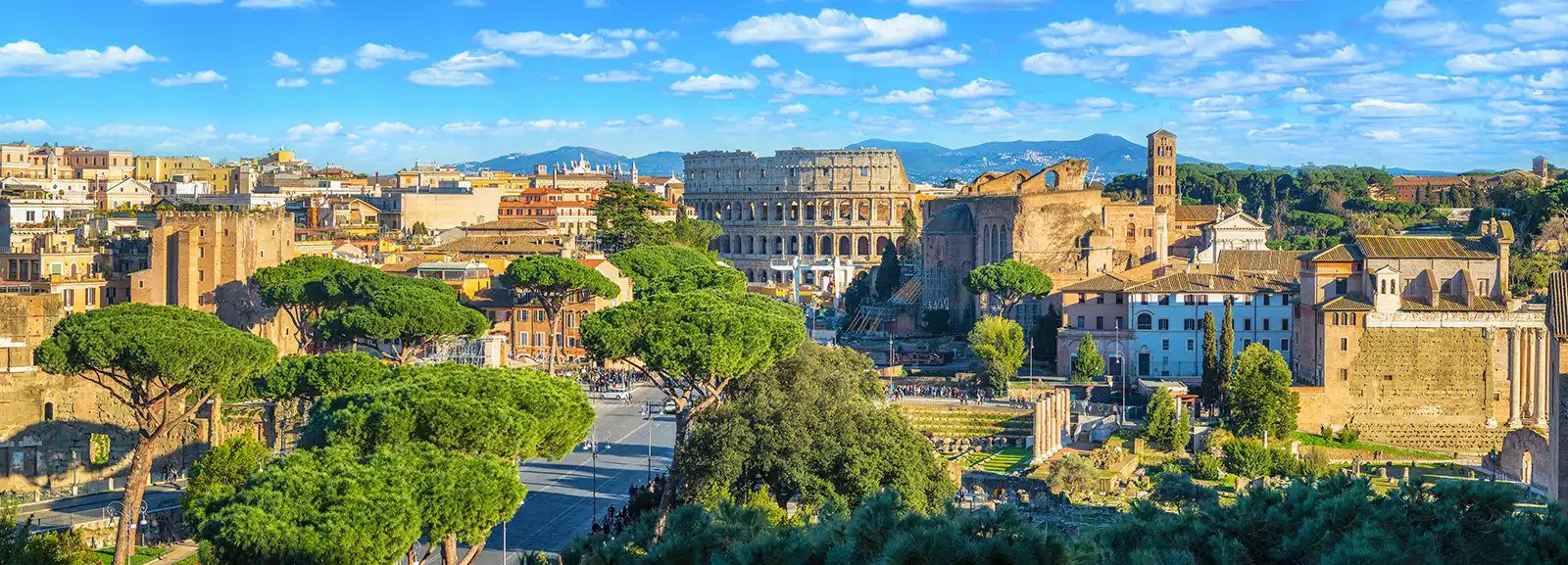
The Forum's layers at dusk — “ancient Rome” is several centuries deep at any given point.
© Sergey Yarochkin / Adobe Stock
Pompeii and Herculaneum: a single day frozen in unusual detail
When Vesuvius erupted in 79 AD, Pompeii was buried under several metres of ash and pumice while Herculaneum, closer to the volcano, was sealed under a faster-moving pyroclastic flow that carbonized organic material rather than simply burying it — two different burial mechanisms that preserved two different kinds of evidence. Pompeii's slower ashfall left buildings, wall paintings and street layouts remarkably intact, while Herculaneum's flow preserved wooden furniture, doors and even food that Pompeii's conditions destroyed.
What makes both sites unusual isn't just survival but density of the ordinary: bakeries with millstones still in place, bathhouses with intact heating systems, political graffiti and shop advertisements painted directly onto walls — a level of everyday, unmonumental detail that grander ruins elsewhere rarely offer, because most ancient sites were stripped, built over or looted long before anyone thought to protect them.
Excavation continues at both sites today, uncovering new frescoes, buildings and even parts of the site never previously opened most years — a reminder that what's visible on any given visit is a snapshot of an incomplete, ongoing project rather than a fully revealed ancient city.
The Colosseum and the Forum: engineering for spectacle and government
The Colosseum's basic engineering achievement is often undersold by its fame as a tourist icon: it could seat around 50,000 spectators and empty them through numbered exits in minutes, a crowd-flow design later stadiums have echoed for two thousand years. Beneath the arena floor, the hypogeum — a network of underground chambers and lift mechanisms, now open on specific tour tickets — moved animals, scenery and performers up through trapdoors during performances, a piece of ancient stage machinery most visitors never realize existed beneath what looks like a simple oval floor.
The Roman Forum, by contrast, wasn't built as a single monument but accumulated as the city's political, religious and commercial center over roughly a thousand years, which is why it reads today as a dense cluster of temples, basilicas and triumphal arches from wildly different eras standing shoulder to shoulder rather than one coherent structure — each generation of Roman leadership added, rebuilt or repurposed rather than starting fresh, the same layering logic that shows up across the whole peninsula.
Ostia Antica: Rome's working port, less crowded and just as complete
Ostia Antica, Rome's ancient port city at the mouth of the Tiber, offers a version of Roman urban life the Forum's ceremonial density doesn't: apartment blocks, warehouses, mosaics from ordinary bathhouses, and the practical infrastructure of a working commercial city rather than a capital's monumental core. Its abandonment came gradually as the river silted up and the port's function shifted elsewhere, rather than through catastrophe, which left the site to decay slowly instead of being demolished for later construction the way much of central Rome was.
That slow abandonment is exactly why Ostia survives as completely as it does with a fraction of the Forum's crowds — it was simply less valuable to build over once it stopped functioning as a port, leaving a genuinely walkable ancient street grid that rewards wandering rather than following a fixed monument-to-monument route.
Where “Roman” Italy came from: Greek temples and earlier foundations
The word “Roman” obscures how much of ancient Italy was built by, absorbed from, or directly modeled on other civilizations that came first. The Greek temples at Paestum, south of Naples, and the Valley of the Temples in Agrigento, Sicily, predate Roman expansion into these regions by centuries — they're not Roman ruins at all, but the Greek colonial cities (Magna Graecia) that Rome later conquered and whose architectural vocabulary — columns, proportions, temple forms — Roman builders adopted wholesale rather than inventing independently.
Hadrian's Villa outside Rome makes the layering explicit within a single site: the emperor Hadrian, who traveled extensively across the empire's Greek-influenced eastern territories, built structures deliberately referencing Egyptian, Greek and other regional architectural styles he'd encountered, turning his private retreat into a physical anthology of the empire's absorbed influences rather than a purely “Roman” design. Reading any single ancient Italian site in isolation misses this — the peninsula's ancient architecture is a running conversation between Greek origins, Roman adaptation and centuries of build-over, not a single self-contained tradition.