
Travel guide
Italy Travel Guide
Italy wasn't a unified country until 1861, and that late, incomplete unification is why regional identity still runs so deep: every part of the country keeps its own pasta shape, its own wine, its own dialect, and Italian cuisine is really twenty regional cuisines that happen to share a peninsula. Rome, Florence and Venice anchor the classic itinerary, while the Amalfi Coast, Tuscany, Cinque Terre, Naples, Puglia, Sicily and Sardinia reward travelers who go further into that regional variety.
Updated 2026-09-24
Deep dives
Deep dive
Art and the Renaissance: Buildings That Became Museums by Accident →
The Uffizi was an office building, the Vatican Museums are a pope's private collection, and the Last Supper is a wall painting in a working monastery. Understanding what Italy's great art institutions were built for explains how to actually see them.
Deep dive
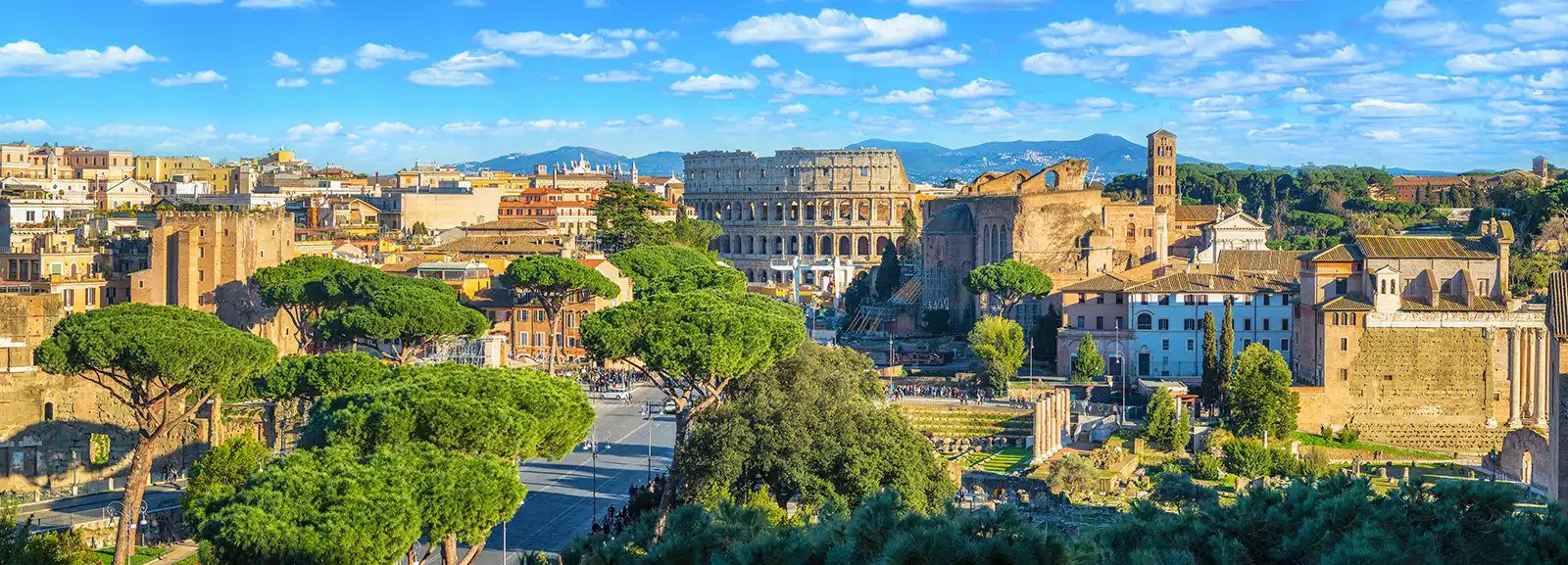
Ancient Rome and Ruins: Reading the Layers →
The Colosseum, Pompeii and the Roman Forum look like a single ancient world — but “Roman” Italy was built on top of Greek cities, Etruscan foundations and its own earlier ruins. Reading the layers turns a checklist of sites into one continuous story.
Deep dive
The Amalfi Coast and Islands: Building on Land That Refused to Be Flat →
Positano's stacked terraces, Cinque Terre's footpath-only villages, Sardinia's stone towers and Capri's hidden grotto all trace back to the same fact: this is land that never offered flat ground, and every settlement here had to adapt to that vertically, by boat, or not at all.
Deep dive
Tuscan Countryside: How Rivalry Became a Postcard →
Siena's horse race, San Gimignano's tower skyline, the Val d'Orcia's rolling hills and the Chianti rooster all trace back to the same force — centuries of fierce rivalry between neighbouring Tuscan communities, now settled into what looks like timeless pastoral beauty.
Deep dive
Milan, Fashion and Made in Italy: An Unbroken Line of Workshops →
Milan's fashion district grew from postwar factories, not royal patronage. Florence's leather workshops are the same family ateliers that supplied Renaissance guilds. Ferrari still hand-builds cars beside a 1940s factory. “Made in Italy” runs on unbroken craft lineage, not institutions.
Itinerary
Italy in Two Weeks: The Two-Gear Route →
Rome, Florence and Venice connect by high-speed rail in a couple of hours each — but Tuscany's hill towns and the Cinque Terre don't. The real skill in planning an Italy trip is knowing when to shift from the fast gear to the slow one.
Ways to Experience This Destination
The Uffizi and Accademia in Florence, the Vatican Museums and Sistine Chapel in Rome, Venice's Gallerie dell'Accademia and Peggy Guggenheim Collection, Milan's Last Supper (advance booking essential), the Brera Pinacoteca, and countless churches where masterpieces by Caravaggio, Raphael and Titian hang in the buildings they were painted for.
The Colosseum and Roman Forum, the Pantheon (a small entry fee), Pompeii and Herculaneum (buried by Vesuvius in 79 AD), the Valley of the Temples in Agrigento (Sicily), Ostia Antica (Rome's ancient port), Hadrian's Villa in Tivoli, and Paestum's Greek temples in Campania.
The Amalfi Coast (Positano, Amalfi, Ravello), Cinque Terre's five cliff villages, Sardinia's Costa Smeralda and wild interior, Sicily's coastline and Aeolian Islands, Capri, the Italian Riviera (Portofino, Santa Margherita Ligure), Puglia's white-sand Adriatic beaches, and Lake Como, Garda and Maggiore.
Neapolitan pizza, Bolognese ragù, Roman carbonara and cacio e pepe, Sicilian arancini and cannoli, Tuscan bistecca alla fiorentina, Puglian orecchiette, risotto in Milan, gelato everywhere. Wine: Chianti, Barolo, Brunello di Montalcino, Amarone, Prosecco from Valdobbiadene, Nero d'Avola from Sicily, Super Tuscans.
Siena (the Palio, the Campo, the Duomo), San Gimignano's medieval towers, Montepulciano and Montalcino (wine country), the Val d'Orcia (UNESCO — cypress-lined roads, golden hills, the postcard landscape of Italy), Cortona, Pienza, and the Chianti wine road between Florence and Siena.
Milan's Quadrilatero della Moda (Via Montenapoleone, Via della Spiga), the Triennale Design Museum, Armani/Silos, the Salone del Mobile (world's largest design fair), Florence's leather artisans, Murano glass in Venice, and the Made in Italy tradition that spans fashion, furniture, automotive (Ferrari Museum in Maranello) and food.
City guides
Frequently asked questions
High-speed rail (Trenitalia's Frecciarossa or the competing operator Italo) connects all three in a couple of hours each, with advance seat reservations required. It's faster, more comfortable and generally cheaper than flying once airport transfer time is factored in, and drops travelers directly into each city's historic center.
Not for the classic Rome-Florence-Venice route, where trains handle everything efficiently and city centers are largely off-limits to unauthorized vehicles under camera-enforced restricted zones. A car becomes genuinely useful for the Tuscan countryside, rural Puglia, or parts of Sicily and Sardinia where public transport thins out significantly.
Late spring (April-June) and early autumn (September-October) offer warm weather without peak-summer crowds and heat. July and August bring the highest temperatures, the biggest crowds at major sites, and many small businesses in cities closing as locals take their own August holidays.
Entry rules, visa types and practical notes live on the Italy overview.
Visaja keeps this page's contact details and visa guidance under continuous review — still, requirements can change at short notice, so confirm the essentials with the mission or the official government portal before you travel.