
Travel guide
Mexico Travel Guide
Mexico's terrain fractures into radically different ecological zones within short distances — tropical Caribbean coast, arid Pacific coast, a volcanic highland spine and dense southern jungle — and that fragmentation is a large part of why its ancient civilizations, colonial cities and regional cuisines diverge so sharply from one state to the next. Mexico City, built on the ruins of the Aztec capital Tenochtitlan, anchors the highland center with colonial Baroque architecture and world-class museums including the National Museum of Anthropology, while the Riviera Maya, Oaxaca and the Copper Canyon each represent a genuinely different Mexico.
Updated 2026-09-22
Deep dives
Deep dive
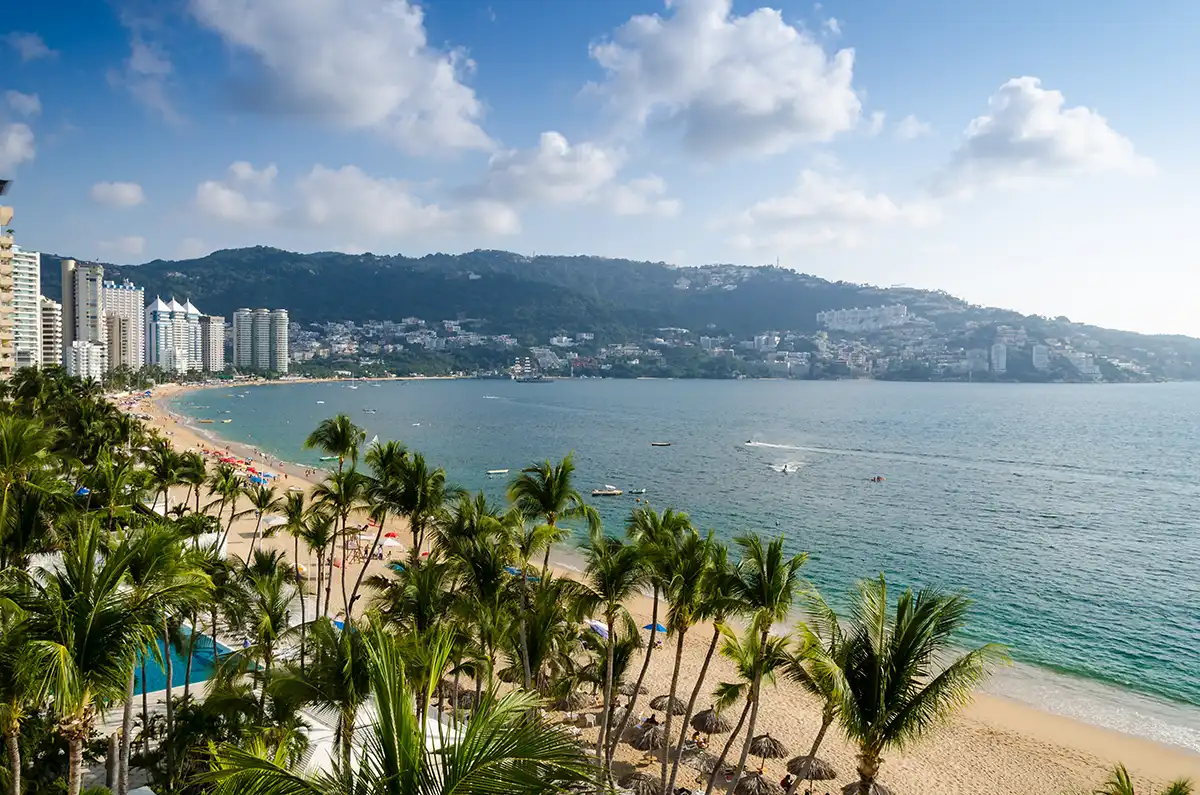
Mexico's Pacific Coast: Puerto Vallarta and Baja →
Mexico's Pacific side runs on different geology from the Caribbean's reef-and-cenote coast — open-ocean swell, deeper water and a desert-meets-sea landscape. Puerto Vallarta, Los Cabos and La Paz, the resort towns that geology built.
Deep dive
Monte Albán and the Zapotec World →
Mexico's pre-Columbian civilizations rose independently in different terrain, not as one empire. Oaxaca's Zapotec capital at Monte Albán — a mountaintop levelled by hand two thousand years ago — tells that story on its own terms.
Deep dive
Mexico's Colonial Silver Belt →
San Miguel de Allende, Guanajuato and Zacatecas sit on the silver Spain extracted from these highlands for three centuries. How that money built three very different Baroque cities.
Deep dive
Mexico's Natural Wonders: Canyon, Monarchs, Whales →
Mexico's natural wonders sit in oddly specific places for oddly specific reasons, starting with a canyon system deeper than the Grand Canyon. Add a forest made for wintering monarchs and lagoons made for calving gray whales.
Itinerary
Mexico: The Base-City Radius, Not a Grand Tour →
Every gateway city in Mexico already describes itself as a base for its own region. The trip that works picks one and goes deep, rather than stringing Cancún, Oaxaca and the colonial highlands into a single overambitious loop.
Ways to Experience This Destination
Cancun, Playa del Carmen, Tulum, and the Riviera Maya offer white-sand beaches, turquoise Caribbean water, cenote swimming, and all-inclusive resorts. On the Pacific side, Puerto Vallarta, Huatulco, and the Baja California peninsula (Los Cabos, La Paz) provide a different coastal experience with desert-meets-ocean landscapes.
The pyramids of Teotihuacan (near Mexico City), Chichen Itza (Yucatan, one of the New Seven Wonders), Palenque (Chiapas jungle), Monte Alban (Oaxaca), and dozens of other Maya, Aztec, Zapotec, and Olmec sites make Mexico one of the world's richest archaeological destinations.
Mexican cuisine is UNESCO Intangible Cultural Heritage. Street tacos, mole (Oaxaca and Puebla), tamales, ceviche, mezcal and tequila tastings, chocolate from Tabasco, and the contemporary fine-dining scene of Mexico City (Pujol, Quintonil) draw food-focused travellers from around the world. Oaxaca is considered the culinary capital.
San Miguel de Allende, Guanajuato, Oaxaca de Juarez, Merida, Puebla, Morelia, and Zacatecas preserve centuries of Spanish colonial architecture, vibrant markets, and living traditions. Day of the Dead (Dia de los Muertos) celebrations in late October/early November are world-famous.
From the Copper Canyon (Barrancas del Cobre, larger than the Grand Canyon) to whale watching in Baja California, cenote diving in the Yucatan, monarch butterfly sanctuaries in Michoacan, and the jungles of Chiapas, Mexico offers extraordinary natural diversity across climatic zones from desert to tropical forest.
City guides
Frequently asked questions
One base city and its own regional radius, not several far-apart highlights strung together. Mexico's ecological fragmentation means the country's famous names — Mexico City, Cancún, Oaxaca, the colonial highlands — rarely sit near each other, so a two-week trip works best exploring one region in real depth rather than treating the country as one connected loop.
It depends on what draws you most: Mexico City for history and colonial architecture in one place, with the colonial silver belt and Teotihuacán within reach; Oaxaca for deep pre-Columbian history and the country's richest food and mezcal culture; the Yucatán (Cancún or Mérida) for beaches paired with Maya ruins; Guadalajara for tequila and living tradition. Each of the country's gateway cities already frames itself around a specific regional identity — picking the one that matches your interest is the natural starting point.
Spanish is the official language nationwide, and English is reliably spoken in major tourist zones, border cities and international hotels but considerably more limited elsewhere. Learning basic Spanish greatly improves the experience outside the busiest resort areas, and Mexicans generally appreciate the effort even when it's imperfect.
Entry rules, visa types and practical notes live on the Mexico overview.
Visaja keeps this page's contact details and visa guidance under continuous review — still, requirements can change at short notice, so confirm the essentials with the mission or the official government portal before you travel.