
Travel deep dive
Mexico's Pacific Coast: Puerto Vallarta and Baja
Mexico's two coasts look nothing alike, and the reason is geological before it's cultural. The Caribbean side — the reef-sheltered Riviera Maya, its cenote-riddled limestone shore — belongs to Cancún's orbit. The Pacific side answers to open ocean and a volcanic coastline instead, and it built an entirely different kind of resort country: Puerto Vallarta's mountain-backed bay and the sun-baked, whale-visited peninsula of Baja California Sur.
Updated 2026-08-16
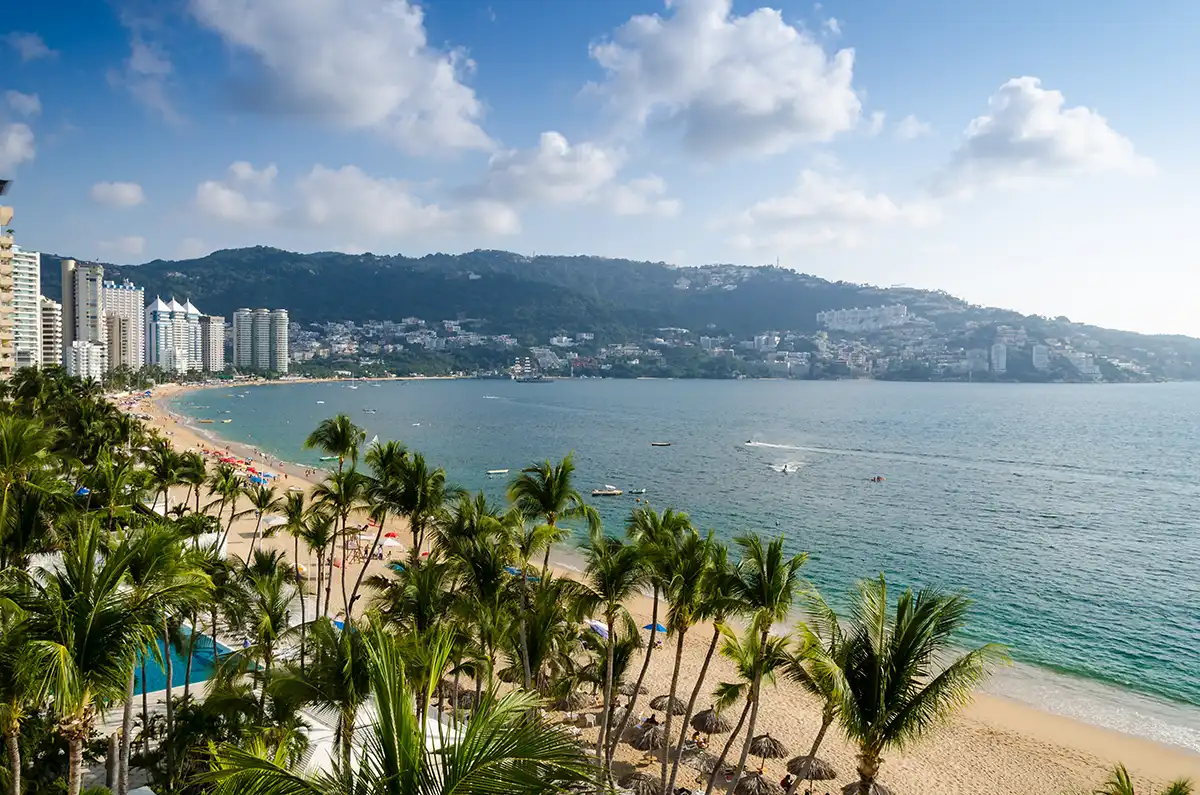
Acapulco Bay — the original Pacific resort, built where the mountains meet open ocean.
© rafalkubiak / Adobe Stock
Why the coasts read as different countries
The Riviera Maya's calm, turquoise water exists because the Mesoamerican Reef absorbs ocean swell before it reaches shore, and the Yucatán's porous limestone has no rivers at all — the mechanism behind Cancún's beaches and cenotes, covered in full on that city's own guide. The Pacific side runs on the opposite logic entirely: a volcanic coastline facing open ocean swell, with deeper water close to shore and none of the Caribbean's flat coral shallows. That single geological difference is why Pacific beach towns feel more rugged and dramatic than the Caribbean's postcard calm, and why surf culture belongs to this coast, not the other.
Puerto Vallarta: a bay in the mountains
Puerto Vallarta sits where the Sierra Madre Occidental drops directly into the wide, sheltered Bahía de Banderas, one of the largest bays in North America — a setting that gives the town a genuine mountains-meet-ocean backdrop unlike anywhere on the flat Caribbean coast. The cobblestoned Zona Romántica retains the fishing-village feel that predates the resort industry, its malecón boardwalk lined with bronze sculptures and sunset-watching crowds, while the surrounding hillsides hold red-tile-roofed neighbourhoods that climb steeply enough to give ocean views from streets several blocks back from the water.
Beyond the town itself, the bay's sheltered water supports whale watching in winter (humpbacks migrate here to breed, distinct from Baja's gray whales further north) and easy access to smaller, harder-to-reach beaches by water taxi — Yelapa and Las Ánimas among them, reachable only by boat, no road connects them at all. The mountain backdrop also means jungle-and-river adventure tourism — zip-lining, ATV routes and the Río Cuale's canyon — sits within a short drive of the beach, a genuine dual identity between coastal resort and mountain adventure base.
Los Cabos and La Paz: where the desert meets the sea
At Baja California's southern tip, Los Cabos — really two towns, Cabo San Lucas and San José del Cabo, connected by a resort corridor — sits where the Sonoran Desert runs straight into the Sea of Cortés, producing a landscape genuinely unlike anywhere else in Mexico: sun-bleached desert hills, cactus-studded cliffs, and the famous El Arco rock formation where the desert peninsula's tip finally gives way to open water. Cabo San Lucas carries the marina, nightlife and cruise-ship energy; San José del Cabo, twenty minutes up the corridor, keeps a quieter colonial-town core and a more restrained, gallery-and-restaurant pace.
La Paz, the calmer capital of Baja California Sur further up the peninsula, trades Los Cabos' resort intensity for a genuine Mexican port city with an unusually rich marine-life reputation — the Sea of Cortés here has been called an aquarium by ocean researchers for its density of species, and swimming with whale sharks (a winter-season activity, distinct from Isla Holbox's summer aggregation on the Caribbean side) and sea lion colonies at nearby Isla Espíritu Santo are the town's signature experiences. Between Los Cabos and La Paz, southern Baja offers the full range from resort polish to working port-town authenticity within a few hours' drive.