- Population:2.1M
- Timezone:CET/CEST
- IATA:PAR
- Currency:EUR. Cards widely accepted (contactless common). Some bakeries and small cafés have a minimum card spend (â¬5-10).
- Key Areas:Le Marais · Saint-Germain-des-Prés · Montmartre · Latin Quarter
Overview
Paris is the city where the Louvre guards 35,000 artworks, boulangeries perfect croissants to an art form, the Seine reflects centuries of beauty, and every arrondissement tells a different story of history, culture, and style.
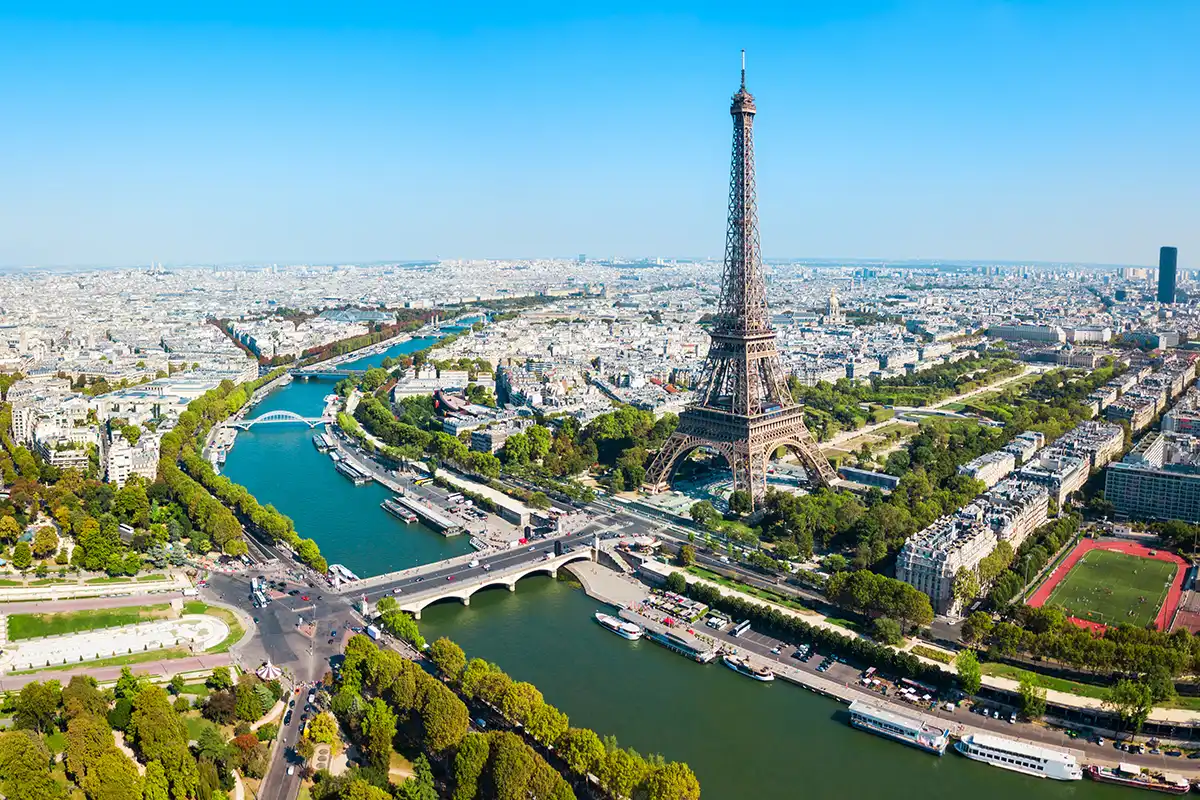
The Eiffel Tower over the city's zinc rooftops.
© saiko3p / Adobe Stock
History
Paris grew from the Gallo-Roman settlement of Lutetia on the Ãle de la Cité, becoming the Frankish capital and seat of medieval European power. The Renaissance brought the Louvre, the Sun King added Versailles, the Revolution of 1789 changed the world, and Haussmann's 19th-century boulevards created the modern city's bones. Two World Wars tested Parisâoccupied 1940-44, liberated in triumph. Post-war Paris shaped existentialism, fashion, cinema (the Nouvelle Vague), and culinary arts, maintaining its position as a global cultural capital through continuous reinvention while fiercely preserving its architectural heritage.
Culture
Paris sets global dining standardsâmore Michelin stars than any city on earth, yet the real magic is in the everyday: a perfect baguette, croque-monsieur at a zinc-topped counter, a glass of Beaujolais at a terrace café. Café culture is a way of life. Boulangeries compete annually for Best Baguette. Food markets (Enfants Rouges, Aligre, Raspail Bio) anchor local life. Tipping: service is included, but rounding up is appreciated. Festivals: Bastille Day (July 14 â fireworks at the Eiffel Tower), Fête de la Musique (June 21 â free concerts citywide), Nuit Blanche (October â all-night art events), Paris Fashion Week (February & September). Museums: Louvre, Musée d'Orsay, Centre Pompidou, Musée de l'Orangerie, Musée Rodin.
Practical Info
Safety: Paris is generally safe but pickpocketing is rampant at major tourist sites (Eiffel Tower, Louvre, Sacré-CÅur) and on the Métroâprofessional teams operate daily targeting distracted tourists. Keep valuables secure, avoid RER B late at night around Gare du Nord. Scams: petition signers, bracelet sellers, ring finders. Emergency: 112 or 17 (police). Language: French. English is increasingly spoken in tourist areas but less reliably than in northern Europe. Starting every interaction with “bonjour” is essential etiquetteâit's not politeness, it's the cultural price of entry. Currency: EUR. Cards widely accepted (contactless common). Some bakeries and small cafés have a minimum card spend (â¬5-10).
Travel
Paris needs no introduction yet always surprises. Beyond the iconic triumvirate of the Eiffel Tower, Louvre, and Notre-Dame, the city reveals itself through its twenty arrondissements spiraling outward from the Seineâeach a distinct village within the metropolis. The Marais preserves aristocratic hôtels particuliers now housing museums and boutiques, Saint-Germain-des-Prés channels literary café culture, Montmartre's cobblestone streets climb to Sacré-CÅur's white domes, and the Canal Saint-Martin's iron footbridges frame a younger, hipper Paris. The cultural density is staggering: the Louvre alone could consume days, the Musée d'Orsay transforms a Beaux-Arts train station into an Impressionist temple, and the Centre Pompidou's inside-out architecture houses Europe's largest modern art collection. Parisian dining ranges from Michelin's galaxy of three-star restaurants to corner bistros perfecting steak-frites and crème caramel, with boulangeries on every block competing for the city's annual Best Baguette prize. The Métro connects everything efficiently, and walking remains the best way to absorb the city's layered beautyâHaussmann's grand boulevards, hidden passages couverts, Seine-side quays converted to promenades, and gardens from the formal Tuileries to the wild Promenade Plantée (the original elevated park that inspired New York's High Line). Paris is expensive, crowded, and occasionally brusqueâand worth every moment.
The Louvre & Museum Island
The Louvre is not just the world's largest art museum but a palace complex that took seven centuries to build, housing 35,000 works spanning from Mesopotamian antiquities to 19th-century French painting. The Mona Lisa draws the crowds, but the museum's true treasures reward deeper exploration: the Winged Victory of Samothrace on her dramatic staircase, the Venus de Milo, Vermeer's The Lacemaker, Delacroix's Liberty Leading the People, and entire wings of Egyptian, Greek, and Islamic art that rival specialized museums anywhere. Advance timed-entry tickets are essentialâwalk-up queues can exceed two hours. The nearby Musée de l'Orangerie houses Monet's Water Lilies in two oval rooms designed specifically for the immersive purpose, while the Tuileries Garden connects the Louvre to Place de la Concorde in a formal French axis of manicured paths, fountains, and sculpture. The Musée d'Orsay, across the Seine in a converted 1900 railway station, holds the world's finest Impressionist collectionâMonet, Renoir, Degas, Cézanne, Van Goghâdisplayed beneath the station's magnificent glass vault.
Eiffel Tower & Left Bank Landmarks
Gustave Eiffel's 1889 iron lattice tower, built as a temporary exhibition structure, became the permanent symbol of Paris and remained the world's tallest structure for 41 years. The experience of ascendingâwhether by elevator or climbing 674 steps to the second levelâculminates in panoramic views that map the entire city below. Evening visits reveal Paris illuminated, with the tower itself sparkling for five minutes on the hour. Advance tickets book out weeks ahead; the summit level requires a separate reservation. The surrounding Champ de Mars provides picnic space with tower views, while the Trocadéro across the Seine offers the classic photographic perspective. Nearby, Les Invalides houses Napoleon's tomb beneath a gilded dome and the comprehensive Musée de l'Armée, the Rodin Museum displays The Thinker and The Kiss in an 18th-century mansion with sculpture gardens, and the Musée du Quai Branly's Jean Nouvel-designed building showcases indigenous arts from Africa, Asia, Oceania, and the Americas behind a living plant wall.
Notre-Dame & Ãle de la Cité
Notre-Dame Cathedral, undergoing meticulous restoration after the devastating 2019 fire, reopened to visitors in December 2024âits restored interior revealing medieval color and grandeur invisible under centuries of grime. The cathedral's Gothic architecture, flying buttresses, and rose windows have anchored Parisian spiritual and cultural life since construction began in 1163. The Ãle de la Cité, Paris's birthplace in the Seine, also houses the Conciergerie (Marie Antoinette's prison), Sainte-Chapelle (whose floor-to-ceiling 13th-century stained glass windows are among the finest in existence), and the flower market of Place Louis Lépine. The neighboring Ãle Saint-Louis preserves a quieter eleganceâ17th-century townhouses along narrow streets lead to Berthillon, Paris's most famous ice cream shop, and riverside quays perfect for evening walks as the Seine bridges illuminate one by one.
Montmartre & Sacré-CÅur
Montmartre's village atmosphere survives as Paris's most romantic neighborhoodâcobblestone streets climb the butte (hill) past vineyard remnants, Place du Tertre's portrait artists, the cabaret Le Moulin Rouge, and ivy-covered houses to reach the white-domed Basilique du Sacré-CÅur at the summit. The panoramic view from the basilica's stepsâall of Paris spread belowârivals the Eiffel Tower, and the interior's golden mosaics gleam in candlelight. Montmartre's history as the cradle of modern art lives on: Picasso, Modigliani, and Toulouse-Lautrec worked in the Bateau-Lavoir studios; the Musée de Montmartre preserves Renoir's garden; and the Espace Dalà exhibits the surrealist's sculptures. The neighborhood's narrow streets reward aimless wanderingâdown the steps from Sacré-CÅur through quiet residential lanes to the vibrant food markets and African shops of the Goutte d'Or, or east to the hip bars and restaurants of south Pigalle (“SoPi”).
Parisian Gastronomy & Café Culture
Paris invented the restaurant and continues to set global dining standards. The city holds more Michelin stars than any otherâbut the real magic lives in the everyday: a perfect croissant from a boulangerie at 7 AM, a croque-monsieur at a zinc-topped café counter, steak-frites at a corner bistro, and a tarte Tatin after dinner. Each arrondissement has its food identity: Rue des Martyrs (9th) is a foodie street of fromageries and pâtisseries, Rue du Nil (2nd) clusters neo-bistro pioneers, and the Marché d'Aligre (12th) provides the most authentic local market experience. Café culture is a Parisian institutionâsit at a terrace table, order an espresso or a glass of Beaujolais, and watch the city flow by. Historic cafés like Les Deux Magots and Café de Flore in Saint-Germain served Sartre and de Beauvoir; today, the specialty coffee movement has also taken hold with third-wave roasters in the 10th and 11th arrondissements. Food markets, both covered (Marché des Enfants Rouges, Paris's oldest) and open-air (Boulevard Raspail organic market), anchor neighborhood social life.
Neighborhoods & Arrondissements
Paris's twenty arrondissements spiral clockwise from the center, each cultivating a distinct identity. The Marais (3rd-4th) blends Jewish heritage along Rue des Rosiers, LGBTQ+ nightlife, aristocratic mansion-museums (Musée Carnavalet, Musée Picasso), and some of the city's most fashionable boutiques. Saint-Germain-des-Prés (6th) channels intellectual Left Bank elegance with galleries, bookshops, and brasseries. The Latin Quarter (5th) surrounds the Sorbonne with bookstores, cinemas, and the Panthéon. The 10th and 11th arrondissementsâaround Canal Saint-Martin and Oberkampfârepresent young, multicultural Paris with natural wine bars, international street food, and independent galleries. Le Marais has become Paris's trendiest address, Belleville (20th) its most multicultural, and the 16th its most bourgeois. Each neighborhood rewards time spent on foot, discovering the local café, fromagerie, and wine shop that define daily Parisian life.
Seine River & Day Trips
The Seine is Paris's defining geographic feature, and river experiences range from tourist Bateaux Mouches (still genuinely worthwhile for first-time visitors) to aperitif cruises and floating nightclubs. The Left Bank quays have been converted into car-free promenades where Parisians jog, picnic, and drink rosé on summer evenings. Beyond the city, the Ãle-de-France region holds world-class day trips: Versailles, the Sun King's palace with its Hall of Mirrors and 800-hectare gardens, is 40 minutes by RER train. Giverny's gardens, where Monet painted his water lilies, bloom spectacularly from April through October. Chartres Cathedral (1 hour by train) preserves the finest medieval stained glass in France. Fontainebleau's Renaissance palace and forest, Chantilly's château and horse museum, and the medieval town of Provins (UNESCO) all lie within 90 minutes. Disneyland Paris, 35 minutes by RER, draws families, while the Champagne region (Reims, Ãpernay) is accessible in under an hour by TGV from Gare de l'Est.
Practical Paris
The Métro is Paris's lifelineâ14 lines, 300+ stations, and trains every 2-5 minutes make it the fastest way to navigate. A carnet of 10 tickets or the Navigo Easy card offers savings over single fares; the Navigo Découverte weekly pass covers all zones including airport RER. Paris has two main airports: Charles de Gaulle (CDG), by RER B or a flat-fare taxi, and Orly (ORY), on a direct Metro line. The city is expensiveâexpect â¬15-20 for a café lunch, â¬35-60 for a good bistro dinner, and â¬150-400 for central hotels. Tipping is included (service compris) but rounding up or leaving â¬1-2 is appreciated. Paris is safe but pickpocketing is rampant at the Eiffel Tower, Sacré-CÅur, on the Métro, and around major stationsâteams of professionals operate daily. Spring (April-June) and autumn (September-October) offer ideal weather; August sees many local shops and restaurants close as Parisians take les vacances. Basic French goes a long wayâ“bonjour” before any interaction is essential courtesy, not optional.
Diplomatic missions in Paris
36 embassies based in this city, grouped by region.
Asia11
Europe10
Africa9
This overview comes from Visaja's worldwide missions database (visaja.com), checked against official government sources; for binding answers, the mission itself always has the final word.