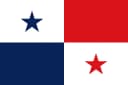
Panama
Panama is a Central American republic of around 4.4 million people, bordering Costa Rica and Colombia, with coastlines on both the Caribbean Sea and the Pacific Ocean separated by the Panama Canal. Spanish is the official language, and the US dollar circulates alongside the Panamanian Balboa at fixed parity. Citizens of around ninety countries enter visa-free for tourism, and the Pensionado retirement-visa programme has made Panama one of the world's most popular foreign-retirement destinations.
Booking links go to our partner Trip.com — we may earn a commission at no extra cost to you.
Visa Requirements for Panama
Panama is one of the most accessible countries in Latin America for visa-free tourism. Citizens of around ninety countries — including the United States, Canada, the United Kingdom, the entire European Union, Australia, New Zealand, Japan, South Korea, and most of South America — enter without an advance visa for tourist stays of 90 to 180 days depending on nationality (US, EU and most Western passports typically receive 180 days). The passport must be valid for at least three months beyond the planned stay (six months is the safer benchmark), a return or onward ticket and proof of around USD 500 in funds may be requested at immigration. The main international entry point is Tocumen International Airport (PTY) in Panama City. Travellers from countries on the visa list apply for an Authorized Stay Visa (Visa Estampada) at the Panamanian consulate responsible for their place of residence — processing typically 5–15 working days. Two long-stay programmes have made Panama unusually attractive for foreign residents: the Pensionado visa (lifetime residence for retirees with at least USD 1,000 in monthly pension income) and the Friendly Nations visa (residence for citizens of around 50 countries with economic or professional ties to Panama). Panama uses the US dollar at par with the Panamanian Balboa, so no currency exchange is required for USD-holders.
Visa types
Visa-Free Tourist Entry (90–180 Days)
Tourism, business, family visits and short courses for citizens of around ninety visa-exempt countries — including the US, Canada, UK, EU, Australia, New Zealand, Japan and most of South America.
Authorized Stay Visa (Visa Estampada)
Tourism, business or transit for nationalities outside the visa-free list, applied for in advance through the Panamanian consulate.
Pensionado Visa (Retiree Residence)
Lifetime residence for retirees with guaranteed monthly pension income, granting wide-ranging discounts on services and air travel.
Friendly Nations Visa
Two-year temporary residence for citizens of around 50 countries with economic or professional ties to Panama, convertible to permanent after two years.
Guides
Panama rewards travellers who like geographically compressed contrast: a single 80-kilometre canal links the Caribbean and the Pacific, and a single short flight from Panama City reaches jungle, an indigenous archipelago, mountain coffee country or the surf coast. Casco Viejo's colonial old town, the canal's engineering heritage, and the wildly biodiverse Darién and Coiba make Panama City a compact base for a country that opens fast in every direction.
Panama travel guide →
The full guide — the gravity-machine locks, two coasts at the table and each region's fixed access tool.
Money in Panama →
Dollars and balboa together, abundant ATMs and city cards — the practical money guide.
Eating in Panama →
Sancocho, two coasts and seco — the national pot, the Caribbean-Pacific split and the drink locals actually pour.
Getting around Panama →
Short flights doing the heavy lifting, long buses where they make sense and the Miraflores timing that matters.
Health & safety in Panama →
Standard city precautions, tap water safe in the capital and bottled beyond, and the Darién as a genuine exception.
Cities & planning
Plan your trip
Booking links go to our partner Trip.com — we may earn a commission at no extra cost to you.
Regions
Embassies & missions
Europe · 2
Accredited missions for Panama
Frequently asked questions
Why are the “mules” at the Panama Canal called that?
The name is a holdover from the canal's early planning, when animal power was briefly considered for towing vessels through the locks — today's electric locomotives keep ships centred in the lock chamber rather than propelling them, but they inherited the original nickname.
Can I visit both Panama Viejo and Casco Viejo in one day?
Yes — they're both within the Panama City metropolitan area and are commonly combined, letting visitors see the ruins of the original 16th-century settlement and the planned colonial town that replaced it after 1673 on the same day.
What is mola textile art?
A Guna handicraft made from layered, hand-stitched panels of colourful fabric cut to reveal the layers beneath in geometric or figurative patterns — it's the best-known Guna craft, and buying directly from island communities in San Blas puts revenue straight into the hands of the makers.
What language do people speak in Bocas del Toro besides Spanish?
Guari-Guari Creole, a local Creole language rooted in the Afro-Caribbean migrant history of the islands, particularly among Jamaican and other English-speaking Caribbean workers who arrived through the region's banana industry from the late 19th century onward.
What time should I start the Volcán Barú hike to see both oceans?
Before dawn — the summit trek takes 6-8 hours and clouds typically build up as the day warms, so reaching the top in the early morning light is what makes the two-ocean view possible on a clear day.
Can I visit Barro Colorado Island on my own?
No — access is limited to regulated, guide-led day trips run through the Smithsonian Tropical Research Institute, a restriction that protects both the site's century-long research plots and its wildlife.
Planning a trip to Panama? Compare hotels and flights and book in minutes.
Booking links go to our partner Trip.com — we may earn a commission at no extra cost to you.
Visaja keeps this page's contact details and visa guidance under continuous review — still, requirements can change at short notice, so confirm the essentials with the mission or the official government portal before you travel.