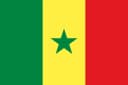
Senegal
Senegal is a 196,000-square-kilometre West African country on the Atlantic coast, bordered by Mauritania, Mali, Guinea and Guinea-Bissau, and surrounding the Gambia (an enclave running along the Gambia river). Around 17 million people share an unusually stable democracy — Senegal has never experienced a coup d'état since independence from France in 1960, and has handed power between governing parties at the ballot box on multiple occasions. Dakar, the capital, sits on the Cap-Vert Peninsula at the westernmost point of mainland Africa, with a metropolitan area of 3.5 million people. Citizens of the EU, US, Canada, UK and many other countries enter visa-free for up to 90 days, though a yellow fever vaccination certificate is mandatory for everyone.
Booking links go to our partner Trip.com — we may earn a commission at no extra cost to you.
Visa Requirements for Senegal
Senegal is one of West Africa's more accessible countries for international tourism. Citizens of the European Union, the United States, Canada, the United Kingdom, Australia, New Zealand, Japan and many other countries enter visa-free for stays of up to 90 days. Citizens of ECOWAS member states (Benin, Burkina Faso, Cape Verde, Côte d'Ivoire, the Gambia, Ghana, Guinea, Guinea-Bissau, Liberia, Mali, Niger, Nigeria, Sierra Leone, Togo) enter visa-free for 90 days using a national identity card or passport under the regional free-movement protocol. Other nationalities apply for an e-visa through the Senegalese government portal at evisa.gouv.sn (90-day single entry, processing typically 5–7 working days — check current fees) or — where consular missions exist — at a Senegalese embassy or consulate. A passport valid for at least six months from the date of entry, return or onward ticket, and proof of accommodation are required. One health requirement is firm: a yellow fever vaccination certificate is mandatory for all travellers entering Senegal, and the certificate must show vaccination at least ten days before arrival. Visa rules and exemption lists have changed several times in the past decade — always verify the current rules for your nationality on the official portal or with a Senegalese embassy before booking. The main international entry point is Dakar's Blaise Diagne International Airport (DSS), 50 km from the city centre. Senegal is generally regarded as one of the safest West African countries for tourism, with the Casamance region in the south the main exception — government advisories typically recommend caution there.
Visa types
Visa-Free Entry (90 Days)
Tourism, business and family visits for citizens of around eighty visa-exempt countries — including the entire EU, US, Canada, UK, Australia, New Zealand, Japan, South Korea and most Latin American countries.
ECOWAS Visa-Free Entry (90 Days)
Free movement for citizens of ECOWAS member states under the regional free-movement protocol.
E-Visa (90 Days)
Tourism and business for citizens of countries not on the visa-free list, applied online through the official Senegalese government portal.
Long-Stay Visa & Carte de Séjour
Stays of more than 90 days for work in Senegal's growing oil and gas, fisheries, NGO and development sectors, study at Université Cheikh Anta Diop in Dakar, family reunification or retirement.
Guides
Senegal rewards travellers who like dense culture, unhurried coastal landscapes and a stable, welcoming country to ease into West Africa. Dakar is the natural starting point — the Plateau financial district, the colonial-era Gorée ferry terminal, the Sandaga and Marché HLM markets, the African Renaissance Monument on the Mamelles headland and the surf and fishing beaches of N'Gor and Yoff. Île de Gorée, the UNESCO World Heritage island twenty minutes off Dakar by ferry, holds the Maison des Esclaves (House of Slaves) memorial — the most-visited memorial site of the Atlantic slave trade in West Africa, where Mandela, Obama and Pope John Paul II have all paid respects — alongside narrow car-free streets of pastel colonial buildings, art galleries and small beaches. Saint-Louis, four hours north on the Senegal River, was the capital of French West Africa from 1895 to 1902 and is itself UNESCO-listed: Faidherbe Bridge (designed by Gustave Eiffel's firm), pastel colonial blocks on the river island, horse-drawn calèches, and the annual Saint-Louis Jazz Festival in May. The Lac Rose (Pink Lake), 30 minutes from Dakar, is a high-salinity lagoon where Dunaliella algae turn the water pink in dry season — a working salt-harvesting landscape and a regular postcard image. Down the Atlantic coast, the Petite Côte resort strip from Saly through Mbour, La Somone and Joal-Fadiouth has been the Senegalese beach hub for European charters since the 1980s. The Saloum Delta — UNESCO biosphere reserve south of Joal-Fadiouth — is mangrove and birdwatching country with overnight pirogue trips. Inland, Niokolo-Koba National Park in the southeast is the country's flagship wildlife reserve, while the Casamance south of the Gambia is a distinct cultural region with palm forests, river villages and a separate pace — but check current government advisories for that region. Cuisine — thieboudienne (the national fish-and-rice dish), yassa poulet, mafé, dibi (grilled lamb), bissap and ginger juice, attaya (three-round mint tea ritual) — is one of West Africa's most exported and one of Senegal's most reliable pleasures.
Senegal travel guide →
The full guide — Gorée's memorial island, the river-mouth capital and Lac Rose's pink chemistry.
Money in Senegal →
The CFA franc in practice — the euro peg, getting XOF, and Orange Money and Wave on the ground.
Eating in Senegal →
A national dish with a named inventor — and the three-round attaya ritual that sweetens as it goes.
Getting around Senegal →
Decent roads, tricky shape — the Gambia enclave and the routes genuinely worth planning around.
Health & safety in Senegal →
Among West Africa's safer countries — year-round malaria care and current Casamance advice.
Cities & planning
Plan your trip
Booking links go to our partner Trip.com — we may earn a commission at no extra cost to you.
Regions
Embassies & missions
Frequently asked questions
Do I need a visa to visit Senegal?
Most Western nationalities — the EU, US, Canada, UK, Australia, New Zealand and Japan among them — enter visa-free for up to 90 days; ECOWAS citizens also enter visa-free, and other nationalities apply for an e-visa online in advance. A yellow fever vaccination certificate is mandatory for everyone, regardless of visa status.
How do I visit Île de Gorée?
Take the ferry from Dakar's Gare Maritime, which runs every 1-2 hours and takes about twenty minutes — the island is car-free and easily covered in a half-day, combining the Maison des Esclaves memorial with the colonial townscape, art galleries and small beaches.
Is the Casamance region safe to visit?
Check your government's current travel advisory before planning independent travel there — the region has experienced low-level instability historically, and the rest of Senegal is generally considered one of West Africa's safer countries for tourists.
What's the best time of year to visit Senegal?
November to May, the dry season, offers pleasant temperatures and low humidity; June to October is hot, humid and rainy, with heavier mosquito presence, though the landscape turns notably lush.
Do I need to worry about malaria?
Yes — malaria is endemic year-round and peaks during the rainy season, so antimalarial prophylaxis, repellent and sleeping under a net are strongly recommended regardless of when you visit.
Can I visit the Saloum Delta as a day trip from Dakar?
It's possible but not ideal — the delta's channels are extensive enough that an overnight pirogue trip from a base like Toubacouta or Palmarin gives a much better sense of the mangroves and birdlife than a rushed single-day visit would.
Planning a trip to Senegal? Compare hotels and flights and book in minutes.
Booking links go to our partner Trip.com — we may earn a commission at no extra cost to you.
Visaja keeps this page's contact details and visa guidance under continuous review — still, requirements can change at short notice, so confirm the essentials with the mission or the official government portal before you travel.