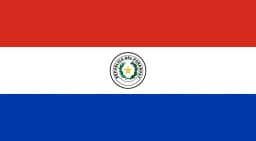
Paraguay
Phone Code
+595
Capital
Asunción
Population
6.8M (2017)
Languages
Spanish · Guarani
Area
406,756 km²
Electricity
220 V
Plug types
Europlug
Driving side
right
Native Name
Paraguay
Region
Americas
South America
Timezone
Paraguay Standard Time
UTC-03:00
On This Page
Paraguay is a landlocked South American country of around 7 million people, bordered by Argentina, Brazil and Bolivia, with Asunción as its capital. It is unique on the continent as an officially bilingual nation — Spanish and Guaraní both hold official status, and Guaraní is the daily language of roughly 90 percent of the population, the only country in the Americas where an indigenous language is spoken by the majority. Tourism is unusually low for the region, which makes Paraguay one of the more genuine, unbranded travel experiences left in South America. Citizens of around 80 countries enter visa-free for up to 90 days.
Visa Requirements for Paraguay
Paraguay offers visa-free entry to citizens of around 80 countries — including the EU, UK, US, Canada, Australia, New Zealand, Japan and most South American nations — for stays of up to 90 days (a few reciprocity arrangements grant shorter windows: South Korean passports, for instance, receive 30 days); citizens of Mercosur and Andean Community member states enter on national identity card under the regional free-movement protocol, the busiest cross-border arrival category. Citizens of the remaining nationalities require an advance consular tourist visa. Paraguay also has one of the more accessible permanent-residency programmes in Latin America, popular with retirees, digital nomads and second-residency seekers; citizenship is available after three years of permanent residency, with basic Spanish or Guaraní language ability required. See the visa categories below for the specific application requirements and durations.
Common Visa Types
Visa-Free Entry (90 Days)
Tourism, family visits and short-term business meetings for citizens of around 80 countries — the entire EU, UK, US, Canada, Australia, New Zealand, Japan, Singapore, Israel and most South American nations (South Korea participates on a 30-day reciprocity window).
Mercosur & Andean Community ID Entry
Free movement for citizens of Argentina, Brazil, Bolivia, Chile, Colombia, Ecuador, Peru and Uruguay — the busiest entry category for the country, especially through the Posadas-Encarnación and Foz do Iguaçu-Ciudad del Este crossings.
Consular Tourist & Business Visa
Tourism and short business visits for citizens of approximately 80 nationalities outside the visa-free list — much of Africa, large parts of Asia, the Middle East, Russia and the post-Soviet space.
Residency Visa (Retirement, Investment, Work)
Long-stay residency for retirees, remote workers, investors, employees with a Paraguayan sponsor and family reunification — Paraguay's residency programme is one of the most accessible in Latin America.
Important Travel Information
•Citizens of around 80 countries...
•Passport must be valid at...
•Silvio Pettirossi International Airport (ASU)...
•Land entries are common: from...
•Spanish and Guaraní are the...
•The Paraguayan guaraní (PYG) is...
•Tereré culture is central —...
•Best travel windows: May to...
•Yellow fever vaccination is recommended...
•Paraguay is one of the...
•Costs are unusually low for...
•In emergencies dial 911 (police,...
Paraguay rewards travellers who like the unpolished and genuinely uncrowded: well under a million international visitors a year, almost no tour-bus circuit, low costs relative to the continent, and a cultural make-up — Spanish and Guaraní side by side, with German-speaking Mennonite communities in the Chaco — that exists nowhere else in South America. Asunción is the natural starting point, with the UNESCO-listed Jesuit mission ruins near Encarnación as the country's signature heritage stop, the Itaipú Dam as its engineering landmark, and the Gran Chaco wilderness as its great off-grid frontier. Tereré — cold mate shared continuously through the day — and the arpa paraguaya harp tradition run through daily life everywhere. Paraguay pairs easily with a wider Argentina or Brazil itinerary.
Discover Paraguay
How the Guaraní Reducciones Actually Worked
A Jesuit reducción was a self-sufficient planned community, not just a church: Guaraní families lived in identical rows of housing around a central plaza, worked communal fields whose surplus was stored for lean years and defence, and trained in workshops that produced the sculpture, music and printed books that made the missions culturally self-contained. Two Jesuit priests typically administered a reducción of several thousand people, teaching Latin, music and European craft techniques to Guaraní artisans whose own carving and metalworking traditions shaped the result — the hybrid Guaraní-baroque style visible today at Trinidad and Jesús. The system collapsed abruptly in 1767 when Spain expelled the Jesuit order from its empire, and the reducciones were largely abandoned within a generation.
Itaipú's Scale, Explained
Itaipú's 20 generating units produce enough electricity between them to have supplied close to 90 percent of Paraguay's own national demand in past years, with the large surplus sold to Brazil under the binational treaty that funds the dam — an unusual arrangement in which a small country's energy exports form a major share of its economy. The dam's reservoir, formed by damming the Paraná, took years to fill and submerged the Sete Quedas waterfalls, once considered among the most voluminous in the world; the generating hall runs almost the full length of the dam, with the machine floor open to visitors on the standard tour. The Paraguayan and Brazilian sides are operated as a single binational entity, an arrangement that has occasionally been a point of bilateral renegotiation over the decades.
The Independence Movement of May 1811
Paraguay's independence was unusually bloodless: on the night of 14-15 May 1811, a small group of criollo officers led by Pedro Juan Caballero occupied the colonial barracks and forced the Spanish governor to resign without a shot fired, a movement plotted in the modest house that is now the Casa de la Independencia museum. Unlike most of Spanish America, Paraguay's break came before any organised independence army existed, and the country spent its first decades largely closed to outside trade under the dictator José Gaspar Rodríguez de Francia. The Panteón Nacional de los Héroes, modelled on Les Invalides in Paris, was built decades later to honour this and subsequent generations of national leaders.
Making Ñandutí Lace
Ñandutí — Guaraní for “spiderweb” — is worked entirely by hand on a small embroidery frame, without a loom: a base of radiating threads is laid down first, then a needle weaves the circular and geometric patterns outward from the centre, a technique introduced by Spanish colonial nuns and adapted with Guaraní motifs over generations. A single tablecloth-sized piece can take a skilled maker several weeks, and Itauguá's workshops still teach the craft to new generations rather than treating it as a museum piece. Traditional pieces are white or come in a single bold colour; more recent work experiments with multicoloured thread while keeping the same radiating construction.
Why Mennonites Settled the Chaco
The first Mennonite colonists who founded Filadelfia and Loma Plata in 1930 were refugees from Stalin-era collectivisation in the Soviet Union, granted land and religious-freedom guarantees — including exemption from military service — by the Paraguayan government specifically because the Chaco was otherwise considered too harsh to settle. A second wave arrived from Canada seeking the same guarantees a few years earlier at Menno colony, and the communities built their own cooperative dairy and agricultural economy from land that outside settlers had largely avoided, eventually turning the central Chaco into Paraguay's main dairy and beef-producing region. Plautdietsch remains the colonies' everyday language today, with German used in church and school and Spanish for dealing with the wider country.
Tereré's Medicinal Herbs and Harp-Making
Tereré is drunk with yuyos — a hand-picked mix of fresh medicinal herbs such as menthol-scented burrito, cedrón and mint, muddled into the cold water rather than the yerba itself — and Paraguayans routinely trade herb combinations believed to help with digestion or the day's heat, making the yuyo stall a fixture of every market. The arpa paraguaya, meanwhile, is built with a lighter frame and thinner strings than the concert harp it descends from, giving it the fast, bright, percussive sound that lets a soloist play the rapid-fire Pájaro Campana; Luque's harp workshops still hand-carve the frames from local cedar and pino paraguayo, and a handmade instrument can take a luthier several weeks to complete.
Ways to Experience This Destination
The UNESCO-listed mission ruins of La Santísima Trinidad de Paraná (founded 1706) and Jesús de Tavarangue (founded 1685) near Encarnación are Paraguay's signature heritage stop. The 17th-18th-century reducciones jesuíticas were self-sufficient Guaraní communities under Jesuit guidance — by the time of the Jesuit expulsion from the Spanish empire in 1767 the system was producing baroque architecture, music and art that combined European training with Guaraní craftsmanship. Trinidad holds the most spectacular surviving ruins, with carved sandstone friezes of musician angels, bell towers and a vast roofless church; Jesús has the more evocative atmosphere of an unfinished ruin. Both sit 28 km apart and can be combined in a half-day trip from Encarnación, which has its own cleaned-up Costanera riverfront and hosts the country's biggest carnival each January-February. Sound-and-light shows operate at Trinidad some evenings.
The Itaipú Dam, on the Paraná River between Paraguay and Brazil opposite Foz do Iguaçu, is the world's second-largest hydroelectric project after China's Three Gorges. Completed in 1984 and binationally operated, the 196-metre-high dam stretches almost 8 km across the Paraná with 20 generating units and a reservoir that extends 170 km upstream. Free guided tours from the Paraguayan-side visitor centre take in the spillway viewpoint, the powerhouse and the evening illumination of the dam structure. Ciudad del Este, the host city, doubles as a famous border-shopping town and the Paraguayan side of the Triple Frontier — most travellers combine the Itaipú visit with a 15-km hop across the Friendship Bridge to the Brazilian and Argentine sides of the Iguazú Falls.
Asunción, founded in 1537 on the east bank of the Paraguay River, is one of the oldest continuously inhabited cities of the Americas. The small historic core — the Casa de la Independencia (the 1772 house where the 14-15 May 1811 independence movement was hatched), the 19th-century Cabildo (now a cultural museum), the Panteón Nacional de los Héroes (a small Italian-marble Pantheon honouring López and the Triple Alliance War heroes), the Plaza de los Héroes — sits inside a low-rise capital that opens onto the Costanera river walk, the lively Mercado 4 for tereré supplies and snack-cart food, and the surrounding Carmelitas neighbourhood for evening dining.
The Circuito de Oro is a 200-km loop of small Franciscan and Jesuit-era towns within an hour or two of Asunción. Areguá, on Lake Ypacaraí, is the colourful pottery town with strawberry fields and a steep cobbled main street; Itauguá is the centre of ñandutí lace, the spiderweb embroidery on display at the annual July Festival; Caacupé holds Paraguay's most important pilgrimage basilica with the great 8 December feast of the Virgin of Caacupé; Yaguarón has the country's most extraordinary Franciscan baroque interior, with hand-carved altars and ceilings by Guaraní craftsmen; Atyrá and Tobatí round off the circuit. A classic 1–2 day trip out of Asunción by hired car or organised tour.
Western Paraguay — the Gran Chaco — is one of South America's last frontiers: 60 percent of the national territory, only 3 percent of the population, dry thorn forest and palm savanna stretching to the Bolivian border. The long Trans-Chaco Highway (Ruta 9) runs almost 800 km from Asunción to the Bolivian border, with the German-speaking Mennonite colonies of Filadelfia, Loma Plata and Neuland — settled by Plautdietsch- and German-speaking Mennonites from Russia and Canada in the 1920s and 1930s, still running their own dairy cooperative (Trébol/Co-op Chortitzer), Mennonite museums and German-language schools — as the only sustained settlements. Defensores del Chaco National Park (780,000 hectares) is one of South America's biggest jaguar reserves; visiting the Chaco requires a 4x4, an experienced guide, and best done May to September (dry season).
Paraguayan culture is unusually distinct on the continent. Tereré — cold mate served with medicinal yuyo herbs, drunk continuously through the hot day — is the country's social signature; UNESCO recognised tereré culture in 2020 as Intangible Cultural Heritage of Humanity. The cuisine — sopa paraguaya (the national baked cornmeal-and-cheese cake, despite the name), chipa (the ring-shaped cheese-and-cassava-flour bread), mbeju, milanesa and asado — is reliable and inexpensive everywhere. Music carries the Guaraní heritage forward: the arpa paraguaya (the lyric Paraguayan harp, with the bell-like Pájaro Campana as standard repertoire), the polka paraguaya and the guarania ballad form invented by José Asunción Flores in 1925.
Money & Currency
Paraguayan Guaraní (PYG)
Currency code: PYG
Practical Money Tips
Paraguayan Guaraní (PYG) — very low denomination; 1 USD ≈ 7,500 PYG; notes come in denominations of 1,000 to 100,000 PYG; USD and BRL widely accepted in Ciudad del Este and border towns; EUR exchangeable in Asunción at Banco Continental, Itaú, BBVA, Banco Regional; exchange houses (casas de cambio) in Asunción and Ciudad del Este
Paraguay uses the Paraguayan Guaraní (PYG), a very low-denomination currency — prices are in thousands and millions. Notes come in 1,000; 2,000; 5,000; 10,000; 20,000; 50,000; and 100,000 PYG. 1 USD ≈ 7,500 PYG. In Asunción, USD and EUR can be exchanged at Banco Continental, Itaú, BBVA, Banco Regional, and casas de cambio (exchange houses) along Palma and Chile streets in the city centre. USD is also readily accepted in restaurants, hotels, and shops in Asunción and Ciudad del Este. BRL is widely accepted in Ciudad del Este due to proximity to Brazil. Near the Argentine border, ARS is sometimes accepted but at poor rates.
ATMs in Asunción and major cities — Banco Continental, Itaú, BBVA, Banco Regional, Banco GNB Sudameris in Asunción (Shopping del Sol, Paseo La Galería); Ciudad del Este has dense ATM coverage; coverage drops outside cities; Visa and Mastercard accepted; carry PYG cash for rural areas, small towns
ATMs are readily available in Asunción and Ciudad del Este. Banco Continental, Itaú, BBVA, Banco Regional, and GNB Sudameris have ATMs in Asunción shopping centres (Shopping del Sol, Paseo La Galería, Multiplaza) and the city centre. Ciudad del Este, as Paraguay's major commercial hub near the Brazil–Argentina border, has dense ATM coverage throughout the shopping district. In smaller towns (Encarnación, Pedro Juan Caballero, Concepción) ATMs are present but less numerous. Rural communities and small villages may have no ATMs — carry PYG cash when leaving the cities.
Cards accepted at hotels, malls, and major restaurants in Asunción and Ciudad del Este — Visa and Mastercard standard; Apple Pay not available; Google Pay limited availability; cash preferred at markets, small restaurants, street vendors, rural towns; Paraguay is one of the most affordable destinations in South America
Card acceptance in Paraguay is decent at mid-range and upscale establishments in Asunción and Ciudad del Este. Visa and Mastercard are accepted at most international hotels, major restaurants, supermarkets (Stock, Superseis, Disco), and shopping centres. Apple Pay is not available in Paraguay. Google Pay has very limited availability. Cash is preferred and often required at local restaurants, markets (Mercado 4 in Asunción), bus stations, local transport, and smaller towns. Carry PYG cash outside main commercial areas.
One of South America's most affordable destinations: budget guesthouse in Asunción PYG 80,000–200,000/night (USD 11–27); mid-range hotel Asunción USD 40–90/night; restaurant meal PYG 30,000–80,000 (USD 4–11); long-distance bus Asunción–Ciudad del Este ~PYG 60,000; Ciudad del Este: major duty-free shopping zone for electronics, perfumes, alcohol
Paraguay is one of the most affordable countries in South America. Budget guesthouse in Asunción: PYG 80,000–200,000/night (USD 11–27). Mid-range hotel in Asunción: USD 40–90/night. Quality hotel: USD 90–200/night. Restaurant meal (main course): PYG 30,000–80,000 (USD 4–11). Menu del día (lunch set): PYG 15,000–30,000 (USD 2–4). Cold beer at a bar: PYG 8,000–15,000. Long-distance bus Asunción–Ciudad del Este: PYG 55,000–70,000 (USD 7–9, approx 4–5 hours). Ciudad del Este is the second-largest duty-free zone in the world — electronics, perfumes, alcohol, clothing significantly cheaper than in Brazil or Argentina. Tipping: 10% is standard at restaurants in Asunción.
Note: Always check current exchange rates before traveling. Currency exchange is available at airports, banks, and authorized money changers.
Do Apple Pay or Google Pay work in Paraguay?
Is USD accepted in Paraguay?
Is Ciudad del Este worth visiting for shopping?
Is tipping expected in Paraguay?
Are Wise or Revolut useful in Paraguay?
Can I exchange EUR in Paraguay?
Is Paraguay safe for using ATMs?
Is Paraguay expensive?
Cities
Explore our city travel guides
Paraguay — Embassies worldwide
Popular Destinations
Top destinations with verified missions
Embassies in Paraguay
These foreign embassies and consulates are based here. Choose a mission to open its in-depth guide and contact details.
Key origin countries


All countries by continent
Europe(1)

Accredited missions for Paraguay
Do I need a visa to visit Paraguay?
Citizens of around 80 countries, including the EU, UK, US, Canada, Australia and most South American nations, enter visa-free for up to 90 days; Mercosur and Andean Community citizens can use a national ID card instead of a passport. Nationalities outside those lists need an advance consular visa.
What language do people actually speak in Paraguay?
Spanish is the language of cities, business and tourism, but Guaraní is what most Paraguayans speak day to day, even in Asunción — a few phrases go a long way, and rural areas in particular run on Guaraní first.
Is Paraguay safe for travellers?
Yes, relative to its neighbours — Paraguay is one of the calmer South American countries, with petty theft in Asunción's central markets and the Ciudad del Este border area at night the main things to watch for rather than anything more serious.
When is the best time to visit Paraguay?
May to September, the dry season, is the standard window — cooler and more comfortable for the Chaco, the Jesuit missions and the Circuito de Oro. December to February is hot and humid but coincides with Encarnación's carnival if that's the draw.
Can I combine the Jesuit missions with Iguazú Falls?
Yes — Encarnación (the missions' base) and Ciudad del Este (the gateway to Itaipú and a short hop from Iguazú) sit on the same eastern side of the country, so a loop taking in the missions, the dam and the falls across the Argentine or Brazilian border is a common itinerary.
What's tereré, and how is it different from Argentine mate?
Both use the same yerba, but tereré is drunk cold with fresh medicinal herbs muddled into the water rather than hot — and it's a shared-cup social ritual passed around a circle throughout the day, not a solo habit, which is why visitors are often invited to join in.
How many days do I need in Paraguay?
A week covers the core loop comfortably — two or three days around Asunción and the Circuito de Oro, a couple more for the missions and Encarnación or Itaipú and Ciudad del Este — with an extra few days needed for a proper Chaco trip given the distances involved.
Visaja keeps this page's contact details and visa guidance under continuous review — still, requirements can change at short notice, so confirm the essentials with the mission or the official government portal before you travel.