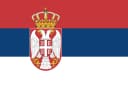
Serbia
Serbia is a landlocked Balkan country in southeastern Europe at the meeting point of Central European, Mediterranean and Balkan cultural worlds, with land borders to Hungary, Romania, Bulgaria, North Macedonia, Montenegro, Bosnia and Herzegovina, and Croatia. The capital Belgrade (Beograd, the «White City») sits on the confluence of the Sava and the Danube — the second-largest Danube city after Vienna and the historical anchor of any travel through southeast Europe — and Novi Sad to the north is the Vojvodina province capital with Habsburg-era streetscapes and the great Petrovaradin Fortress overlooking the Danube. Serbia is one of the most affordable destinations in Europe, with strong river-and-mountain country (the Iron Gates Đerdap gorge of the Danube, the Tara and Kopaonik national parks, the Drina river canyon and the Uvac meanders), a remarkable medieval monastic heritage with Byzantine frescoes (Studenica and Sopoćani are UNESCO World Heritage sites, and Žiča, Mileševa, Manasija and Ravanica round out the great monastery circuit), the Habsburg-era city architecture of Vojvodina (Subotica's art nouveau Magyar/Austrian heritage, Sremski Karlovci's baroque), the Roman archaeological sites of Sirmium (Sremska Mitrovica, one of four imperial-era capitals of the Roman Empire) and Felix Romuliana (Gamzigrad, UNESCO), the Đavolja Varoš earth-pyramid natural monument in southern Serbia, the great rakija fruit-brandy tradition (plum/šljivovica, apricot/kajsija, quince/dunja, grape/loza), and the legendary Belgrade music and dining scene that culminates each July at the Exit Festival in Novi Sad's Petrovaradin Fortress. Serbia is an EU candidate country and is not part of the Schengen Area; the visa system is one of the most open in Europe, with visa-free entry up to 90 days for over 90 countries and a special exemption for holders of valid Schengen, US or UK visas. The official language is Serbian (in both Cyrillic and Latin script); the Serbian dinar (RSD) is the currency. English is widely spoken in Belgrade and Novi Sad, and German is also used in the Vojvodina border zone with Hungary and at hotels and restaurants oriented to the long-running Vienna–Budapest–Belgrade Danube corridor.
Booking links go to our partner Trip.com — we may earn a commission at no extra cost to you.
Serbia visa system overview
Serbia operates one of the most liberal visa frameworks in Europe. Citizens of more than ninety countries — including all EU and EEA member states, the United Kingdom, the United States, Canada, Australia, New Zealand, Switzerland, Japan, South Korea, Singapore and most Latin American and Gulf countries — enter visa-free for tourism and short business meetings up to 90 days within any 180-day period, with no advance application required: the entry stamp is placed in the passport on arrival at Belgrade Nikola Tesla Airport (BEG), Niš Constantine the Great Airport (INI) or one of the major land border crossings. Passport must be valid for at least 90 days beyond the intended stay. A particularly useful Serbian provision: holders of a valid Schengen visa, a US visa, a UK visa or a residence permit from any Schengen country may enter Serbia visa-free for up to 90 days even if their nationality normally requires a Serbian visa — a valuable shortcut for travellers already holding any of these documents who want to add Serbia to a European itinerary. Serbia is not a Schengen Area member, so the Schengen 90-in-180 clock and the Serbian 90-in-180 clock run independently. Travellers from countries that do require a visa apply at the Serbian embassy or consulate of residence with the standard documentation: completed application form, passport with at least six months' validity beyond the planned stay, recent passport-style photographs, return or onward ticket, accommodation evidence, travel-medical insurance with a substantial minimum cover (check current requirements), evidence of sufficient funds (check current daily-funds guidance), and the visa fee. Foreign visitors must register their address with the local police within 24 hours of arrival in Serbia — hotels and registered guesthouses handle this automatically; visitors staying privately should ask their host to register them at the local police station. Long-stay categories — Temporary Residence Permit (boravišna dozvola), Work Permit, Student Residence, Family Reunification and Investor/Entrepreneur Residence — are filed at Serbian diplomatic missions abroad and finalised in Serbia after arrival. Belgrade Nikola Tesla International Airport (BEG) is the main international gateway with direct flights to most major European hubs (Vienna, Frankfurt, Munich, Zurich, Paris, Rome, Madrid, Istanbul) and onward worldwide.
Visa types
Visa-Free Entry (Tourism & Business)
The standard route for citizens of more than ninety countries — all EU and EEA member states, the United Kingdom, the United States, Canada, Australia, New Zealand, Switzerland, Japan, South Korea, Singapore and most Latin American and Gulf countries — entering for tourism, family visits, conferences, short business meetings and contract negotiations. No visa is required, no fee is charged, an entry stamp is issued at Belgrade Nikola Tesla Airport, Niš Constantine the Great Airport or at the land borders. Passport must be valid for at least 90 days beyond the planned stay. Foreign visitors must register their address with the local police within 24 hours of arrival; hotels and registered accommodations handle this automatically, while visitors staying privately should ask their host to register them.
Visa-Free for Schengen, US & UK Visa Holders
A particularly useful Serbian provision: holders of a valid Schengen visa, a US visa, a UK visa or a residence permit from any Schengen country may enter Serbia visa-free for up to 90 days even if their nationality normally requires a Serbian visa. The traveller presents the Serbian-relevant documentation (passport valid 90 days beyond the planned stay, the held visa or residence permit, a return or onward ticket and evidence of accommodation) at the airport on arrival. The Serbian visa-free clock is independent of the Schengen 90-in-180 clock and resets on each fresh trip in/out of Serbia.
Tourist & Business Visa (Type C)
For nationals of countries not covered by visa-free entry. Filed at the Serbian embassy or consulate of residence with the standard short-stay documentation: completed application form, passport (six months' validity beyond the planned stay, with blank pages), two recent passport-style photographs, return or onward ticket, accommodation evidence (hotel reservation or invitation letter from a Serbian host), travel-medical insurance with a substantial minimum cover, evidence of sufficient funds, and the visa fee — check current requirements and pricing. Processing is usually 10 to 15 working days. Single-entry and multiple-entry options exist for business travellers.
Long-Stay Visa (Type D) & Temporary Residence
For stays beyond 90 days, including digital nomads, family reunification, investors and self-employment routes. The Long-Stay Type D Visa is filed at the Serbian embassy of residence and is followed within Serbia by the Temporary Residence Permit (boravišna dozvola), which is the document that grants longer residence rights. Standard documentation includes the application, passport, evidence of accommodation in Serbia (lease, property ownership, host invitation), evidence of financial means or income, health insurance, a clean police clearance from the country of residence, and the relevant fee. The Serbian property-ownership track is widely used: foreign nationals can buy property in Serbia, and ownership combined with proof of income supports a renewable temporary residence application.
Work Permit
The Serbian work-permit route runs through the Serbian employer, who initiates the application at the National Employment Service (Nacionalna služba za zapošljavanje); the candidate then applies at the Serbian embassy of residence with passport, qualifications, a copy of the employer-side approval, the employment contract, photographs and the visa fee. Concentrated demand around Belgrade (IT and financial services, regional headquarters of multinationals, Belgrade Waterfront), Novi Sad (IT, agriculture, the long-running Lehel and other Hungarian-Italian-German manufacturing footprint), Niš (the southern industrial hub) and the broader China-led infrastructure programme. Family members can join under the dependant route.
Student Residence Permit
For full-time studies at Serbian universities and recognised institutions, primarily the University of Belgrade (the country's oldest, founded 1808 as a Lyceum), the University of Novi Sad, the University of Niš, the University of Kragujevac and the Singidunum and Megatrend private universities. The institution issues the admission letter; the student applies at the Serbian embassy of residence with admission letter, evidence of fee payment, financial means, health insurance, photographs and the visa fee. Spouses and minor children may follow under the dependant route. Belgrade in particular has a growing English-taught programme footprint at LSE-Belgrade and at the Faculty of Economics for international Master's students.
Guides
Serbia rewards visitors who anchor a trip on Belgrade and Vojvodina and let the rest of the country branch out from those two centres. Most travellers fly into Belgrade Nikola Tesla International Airport (BEG); direct connections from Western Europe include Lufthansa (Frankfurt, Munich), Austrian (Vienna), Swiss (Zurich), Air France (Paris-CDG), Air Serbia (Paris, London, Rome, Milan, Madrid, Vienna, Zurich, Berlin, Düsseldorf, Stuttgart, Frankfurt and onward to North America and the Middle East), Ryanair, Wizz Air, Turkish Airlines (Istanbul) and Aeroflot (when running). The Belgrade–Vienna and Belgrade–Budapest air corridor is short and frequent; the Belgrade-to-Niš high-speed rail line and the new Belgrade–Novi Sad fast train (38 minutes) make the country's three biggest cities easy to combine in a single week. Belgrade itself is the centrepiece — the Kalemegdan Fortress at the confluence of the Sava and Danube rivers (the citadel that has watched every wave of Central-European, Byzantine and Ottoman traffic across the Balkans), the bohemian cobbled lanes of Skadarlija for traditional Serbian dining, the Saint Sava Cathedral (one of the largest Orthodox churches in the world), the Knez Mihailova pedestrian street, the Tesla Museum (with the inventor's actual ashes in a golden sphere), the new Belgrade Waterfront riverside development, and the legendary nightlife on the splavovi river-clubs anchored on the Sava and the Danube. Novi Sad on the Danube is the second city — pedestrianised Habsburg-era core, the Petrovaradin Fortress with its Vauban-pattern bastions and the celebrated star-shaped clock tower, and the Exit Festival in mid-July (one of Europe's biggest open-air music festivals, held in the moats and bastions of the fortress). Out of Belgrade and Novi Sad, the great medieval monastery circuit of southern Serbia (Studenica and Sopoćani UNESCO, Žiča, Mileševa with its «White Angel» fresco, Manasija and Ravanica) is the deepest cultural heritage of the country; the Habsburg-era Vojvodina towns (Sremski Karlovci with its baroque seminary, Subotica with the magnificent Magyar/Austrian art nouveau City Hall and Synagogue, Sombor and Zrenjanin) are the northern cultural circuit; the Iron Gates (Đerdap) gorge of the Danube where the river slices through the Carpathians is one of Europe's great river landscapes; the Tara and Kopaonik mountains, the Drina canyon, the Uvac meanders and the Đavolja Varoš earth pyramids round out the nature itinerary; and the spa towns (Vrnjačka Banja, Sokobanja, Niška Banja) carry the long Habsburg-era Kurort tradition. Serbia is one of the most affordable destinations in Europe — a sit-down meal with rakija and a shared bottle of wine in Belgrade costs noticeably less than the same meal in most Western European capitals — and the Serbian sense of welcome (gostoprimstvo) is one of the country's most consistent travel pleasures.
Serbia travel guide →
The full guide — the kafana, buses and tolls, and the fast train that changed the two-city trip.
Money in Serbia →
Dinars outside the eurozone, city ATMs and the DCC refusal — the practical money guide.
Eating in Serbia →
The kafana as a social institution, domaća kafa's own ritual and why burek comes in coiled layers.
Getting around Serbia →
Balkan buses and highway tolls — the real network beyond the fast rail corridor.
Health & safety in Serbia →
Healthcare and insurance, tap water and everyday precautions, and winter mountain safety.
Embassies & missions
Europe · 2
Frequently asked questions
Do I need a visa to visit Serbia?
Citizens of more than 90 countries, including the EU, US, UK, Canada, Australia and most of Latin America, enter visa-free for up to 90 days; holders of a valid Schengen, US or UK visa can also enter visa-free even if their own nationality would otherwise need one.
Is Serbia part of the Schengen Area?
No — Serbia is an EU candidate country but not a Schengen member, so its 90-in-180-day visa-free window runs completely independently of the Schengen one; a Schengen trip and a Serbian trip don't eat into each other's day count.
Do I need to register with the police when I arrive?
Yes, technically — all foreign visitors must register their address within 24 hours of arrival, but hotels and registered guesthouses handle this automatically as part of check-in, so independent travellers rarely need to do anything themselves; only those staying privately should confirm their host has registered them.
Can I visit both Serbia and Kosovo on the same trip?
Yes, but plan the order and documentation carefully, since Serbia and Kosovo run independent immigration systems — check the most current guidance from your own country's foreign ministry before crossing between them.
How do I get between Belgrade and Novi Sad?
The fast train covers the route in well under an hour, making the two cities easy to combine in a single trip; frequent inter-city buses are the affordable alternative if the train schedule doesn't line up.
What's the best time to visit for the Exit Festival?
Early-to-mid July, when the festival takes over Petrovaradin Fortress in Novi Sad for several nights — book accommodation well ahead, since the city's hotel capacity is stretched thin during the festival.
Planning a trip to Serbia? Compare hotels and flights and book in minutes.
Booking links go to our partner Trip.com — we may earn a commission at no extra cost to you.
This overview comes from Visaja's worldwide missions database (visaja.com), checked against official government sources; for binding answers, the mission itself always has the final word.