
Travel guide
France Travel Guide
France rewards treating it as a collection of regions rather than a single destination. Paris anchors any first visit, but the country's depth lies in how different its regions are from the capital and from each other: the Loire's Renaissance châteaux, Provence's lavender and painterly light, the Côte d'Azur's concentrated glamour, wine country from Bordeaux to Burgundy's Route des Grands Crus, Normandy's D-Day coast and Mont-Saint-Michel, and the Alps' twin winter and summer seasons beneath Mont Blanc. Beyond the headline regions lie quieter registers: Brittany's Celtic coast and crêperies, the medieval villages of the Périgord, the volcanic Auvergne, and Corsica's wild mountain-and-sea interior traced by the legendary GR20 trail. Binding it all together is a food culture whose gastronomic meal UNESCO lists as Intangible Cultural Heritage — from the neighbourhood boulangerie upward — and a Paris-centred TGV network that makes hub-and-spoke travel the natural way to see the country.
Updated 2026-09-24
Deep dives
Deep dive
France's Wine Regions: A Name as Law →
French wine's regional names aren't marketing — they're law. How the AOC system actually works, and a region-by-region guide to Burgundy, Champagne, the Loire and Alsace.
Deep dive
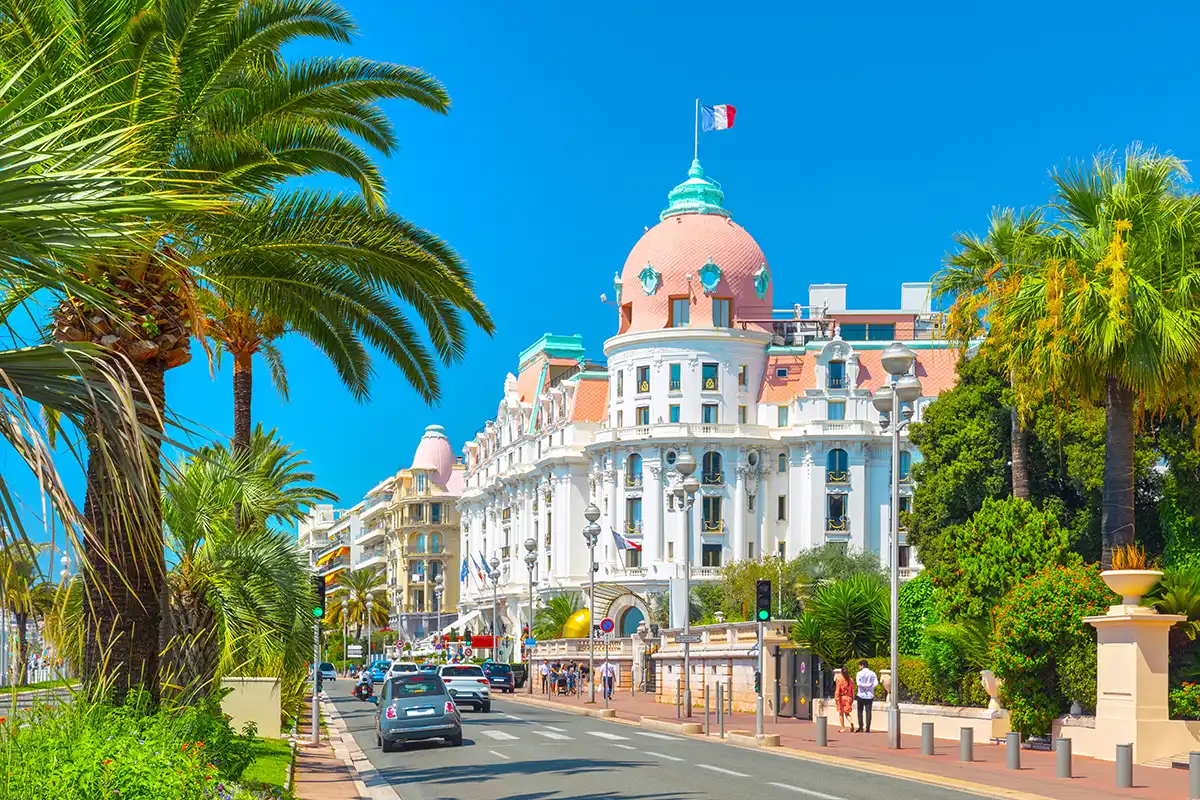
Provence & the Côte d'Azur: Where the Light Comes From →
The wind that gives Provence its famous light, and the two waves of foreign visitors — Victorian aristocrats, then Jazz Age Americans — who invented the Côte d'Azur as we know it. Lavender fields, hilltop villages and the Riviera's real history.
Deep dive
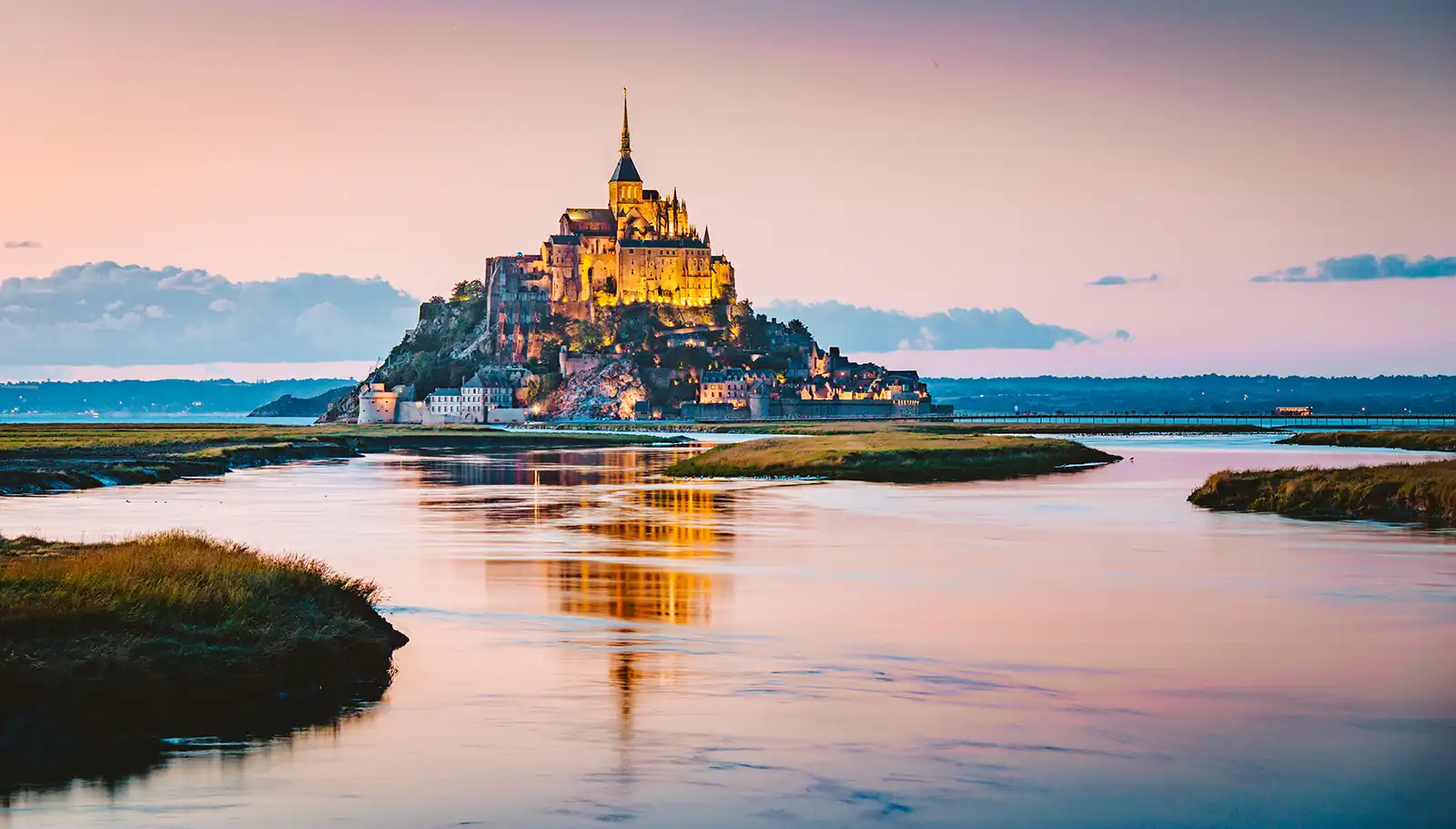
Historic France: the Loire, Mont-Saint-Michel & Carcassonne →
Why over 300 Renaissance châteaux cluster along one river, the tides that make Mont-Saint-Michel an island at their highest, and Europe's largest surviving medieval walled city. France's deep history beyond Paris and Normandy.
Deep dive
The French Alps: Two Kinds of Mountain Town →
Why Courchevel and Les Menuires look startlingly modern for Alpine villages, while Chamonix looks nothing like them — a single postwar planning decision explains the difference. Plus Les Trois Vallées, turquoise Annecy, and the Alps in summer.
Itinerary
France in Two Weeks: Base in Paris, Radiate Outward →
Don't plan France as a line across the map — the country's own rail network is built around Paris, and the efficient trip shape follows it. A two-week hub-and-spoke route: the capital as base, day trips and overnight detachments radiating outward.
Ways to Experience This Destination
The Eiffel Tower at dusk, the Louvre (quieter at the Wednesday and Friday night openings), Montmartre and the Sacré-Cœur, the Champs-Élysées to the Arc de Triomphe, the Latin Quarter's bookshops (Shakespeare & Company), the Musée d'Orsay for the Impressionists, bateau-mouche cruises on the Seine, the Tuileries and Luxembourg gardens, the Marais for galleries, fashion and food — and bistro dinners where the menu du jour remains one of Europe's great value rituals. Beyond Paris: Lyon for gastronomy, Marseille for grit and the MuCEM, Strasbourg for its cathedral and European Quarter, Bordeaux and Toulouse for southwest warmth.
Bordeaux: château tastings in UNESCO-listed Saint-Émilion, the Médoc and Graves, plus the interactive Cité du Vin museum. Burgundy: the Route des Grands Crus between Dijon and Beaune (through the UNESCO-listed Climats of Burgundy), the Hospices de Beaune auction, and some of the world's most sought-after Pinot Noirs. Champagne: underground cellar tours in Reims and Épernay (Moët & Chandon, Veuve Clicquot, Dom Pérignon). The Loire Valley for elegant Sancerre and Vouvray whites. Alsace for its Riesling and half-timbered wine-village route.
Lavender fields on the Valensole plateau and at the Abbaye de Sénanque (bloom from mid-June to early August, peaking in July), perched villages (Gordes, Roussillon, Les Baux-de-Provence), markets in Aix-en-Provence and Avignon (Palais des Papes, the July theatre festival). The Riviera: Nice and the Promenade des Anglais, the Cannes Croisette, Saint-Tropez, Monaco and Monte-Carlo, the Calanques of Marseille — fjord-like limestone inlets — and Antibes with its Picasso Museum.
The Loire Valley's 300-plus châteaux: Chambord (François I's masterpiece with the double-helix staircase attributed to Leonardo da Vinci), Chenonceau spanning the River Cher, Amboise (Leonardo's final home), Villandry's Renaissance gardens. Normandy: the Mont-Saint-Michel abbey-island emerging from tidal flats, the D-Day landing beaches (Omaha, Utah — museums and cemeteries that stop you cold), the Étretat cliffs, and Camembert in its home village. Carcassonne's medieval walled city in the south.
Chamonix-Mont-Blanc: the most legendary ski and mountaineering station in the Alps, with the Aiguille du Midi cable car (3,842 m) for panoramic Mont Blanc views. Courchevel, Méribel and Val d'Isère for luxury skiing. Les Trois Vallées — 600 km of interconnected pistes, the largest ski area in the world. Annecy and its turquoise lake (‘the Venice of the Alps’). In summer, the Tour du Mont Blanc trek (170 km through France, Italy and Switzerland) and the Gorges du Verdon — one of Europe's deepest canyons.
France has the highest concentration of Michelin-starred restaurants in the world, but the real magic is in the bistros, brasseries, boulangeries and marchés. Croissants in Paris, bouillabaisse in Marseille, flammekueche in Alsace, crêpes in Brittany, cassoulet in Toulouse, cheese from over 400 varieties. Lyon — France's gastronomic capital — and its bouchons. Cooking schools across Paris and Provence that turn visitors into practitioners. The concept of the restaurant was invented here, and the tradition continues daily at every price point.
City guides
Frequently asked questions
It depends entirely on which France you're visiting, since the country's regions run on different calendars. Paris and the Loire châteaux are comfortable nearly year-round but least crowded in spring and autumn; Provence's lavender has a narrow mid-June-to-early-August window that's worth planning around specifically; the Côte d'Azur is a summer destination first; and the Alps split cleanly into a winter ski season and a completely different summer hiking one. There's rarely a single bad time to visit the country as a whole — the question is always which region, and what you want from it.
Two weeks is the comfortable shape for a first trip that goes beyond Paris alone: three to four days in the capital, then two or three regional spokes radiating out and back by train — the Loire châteaux for a short detour, Provence or the Côte d'Azur for a longer one, and a final choice between the Alps, Alsace or Lyon depending on what draws you. Ten days works with one spoke dropped; a week suits Paris plus a single region rather than the full route.
Paris alone genuinely rewards three to four days and could absorb far more, but France's regional identity is strong enough that seeing only the capital gives a real but incomplete picture — Provence, the Loire and the Alps are different enough from Paris and from each other that each feels like a distinct trip. First-time visitors with more than a week are generally better served splitting time than spending the whole trip in the capital.
Entry rules, visa types and practical notes live on the France overview.
This overview comes from Visaja's worldwide missions database (visaja.com), checked against official government sources; for binding answers, the mission itself always has the final word.