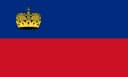
Liechtenstein
Liechtenstein is a tiny Alpine principality doubly landlocked between Switzerland and Austria — at 160 km² (62 sq mi) the world's sixth-smallest country, and one of only two doubly landlocked states (with Uzbekistan), meaning every neighbour is landlocked too. It is a constitutional monarchy headed by Prince Hans-Adam II and one of the wealthiest countries per capita, with a financial sector alongside a surprisingly strong industrial base — Hilti power tools, Ivoclar dental technology and several dozen precision manufacturers work out of a country the size of a mid-sized city. The capital, Vaduz, sits in the Rhine Valley below the castle that is still the princely family's home. Liechtenstein shares the Swiss franc and a customs union with Switzerland, is a full member of the United Nations, and is part of the European Economic Area and the Schengen Area.
Booking links go to our partner Trip.com — we may earn a commission at no extra cost to you.
Visa Requirements for Liechtenstein
Liechtenstein is part of the Schengen Area but has no border controls of its own: it shares a customs union and an open border with Switzerland, and travellers arrive overland through Switzerland or Austria. Because both countries apply the same Schengen rules, the practical test is simple — if you can enter Switzerland, you can enter Liechtenstein. Citizens of the United States, the United Kingdom, Canada, Australia, New Zealand, Japan and the other Schengen visa-exempt countries visit visa-free for up to 90 days in any 180-day period, counted across the whole Schengen Area. Everyone else applies for a Schengen visa through Switzerland.
Before you travel
Visas through Swiss missions
Liechtenstein has very few embassies of its own and relies on Switzerland for most consular services, so Schengen visa applications go to the Swiss embassy or consulate responsible for your place of residence.
EU, EEA and Swiss citizens
Free movement applies: a valid passport or national identity card is enough, with no limit on the length of a visit.
Open border with Switzerland
There are no passport controls between Switzerland and Liechtenstein — only small signs mark the crossing, so there is no entry stamp.
Arriving from Austria
Both sides of the Austrian border are in Schengen, so passports are not checked there, but Swiss customs rules apply to the goods you bring in.
No airport of its own
International travellers arrive through Swiss or Austrian airports and railway stations and continue overland.
ETIAS for visa-exempt travellers
Check whether you need an ETIAS travel authorisation once that system is in operation; it will apply to the whole Schengen Area, Liechtenstein included.
Visa types
Visa-Free Entry (Schengen)
For tourism, business, or short stays for US, UK, Canada, Australia, and other Schengen visa-exempt nationalities.
EU/EEA/Swiss Entry
For EU, EEA, and Swiss citizens for any purpose including residence and work.
Schengen Visa (Type C)
For short-term stays for nationalities requiring Schengen visa, applied through Swiss embassy (Liechtenstein has limited diplomatic missions).
National Visa / Residence Permit
For long-term stays exceeding 90 days including work or residence in Liechtenstein.
Guides
Liechtenstein fits a whole country into one stretch of the Rhine Valley: eleven villages between the river and the mountains, a capital crowned by a castle, and an Alpine resort a short bus ride above. Most visitors come for a few hours from Switzerland — the castle view, an art museum of international standing, a souvenir stamp in the passport — but the country rewards staying, with a flat car-free cycleway along the whole Rhine border, a 75-kilometre trail through every municipality, and family skiing and high summer trails at Malbun. No car is needed: LIEmobil buses link every village with the rail stations at Sargans, Buchs and Feldkirch, and overnight guests ride free with the Adventure Pass.
Liechtenstein travel guide →
The full guide: Vaduz's museum mile, Malbun and the Walser terrace, the national trail and why one night changes the trip.
Money in Liechtenstein →
Swiss francs, euros at the shop's own rate and contactless almost everywhere: paying in Liechtenstein.
Eating in Liechtenstein →
Käsknöpfle with apple sauce, golden Ribel, plum dumplings and the Prince's own Pinot Noir.
Getting around Liechtenstein →
LIEmobil buses to every village and up to Malbun, free for overnight guests with the Adventure Pass.
Health & safety in Liechtenstein →
The numbers to save, health cover with an EHIC, and the Alpine terrain above the valley.
Cities & planning
Regions
Embassies & missions
Accredited missions for Liechtenstein
German Embassy in Bern
Based in Bern, Switzerland
Portuguese Embassy in Bern
Based in Bern, Switzerland
Russian Embassy in Bern
Based in Bern, Switzerland
Saudi Arabian Embassy in Bern
Based in Bern, Switzerland
Swiss Embassy in Vienna
Based in Vienna, Austria
Royal Thai Embassy in Bern
Based in Bern, Switzerland
British Embassy Bern
Based in Bern, Switzerland
Frequently asked questions
Do I need a visa to visit Liechtenstein?
The practical rule: if you can enter Switzerland, you can enter Liechtenstein. The principality is in Schengen and in customs union with Switzerland, with completely open borders — US, UK, Canadian, Australian and other Schengen-exempt citizens get the standard 90 days in 180, EU/EEA/Swiss citizens enter freely, and anyone needing a Schengen visa applies through Swiss embassies, since Liechtenstein uses the Swiss diplomatic network.
How do I get to Liechtenstein without an airport?
Via its neighbours. The standard route: fly to Zürich, take the train to Sargans or Buchs SG on the Swiss side, then the LIEmobil bus into Vaduz — roughly an hour and a quarter from the airport. From Austria, it is the train to Feldkirch and a bus across the border; a regional train from Feldkirch also stops at Nendeln and Schaan-Vaduz. Once in, LIEmobil buses cover all eleven municipalities.
Can I get a Liechtenstein stamp in my passport?
Not at the border — there are no controls, just a signpost — but yes at the tourist office on Vaduz's Städtle, which stamps passports with a souvenir Liechtenstein seal for a small fee. It's the only “border stamp” the country offers and has become a small ritual of the visit for collectors of hard-to-get passport pages.
Can you visit Vaduz Castle?
No — it's the princely family's home and closed to the public. The compensation is twofold: the Schlossweg path below the walls gives the classic castle-and-Rhine-Valley panorama free of charge, and Gutenberg Castle in Balzers, at the country's southern tip, opens for guided tours and events, with a view over the whole of Liechtenstein from its hill.
Is half a day enough for Liechtenstein?
For the core — castle viewpoint, Städtle, the Kunstmuseum, the souvenir stamp — honestly, yes: many visitors do exactly that from Switzerland. But the country rewards more: the flat Rhine cycle path runs its full length, the 75-km Liechtenstein Trail crosses all eleven municipalities in five day stages, and Malbun's ridge walk to Naafkopf (2,570 m) overlooks four countries. Day-trip the novelty or stay for the Alps — both are legitimate.
What currency does Liechtenstein use — and how expensive is it?
The Swiss franc — there is no Liechtenstein currency of its own. Euros are accepted in many tourist businesses, usually at the business's own rate with change in francs, so paying in francs or by card is better value. Prices sit at full Swiss levels, among Europe's highest across hotels, restaurants and cafés. The established workaround: stay in Feldkirch (Austria) or the Swiss Rhine-valley towns, where accommodation costs notably less, and visit from there.
Can you ski in Liechtenstein?
Yes — at Malbun, the country's single Alpine resort at 1,600 metres: about 23 km of pistes, a handful of lifts, no queues, and a family scale that's the deliberate opposite of the big resorts across both borders. The season typically runs from just before Christmas into early April; in summer the Sareis chairlift and the high trails of the Liechtenstein Alps take over.
Planning a trip to Liechtenstein? Compare hotels and flights and book in minutes.
Booking links go to our partner Trip.com — we may earn a commission at no extra cost to you.
Treat this Visaja page as your starting point: verify the current rules directly with the official source before you submit an application.